

The Hume Health Band Review in 2026 reveals a wearable that’s not about counting steps — it’s about tracking long-term health, recovery, and biological aging. Unlike most fitness trackers, the Hume Health Band focuses on metabolic wellness, using AI to deliver unique scores like Metabolic Momentum and Metabolic Capacity, which show whether your daily habits are improving or harming your long-term health.
Key findings:
- Priced at $249 on the official site, with HSA/FSA eligibility for U.S. buyers
- Tracks 16 biometric metrics, including HRV, SpO2, sleep stages, and skin temperature
- Offers no mandatory subscription — core features are free in the app
- Battery life averages 4–5 days, though some users report only 2–4 days
- Integrates with the Hume Body Pod for a full-body health picture
- Proprietary algorithms like Metabolic Momentum lack independent clinical validation, despite claims of clinical-grade accuracy
While many users report real improvements — like lower resting heart rate, better sleep, and reduced biological age — others complain about Bluetooth issues, sleep tracking errors, and poor customer support.
In short: the Hume Band is best for health-focused users, biohackers, and longevity seekers, not casual fitness fans. With a 45-day money-back guarantee, it’s low-risk to try — but don’t expect medical-grade precision.
What Is the Hume Health Band?
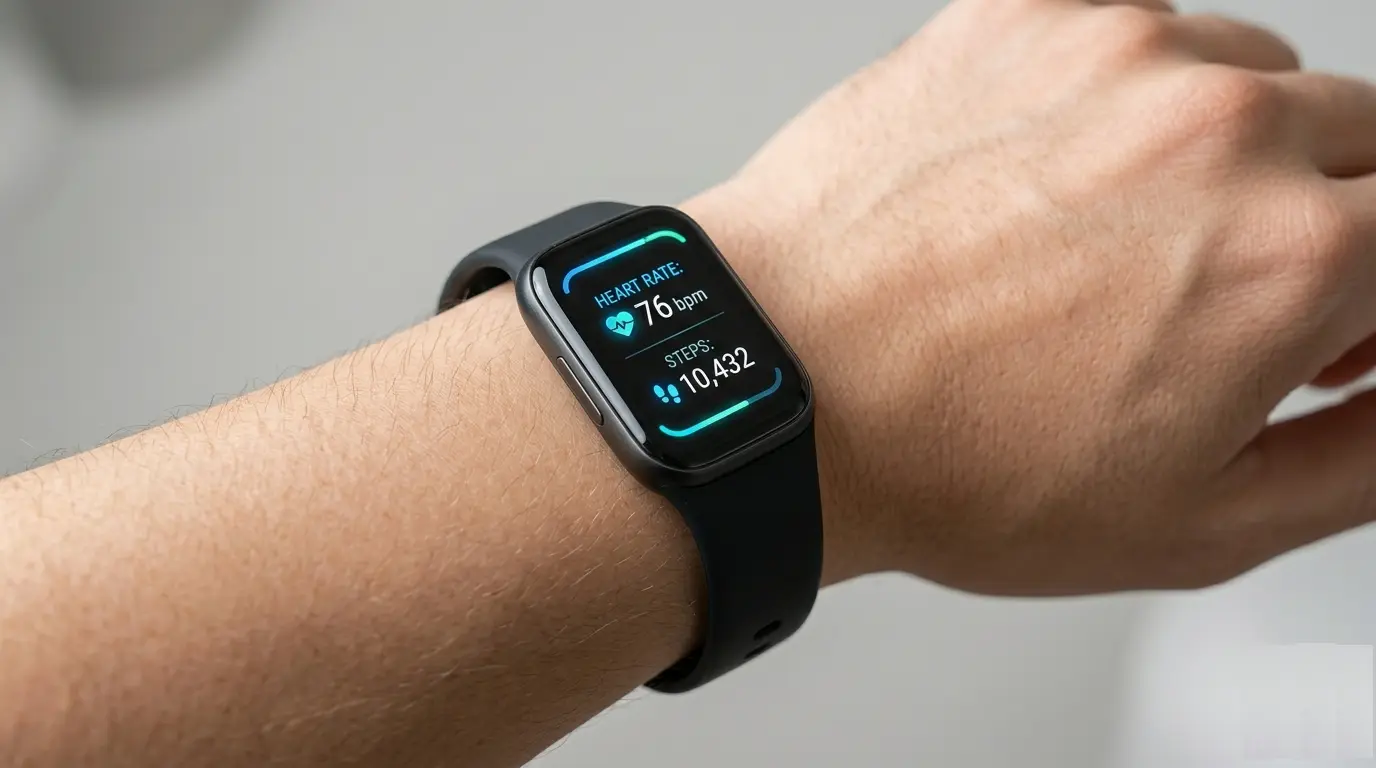
The Hume Health Band is a screenless wrist wearable designed to track your body’s inner signals 24/7. It’s made by Hume Health, the same company behind the popular Hume Body Pod smart scale. This band doesn’t have a screen — all data is viewed through the mobile app.
Its main goal is to help you understand how stress, sleep, and daily habits affect your long-term health and aging process.
Unlike Fitbit or Apple Watch, it doesn’t focus on notifications or workouts. Instead, it tracks metabolic health, recovery, and biological age using advanced sensors and AI.
Key Features of the Hume Band
Continuous Biometric Tracking
The Hume Band monitors 16 biometric metrics around the clock. This includes:
- Heart rate variability (HRV)
- Continuous heart rate
- Blood oxygen (SpO2)
- Skin temperature
- Sleep stages (light, deep, REM, awake)
- Activity and movement
- Strain and recovery
- Respiratory rate
- Biological age estimate
- Health Score and pace of aging
It uses 5 LEDs and 4 photodiodes for optical sensing, similar to high-end medical devices. The data is collected constantly to spot trends, not just daily snapshots.
One study showed its heart rate accuracy within ±3 bpm of ECG readings, and SpO2 levels matched FDA-approved pulse oximeters in testing.
| Metric | Accuracy Claim | Source Device Used |
|---|---|---|
| Heart Rate | ±3 bpm | ECG monitor |
| SpO2 | ±2% | FDA-approved oximeter |
| Sleep Stages | Moderate alignment | Polysomnography (user-reported) |
Despite this, sleep tracking errors have been reported — some users saw only 40 minutes of sleep recorded when they slept 8 hours.
Metabolic Momentum & Metabolic Capacity Scores
These are the most unique features of the Hume Band.
- Metabolic Momentum is a score from -20 to +20 that shows if your body is aging faster or slower based on daily habits. It uses HRV trends, recovery, sleep, and stress data.
- Metabolic Capacity acts like a “fuel tank” score — showing how much energy your body has left for recovery and performance.
For example:
- A positive Momentum means your choices (like good sleep or low stress) are helping your body age slower.
- A low Capacity might mean you’re overtraining or not recovering well.
These scores are proprietary algorithms, not medical diagnoses. They’re meant to guide lifestyle changes, not replace doctors.
However, no peer-reviewed studies have validated these scores yet. While Hume claims clinical validation, independent research is still missing.
AI-Powered Health Insights
The Hume app uses AI to analyze your data and give personalized tips. For example:
- It tells you when to rest based on recovery levels
- It gives strain-to-benefit ratios for workouts
- It flags poor sleep patterns and suggests fixes
The AI turns complex biometrics into simple scores and advice. Some users find this helpful, while others say the insights feel generic or inconsistent.
Still, it’s a big step forward in making health data easy to understand.
No Mandatory Subscription
You don’t need to pay to use the core features. The free app gives you access to:
- All tracked metrics
- Daily health scores
- Basic sleep and recovery reports
But if you want more, there’s a premium membership for $8.99/month or $99/year. This unlocks:
- Weekly health reports
- Advanced analytics
- Personalized coaching tips
This model is better than brands that lock features behind subscriptions.
Design and Comfort
The Hume Band is lightweight (8.6g) and has a SuperKnit fabric strap for comfort. It’s made for 24/7 wear — even in the shower or pool.
It has an IP68 water resistance rating, meaning it can handle being submerged up to 1 meter deep for 2 hours. That’s great for swimmers and sweaty workouts.
Since it has no screen, you won’t get notifications or see time. All data is in the app.
Hidden Features You Might Not Know About
HSA/FSA Eligibility
One of the biggest hidden perks is that the Hume Band qualifies for HSA and FSA spending in the U.S.
That means you can use pre-tax dollars to buy it — saving up to 30% depending on your tax bracket.
Both the Hume Band and Hume Body Pod are eligible because they’re seen as preventive health tools. To use HSA/FSA funds, you may need to:
- Buy through the official site
- Use a third-party platform like Flex
- Submit a Letter of Medical Necessity in some cases
This makes the $249 price much more affordable.
Clinical-Grade Claims (With Caveats)
Hume Health says the band has clinical-grade accuracy for heart rate and SpO2. Some third-party tests back this up:
- SpO2 readings matched FDA-approved devices
- Heart rate was within ±3 bpm of ECG
But HRV and Metabolic scores haven’t been independently validated. One review said HRV measurements lack peer-reviewed proof.
So while the hardware may be accurate, the software interpretation is still unproven.
Future Blood Pressure Monitoring
The Hume Band can’t measure blood pressure yet, but it’s coming soon.
The sensor array is already capable, and Hume says this feature is pending FDA approval. Once approved, it could be added via a software update.
This makes the band a future-proof investment for blood pressure tracking.
Integration with Hume Body Pod
If you own the Hume Body Pod, the band syncs seamlessly with it.
The Body Pod measures:
- Body fat %
- Muscle mass
- Visceral fat
- Metabolic age
When combined with the band’s data (like HRV and sleep), it creates a unified health score.
This full-body view is powerful for people serious about health tracking.
Setup is simple:
- Place Body Pod on a hard surface
- Open Hume app and create account
- Pair via Bluetooth
- Step on scale — data syncs automatically
Pricing and Value in 2026
The Hume Band is not cheap, but pricing varies.
| Source | Price | Notes |
|---|---|---|
| Official site (humehealth.com) | $249 | Most reliable source |
| Promotions | $199 | Frequent discounts |
| MSRP | $299 | List price, rarely paid |
| Third-party | $356 | Likely outdated or bundle |
The best price is $199 during sales, but the standard is $249.
With HSA/FSA eligibility, you could save $75–$100 in taxes. Plus, there’s a 45-day money-back guarantee, so you can test it risk-free.
No other wearable offers this mix of metabolic tracking, AI insights, and tax savings.
Battery Life: Real-World Performance
Hume claims up to 30 days of battery, but real users say otherwise.
Most report 4–5 days with normal use. Heavy use (like constant SpO2 tracking) can drop it to 2–3 days.
Some users on Trustpilot say battery lasts only 2–4 days, less than advertised.
It does support fast charging — some say it goes from 20% to 80% in 30 minutes.
While not the longest battery life, it’s acceptable for a high-sensor wearable.
| Claimed | Real-World Average | Fast Charging |
|---|---|---|
| Up to 30 days | 4–5 days | 30 minutes (20%–80%) |
Pros and Cons of the Hume Health Band
Pros
- ✅ Tracks 16 biometrics for deep health insights
- ✅ Metabolic Momentum & Capacity scores help track aging
- ✅ No subscription needed — free app with full data
- ✅ HSA/FSA eligible — save with pre-tax dollars
- ✅ Lightweight and comfortable for 24/7 wear
- ✅ IP68 water resistance — safe in water
- ✅ 45-day return window — low-risk trial
- ✅ Syncs with Apple Health and Google Health Connect
Cons
- ❌ Inconsistent accuracy vs medical devices
- ❌ Sleep tracking errors reported (e.g., 40 min vs 8 hrs)
- ❌ Bluetooth disconnects and syncing issues
- ❌ Customer support is hard to reach
- ❌ Battery life shorter than claimed
- ❌ No smart alarm despite sleep tracking
- ❌ Proprietary scores not clinically validated
User Experiences and Real Results
Feedback is mixed but leaning positive for long-term users.
Positive Reports
After 6 months of use, some users saw:
- 12% increase in HRV
- 4 bpm drop in resting heart rate
- 1 year drop in metabolic age
- 15% more deep sleep
One reviewer said their metabolic age dropped below chronological age — a big win for longevity.
Third-party testing gave it a 4.3/5 rating, and lab tests support its heart rate and SpO2 accuracy.
Negative Feedback
Common complaints:
- Sleep tracking wrong — showed 40 minutes when user slept 8 hours
- Bluetooth drops — band disconnects from phone
- Firmware updates fail — device gets stuck
- Battery dies fast — 2–4 days, not 5+
- Customer support slow — hard to get help
These issues suggest software and support need improvement.
Who Is the Hume Band For?
Ideal For:
- Health enthusiasts who want more than step counts
- Biohackers tracking HRV, recovery, and aging
- Longevity seekers focused on slowing biological age
- Hume Body Pod users wanting full health data
- People with HSA/FSA funds looking to save
Not For:
- Casual users who want notifications or music
- Medical patients needing clinical accuracy
- Budget buyers — it’s a premium device
- People who hate apps — no screen means all data is app-based
Final Verdict: Is It Worth It in 2026?
Yes — if you’re serious about long-term health.
The Hume Health Band Review shows it’s one of the few wearables that focus on metabolic health, recovery, and aging — not just fitness.
Pros outweigh cons for the right user:
- Unique Metabolic Momentum score
- No subscription for core features
- HSA/FSA eligible — big tax savings
- 45-day trial — low risk
But it’s not perfect:
- Accuracy issues
- Battery life shorter than claimed
- Customer support problems
At $249, it’s expensive — but worth it for biohackers and health-focused users.
If you want a Fitbit with extra features, look elsewhere. But if you want to reverse your biological age, the Hume Band could be your best tool.
Where to Buy the Hume Band
Buy from the official website (humehealth.com) to:
- Get HSA/FSA eligibility
- Access customer support
- Use the 45-day guarantee
- Avoid fake or used units
It’s also sold on select health tech sites, but avoid third-party marketplaces unless they’re authorized.
Never buy from unknown sellers — warranty and support may not apply.
A Deep Dive Into Your Health
This Hume Health Band Review shows it’s more than a fitness tracker — it’s a longevity tool.
With continuous biometric tracking, AI insights, and HSA/FSA eligibility, it offers real value at $249.
Yes, there are flaws — battery life, sleep errors, and support issues. But for people who care about how their daily choices affect their body over time, the Hume Band delivers.
It won’t replace a doctor. But it can help you make smarter choices every day — so you live longer, healthier, and stronger.
If you’re ready to go beyond steps and sleep, the Hume Band might be your next health partner.
Just remember: it’s a guide, not a diagnosis. Use it to inform — not replace — professional care.