

If you have ever looked into the world of dive watches, you have almost certainly heard of the Seiko SKX007. It is a name that comes up again and again in forums, reviews, and conversations among watch lovers. Even though Seiko stopped making this specific model in 2019, it remains one of the most talked-about timepieces on the market today. Why does a watch that is no longer being made still hold such a special place in the hearts of collectors and daily wearers? The answer lies in its perfect mix of tough build quality, classic style, and amazing value.
In this review, we will take a deep look at everything that makes the Seiko SKX007 a legend. We will check its size, how it wears on the wrist, the engine inside it, and its ability to handle water. We will also look at the current market in July 2026 to see what you can expect to pay if you want to buy one today. Whether you are a first-time buyer or a seasoned collector, this guide will help you understand why this watch is still a top choice.
A Brief History of the Seiko SKX007
The story of the Seiko SKX007 began in 1996, marking the start of a 23-year production run that is rare in the modern watch industry. When it first launched, it came with a price tag of around $430, which was a fair price for a serious dive watch at the time. During its lifespan, it became known as the entry-level king of ISO-certified dive watches, setting a standard that few competitors could match.

Even though it is discontinued, the demand has not gone away. In fact, because they are no longer being made, prices on the secondary market have shifted significantly. Today, in 2026, finding a mint condition example, especially those with specific serial numbers like the “J-serial” models made in Japan, can cost over $1,000. However, for most buyers, the Seiko SKX007 is still considered a “value king,” offering high-end features at a price that is much lower than many modern competitors.
Design and Build Quality
When you pick up a Seiko SKX007, the first thing you notice is its solid feel, designed to be a tool watch rather than just jewelry. It is built to be used, with a robust stainless steel case that gives it a sturdy and purposeful presence on the wrist. Let’s break down the design elements that make it so popular among enthusiasts.
Case Dimensions and Wearability
One of the biggest reasons people love this watch is how it fits on the wrist, despite its substantial look. The case diameter is 42.5mm, which is a very standard size for a men’s dive watch, but the number alone does not tell the whole story. The watch has a lug-to-lug distance of 46mm, a crucial measurement that determines how the watch sits from the top of your wrist to the bottom.
| Dimension | Measurement |
|---|---|
| Case Diameter | 42.5 mm |
| Case Thickness | 13.3 mm |
| Lug-to-Lug | 46 mm |
| Lug Width | 22 mm |
At 46mm lug-to-lug, the Seiko SKX007 fits a wide range of wrist sizes, including smaller wrists, better than many other 42mm watches. The thickness of the case is 13.3mm, which might sound thick on paper, but the design of the lugs allows it to wear thinner than it actually is. This makes it comfortable enough for daily wear under a shirt cuff, yet substantial enough to feel like a serious piece of equipment.
The Dial and Legibility
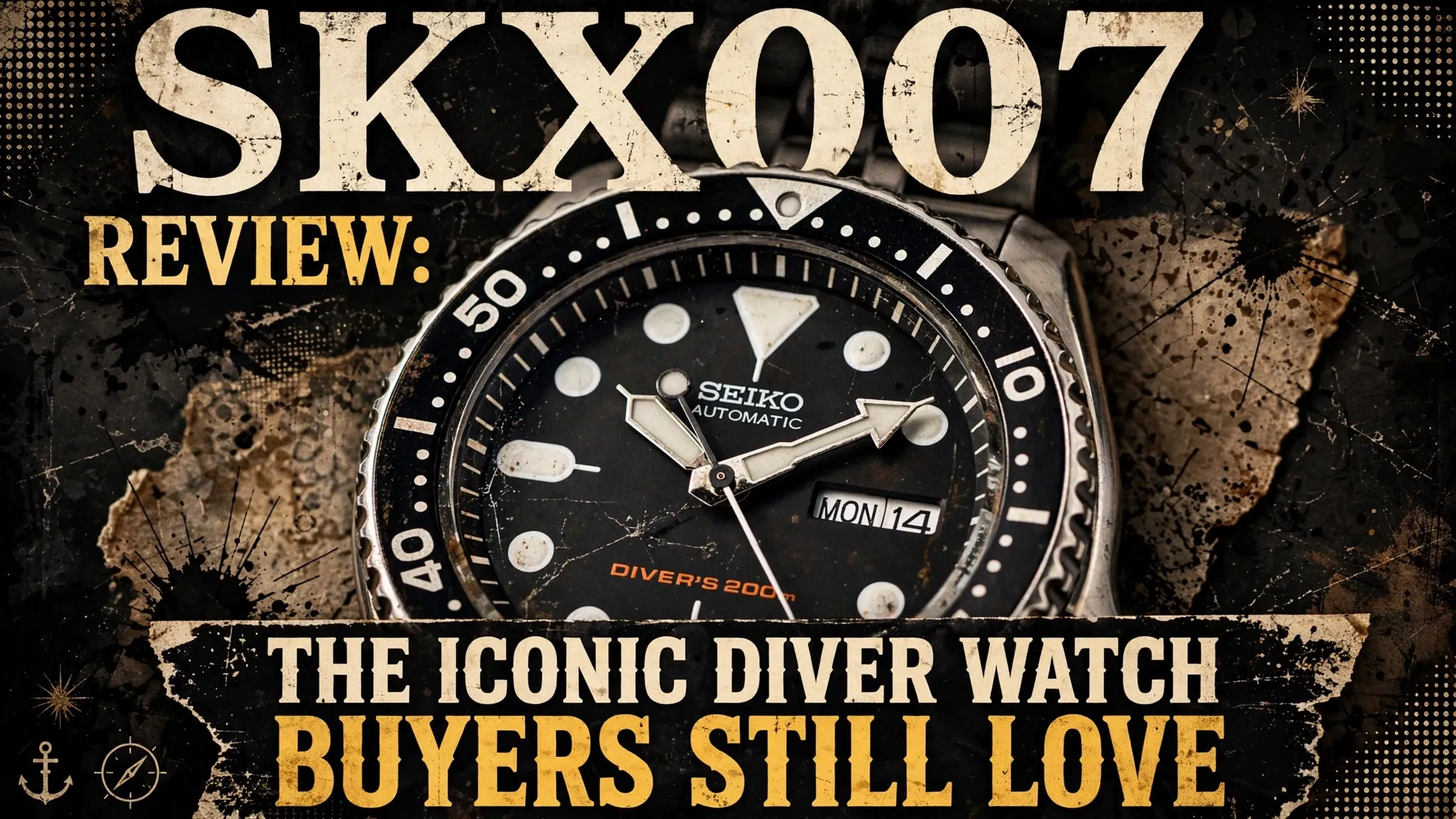
The dial of the Seiko SKX007 is a masterpiece of simplicity, featuring a deep matte black finish that creates a bold background. This matte texture helps reduce glare, making it easier to read the time in bright sunlight, while the white indices create a high-contrast look for superb legibility. A key feature of the dial is the day and date window, adding practicality for daily use by showing both the day of the week and the date.
The hands and markers are coated with Seiko’s proprietary LumiBrite lume, which is not just ordinary glow-in-the-dark paint. Users report that the LumiBrite is bright and lasts for hours after being exposed to light, ensuring readability in dark movie theaters or during night dives. Whether you are in low light or total darkness, the Seiko SKX007 remains easy to read thanks to this high-quality illumination.
The Bezel Action
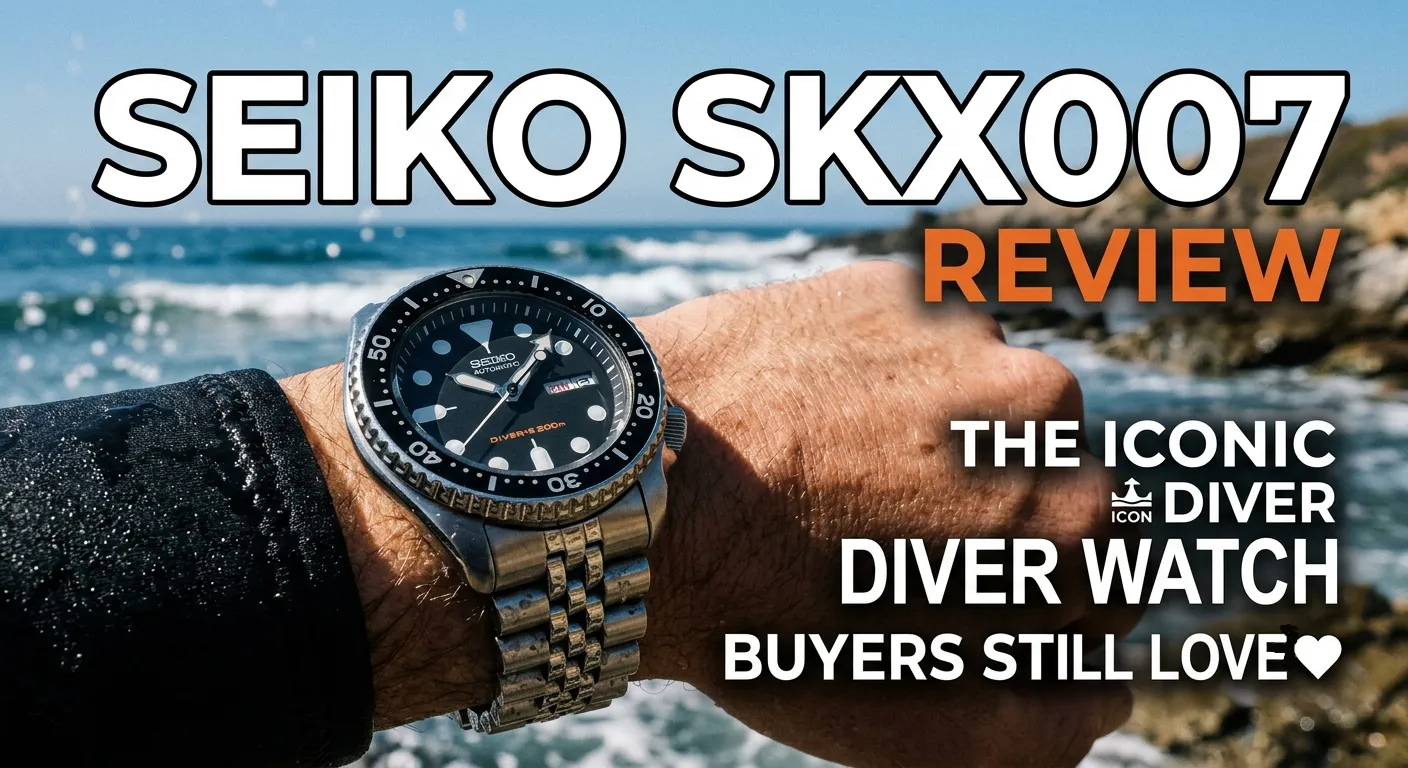
For a dive watch, the bezel is one of the most important parts, serving as the ring around the glass that you turn to track elapsed time. The Seiko SKX007 features a unidirectional bezel, meaning it only turns counter-clockwise, a critical safety feature that prevents dangerous miscalculations underwater if accidentally bumped. The action of the bezel is often described as “unbelievable” and “instrument-like” by owners, offering a heavy and tactile feel.
It has 120 clicks, which means it moves in very small, precise increments, allowing for accurate timing of dives or other activities. The insert on the bezel is flat and black with white markers, providing a clean and classic look that complements the matte black dial. Many users praise this precise and satisfying action, noting that it feels far more expensive than the watch’s price point suggests.
The Engine Inside: 7S26 Movement
Inside the Seiko SKX007 beats the 7S26 automatic movement, an in-house caliber made by Seiko that is known for being incredibly reliable. An automatic movement means the watch powers itself using the motion of your wrist, so you do not need to change a battery, making it a true “set it and forget it” timepiece. This movement has been the heart of the SKX line for decades, proving its durability in real-world conditions.
Power Reserve and Features
The 7S26 movement has a power reserve of approximately 40 to 41 hours, meaning if you take the watch off on Friday evening, it should still be running when you put it back on Monday morning. However, there are two features missing from this movement that are common in modern watches: hacking and hand-winding. “Hacking” means the second hand stops when you pull the crown out to set the time, a feature the 7S26 lacks, requiring you to sync the time while the hand is still moving.
Additionally, you cannot wind the watch with your fingers to start it; you have to shake it or wear it to get it going. While some enthusiasts miss these features, many owners find that the reliability of the 7S26 makes up for it. As long as the watch is worn regularly, it keeps running without issues, embodying the robust nature of Seiko’s entry-level automatics.
Accuracy Expectations
When it comes to accuracy, it is important to have realistic expectations, as the factory specification for the 7S26 movement is an accuracy range of -20 to +40 seconds per day. This is a wide range, and on paper, it might seem poor compared to expensive Swiss chronometers, but real-world performance is often much better. Many owners report that their Seiko SKX007 runs within -6 to +13 seconds per day, which is quite good for a mechanical watch in this price range.
| Metric | Specification | Real-World Average |
|---|---|---|
| Daily Accuracy | -20 to +40 sec/day | -10 to +20 sec/day |
| Power Reserve | 41 hours | ~40 hours |
| Jewels | 21 | 21 |
| Hacking | No | No |
| Hand-Winding | No | No |
Some users even report accuracy as tight as +5 seconds per day when the watch is fully wound, showing that individual units can perform exceptionally well. While it is not perfect, the consensus is that the movement is robust and reliable, capable of running within its stated accuracy for years without needing major maintenance. Typical real-world accuracy often settles around 10 to 20 seconds per day after a break-in period, which is adequate for daily wear.
Water Resistance and ISO 6425 Certification
One of the strongest selling points of the Seiko SKX007 is its water resistance, rated for 200 meters (200m) and compliant with ISO 6425 standards. This is not just a marketing term; ISO 6425 is a strict international standard for dive watches that ensures the timepiece can survive harsh underwater conditions. Being certified means the watch has passed a series of rigorous tests that go far beyond simple water pressure checks.
What ISO 6425 Means
Being ISO 6425 certified means the watch has passed tests ensuring it can handle the demands of actual diving, not just swimming. According to the standards, the watch undergoes water resistance testing at 125% of its rated pressure for two hours to ensure no leaks occur. It also faces a condensation test where it is heated to 40-45°C and then a drop of water is placed on the glass to check for fogging inside.
The testing protocol includes thermal shock cycles, moving the watch between hot (40°C) and cold (5°C) water to ensure seals do not fail under temperature changes. Furthermore, the watch is immersed in a salt water solution (30g/L NaCl) for 24 hours to test for corrosion, a critical test for any dive gear. Shock resistance is also verified, often involving a hammer strike test, along with magnetic resistance testing to ensure the movement keeps time accurately near magnetic sources.
| ISO 6425 Test | Requirement |
|---|---|
| Water Resistance | 200m minimum (tested at 125%) |
| Condensation | No fogging after heat/water test |
| Thermal Shock | 40°C to 5°C cycles |
| Salt Water | 30g/L NaCl for 24 hours |
| Shock Resistance | Impact test (e.g., 3kg hammer) |
| Magnetic Resistance | 4800 A/m field exposure |
| Legibility | Visible in total darkness |
The Seiko SKX007 has passed these tests, making it a true tool watch ready for actual diving. It features a screw-down crown at the 4 o’clock position, which helps seal the case against water entry and reduces wrist irritation. The caseback is also solid and screw-down, adding to its ruggedness and ensuring the internal components remain protected.


Crystal Durability
There is some discussion in the watch community about the crystal material on the Seiko SKX007, with some sources stating it features a sapphire crystal with anti-reflective coating. However, technical market data and specification sheets often list the crystal as Hardlex mineral glass, which is Seiko’s own brand of hardened mineral crystal. Hardlex is known for being very tough and resistant to shattering, though it is slightly more prone to scratches than sapphire.
Regardless of the specific material name, the crystal is designed to be durable and meets the OEM water resistance ratings. The anti-reflective properties help ensure you can read the dial clearly underwater or in bright sun, maintaining the watch’s legibility in all conditions. This durability ensures that the watch can take a beating without compromising its ability to tell time or keep water out.
Comfort and Strap Options
How a watch feels on your wrist is just as important as how it looks, and the Seiko SKX007 originally came with two main options: a stainless steel bracelet or a rubber strap. The choice of strap can significantly impact the wearing experience, with each option having its own set of pros and cons that buyers should consider.
The Jubilee Bracelet
The stainless steel option is a “Jubilee” style bracelet, which has five links and offers a classic look that matches the vintage vibe of the watch. While it is functional, it is often criticized by owners who mention that the stock Jubilee bracelet feels cheap and flimsy. The links can feel hollow, and the clasp lacks the refinement found on more expensive watches, which can be a letdown for some buyers.
Despite this, some users find it comfortable for daily wear, even if it lacks a premium feel. The bracelet does the job of holding the watch securely, but many enthusiasts recommend upgrading to an aftermarket option for a better experience. The perceived lack of quality in the stock bracelet is one of the few common complaints about an otherwise highly praised timepiece.
The Rubber Strap
For many fans, the rubber strap (often found on the SKX007K model) is the superior choice, offering durability and comfort that the steel bracelet lacks. It is water-resistant and comfortable, especially in hot weather or when swimming, avoiding the “cheap” feel of the steel bracelet. The rubber strap matches the sporty nature of the watch perfectly, making it an ideal choice for active use.
Because of the criticism of the steel bracelet, many buyers recommend choosing the rubber version or planning to swap the bracelet for an aftermarket option. The lug width of the Seiko SKX007 is 22mm, which is a very common size, meaning there are thousands of aftermarket straps and bracelets available. From nylon NATO straps to leather bands, the 22mm width gives you endless possibilities to make the watch your own.
Price and Value in 2026
If you are looking to buy a Seiko SKX007 in July 2026, you need to know the current market prices, as the watch was discontinued in 2019. You will mostly be buying it on the used or secondary market, where prices have fluctuated based on demand and condition. Understanding the current value helps ensure you pay a fair price for this iconic piece.
Current Market Estimates
As of mid-2026, the price for a used Seiko SKX007 typically ranges between $300 and $600, with market data from July 2026 estimating the average pre-owned price at around $344. In the UK, the market price is approximately £255, with a range between £164 and $346. Prices can vary significantly based on the condition of the watch and its specific production year, with some listings reaching higher depending on rarity.
| Condition/Type | Estimated Price (USD) | Notes |
|---|---|---|
| Average Used | $300 – $400 | Standard market rate |
| Mint/Box & Papers | $450 – $600 | Excellent condition |
| J-Serial (Japan) | $800 – $1,000+ | High collector demand |
| Rare Variants | $1,000+ | Specific serials/years |
For example, a watch listed on a major marketplace in 2026 was priced at $581 (C$779) for a 2015 model in good condition. Rare models, such as those with “J-serial” numbers indicating Japanese assembly, can command prices exceeding $1,000 due to their perceived higher quality among collectors. These prices reflect the watch’s status as a modern classic rather than just a used tool watch.
Is It Still a Good Value?
Even at $300 to $600, the Seiko SKX007 is considered a strong value proposition, especially when compared to new dive watches from other brands. When it launched in 1996, the MSRP was around $430, and adjusted for inflation, the current used prices are quite reasonable for a watch with ISO 6425 certification. Compared to new dive watches that often start at $500 or more without the same level of heritage or certification, the SKX007 remains a “value king”.
It offers an in-house movement, proven dive credentials, and long-term value retention that few other watches in this bracket can match. The fact that prices have held steady or even increased for certain models shows that the market recognizes its worth. For the money, you get a piece of horological history that is built to last and looks good doing it.
Seiko SKX007 vs. SKX009 and SKX013
You might also come across the Seiko SKX009 or the SKX013 while shopping, and it is helpful to know how they compare to the Seiko SKX007. These models share the same DNA but offer different aesthetics and sizes to suit various preferences.
SKX007 vs. SKX009
The Seiko SKX007 and SKX009 are functionally identical, sharing the same 42.5mm case, the same 7S26 movement, and the same 200m water resistance. The only difference is aesthetic: the SKX007 has a classic black dial and a black bezel, giving it an “all-black” stealthy look. The SKX009, on the other hand, features a navy blue dial and a “Pepsi” bezel (red and blue), offering a more colorful and vibrant appearance.
If you prefer blue and red colors, the SKX009 is the choice; if you like the classic black diver look, the SKX007 is the one. Both watches wear the same way and offer the same performance, so the decision comes down entirely to personal style preference. Collectors often own both to have options for different outfits or moods.
SKX007 vs. SKX013
The SKX013 is a smaller version of the watch, designed for those who find the 42.5mm case too large. It has a lug-to-lug of 44mm compared to the 46mm of the SKX007, making it a better fit for smaller wrists. It also has narrower lugs of 20mm, compared to the 22mm of the SKX007, which limits strap options slightly but contributes to a more compact feel.
| Feature | SKX007 / SKX009 | SKX013 |
|---|---|---|
| Case Diameter | 42.5 mm | ~38 mm |
| Lug-to-Lug | 46 mm | 44 mm |
| Lug Width | 22 mm | 20 mm |
| Weight | 135 g | 124 g |
The SKX013 is lighter, weighing 124g, while the SKX007 weighs 135g, a difference that can be felt on the wrist over long periods. If you have very small wrists, the SKX013 might fit better, but the SKX007 is generally suitable for most people. Despite the size difference, the SKX013 retains the same 200m water resistance and 7S26 movement, ensuring it is just as capable a diver.
Common Questions and Maintenance
Owning a Seiko SKX007 comes with a few common questions regarding warranty, servicing, and long-term care. Since the watch is discontinued and often sold on the grey market, getting a warranty can be tricky, but understanding the options helps protect your investment.
Warranty and Servicing
Official Seiko warranties typically cover defects in material or workmanship for 3 years from the original retail purchase. However, because the SKX007 is not officially available in some regions like the USA anymore, buyers often rely on third-party vendor warranties. It is important to check with the seller about warranty coverage before buying, as grey market watches may not have an official Seiko warranty card.
The movement is known for being robust, and as long as the watch is not abused, it can run for years without needing service. However, like any mechanical device, it benefits from occasional regulation, where a watchmaker adjusts the movement to improve accuracy. Some owners find that having the movement regulated can improve accuracy to within ±8 seconds per day, making it perform even better than factory specs.
Water Resistance Maintenance
While the watch is rated for 200m, it is important to remember that water resistance is not permanent and requires maintenance. Gaskets and seals can degrade over time due to exposure to soap, chlorine, and temperature changes, so it is recommended to have the water resistance checked periodically. This is especially important if you plan to dive with it, as a failed seal can lead to costly damage.
The screw-down crown must be fully tightened to maintain the seal, and users should avoid operating the crown underwater. Regular pressure testing by a professional can ensure that the Seiko SKX007 remains safe for water activities. Taking these simple precautions ensures that your dive watch remains a reliable companion for years to come.
My Final View
The Seiko SKX007 is more than just a watch; it is a piece of horological history that has earned its place in the hearts of watch lovers worldwide. From its launch in 1996 to its discontinuation in 2019, it set the standard for what an affordable dive watch should be, offering features that rival much more expensive timepieces. It offers a rugged stainless steel case, a highly legible matte black dial with long-lasting LumiBrite, and a satisfying 120-click bezel that feels professional and precise.
Inside, the 7S26 movement may lack modern luxuries like hacking and hand-winding, but it makes up for it with legendary reliability and decent real-world accuracy. Its ISO 6425 certification proves that it is a true dive watch, capable of withstanding pressure, salt water, and shocks, making it a genuine tool watch. In 2026, with used prices ranging from $300 to $600, the Seiko SKX007 remains an incredible value, offering heritage and performance that few competitors can match.
Whether you choose the classic black SKX007 or the colorful SKX009, you are getting a watch that has earned the love of buyers globally. It is a timepiece that looks good on a dive boat, in the office, or at a weekend barbecue, transitioning seamlessly between environments. For anyone looking for their first serious dive watch, or even their tenth, the Seiko SKX007 is a choice you will not regret, standing as a testament to Seiko’s ability to create timeless, reliable, and affordable watches.