

When it comes to choosing between Rado vs Rolex vs Omega, the best brand for you depends on what you value most: durability, prestige, innovation, or price. In 2026, all three Swiss watchmakers offer a 5-year international warranty, but their strengths are very different.
- Rado stands out for its lightweight, scratch-resistant high-tech ceramic—ideal for daily wear. With prices from $1,000 to $5,000, it offers affordable luxury without sacrificing quality.
- Rolex remains the king of prestige and resale value, with models like the Submariner often selling above retail. However, it starts at $7,000+ and uses steel that shows wear over time.
- Omega leads in technical performance, with Master Chronometer movements resistant to 15,000 gauss of magnetism—far beyond Rolex’s 90 gauss.
While Rolex wins on status and Omega on tech, Rado delivers unmatched durability and comfort for real-world use. If you want a watch that looks new for years and fits a modern lifestyle, Rado is the most practical luxury choice in the Rado vs Rolex vs Omega debate.
Price & Value: What Are You Really Paying For?
The biggest difference in the Rado vs Rolex vs Omega face-off is price. This isn’t just about how much you spend—it’s about what you get in return.
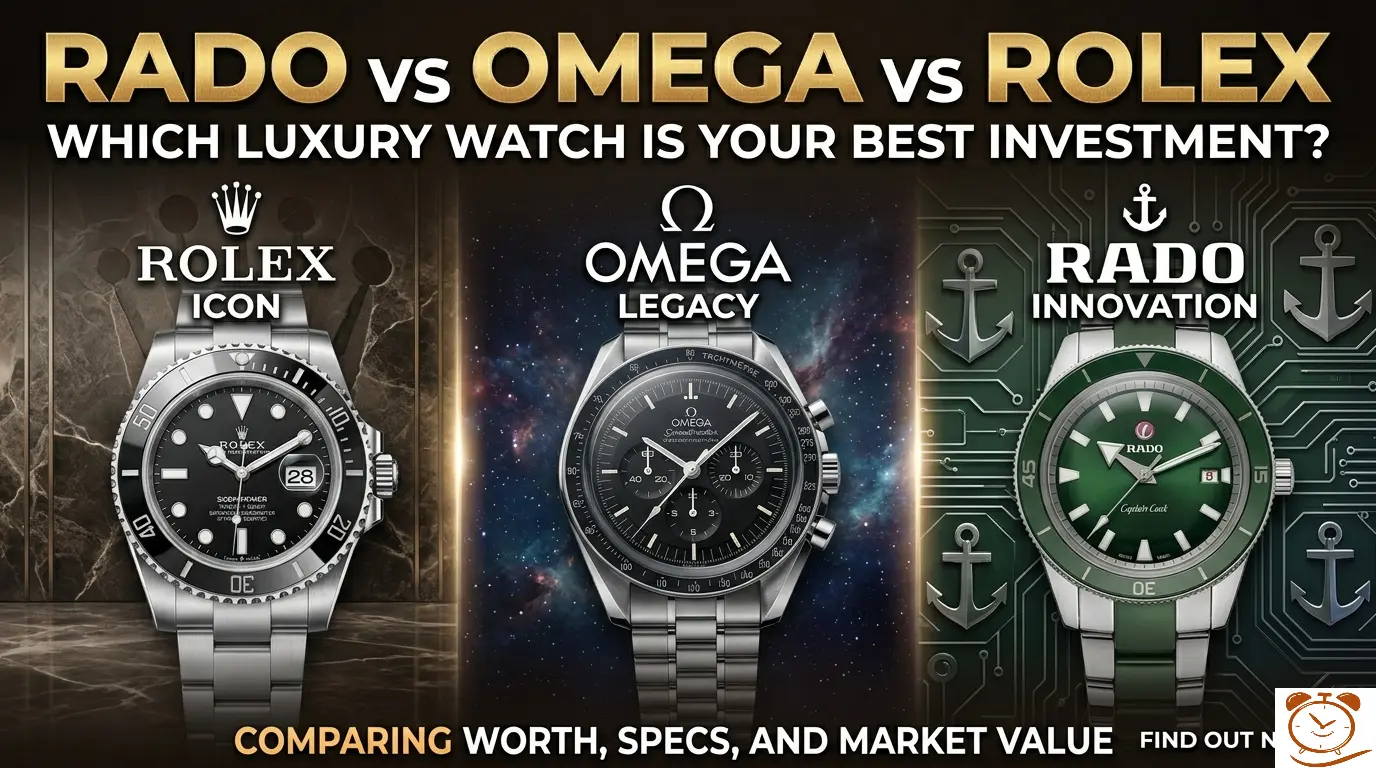
Rado: Affordable Luxury with High-Tech Materials
Rado sits in the “accessible luxury” category—high quality without the sky-high price. Most models range from $1,000 to $5,000 (₹80,000 to ₹5,30,000 in India), making it perfect for first-time buyers or professionals who want a Swiss-made watch that lasts.
You’re not just buying a brand name—you’re getting real innovation in materials and design.
| Model | Price Range (USD) | Price Range (INR) | Key Features |
|---|---|---|---|
| Rado D-Star | ~$1,900 | ₹1,50,000 – ₹1,80,000 | Quartz movement, 200m water resistance |
| Rado HyperChrome Chronograph | ~$4,600 | ₹3,00,000 – ₹4,20,000 | Stainless steel & ceramic, chronograph function |
| Rado Captain Cook | ~$3,000–$5,300 | ₹2,20,000 – ₹5,30,000 | Automatic movement, 300m water resistance, retro design |
| Rado True Square | ~$2,500–$3,700 | ₹1,80,000 – ₹3,71,200 | Square ceramic case, minimalist design |
Rado’s value lies in its long-term durability. While it doesn’t hold resale value like Rolex, it saves you money on maintenance and polishing because it resists scratches naturally.
Rolex: High Entry Price, Strong Resale Value
Rolex is in a league of its own when it comes to price and prestige. Even the most basic models start around $7,000, and popular ones like the Submariner or Daytona can cost $10,000 to $32,000 or more.
But here’s the twist: many Rolex watches hold or increase in value. A pre-owned Submariner might sell for more than its original price. This makes Rolex not just a watch, but a potential investment.
| Model | Retail Price (USD) | Pre-Owned Market (USD) | Notes |
|---|---|---|---|
| Rolex Datejust 41 | ~$7,500 | $7,000 – $9,000 | Classic design, everyday wear |
| Rolex Submariner No-Date | ~$10,650 | $10,000 – $11,500 | High demand, often above retail |
| Rolex Daytona Steel | ~$14,500 | $27,000 – $32,000 | Collector favorite, limited supply |
You’re paying for the brand, the legacy, and the status. But if you plan to wear it daily, be ready for scratches—steel needs care.
Omega: Mid-Range Pricing with High-End Tech
Omega sits between Rado and Rolex in price, but leans toward the higher end. In 2026, new models reflect both heritage and innovation.
| Model | Price (USD) | Price (EUR/CHF) | Key Features |
|---|---|---|---|
| Omega Seamaster Diver 300M Milano Cortina | ~$10,500 | CHF 8,200 | Grade 5 titanium, Master Chronometer |
| Omega Speedmaster Moonwatch (Steel) | ~$11,000 | EUR 10,200 | Calibre 3861, 50h power reserve |
| Omega Speedmaster Moonwatch (Moonshine Gold) | ~$48,600 | EUR 48,600 | Limited edition, luxury finish |
| Omega Constellation Platinum-Gold | $57,800 | — | High-end materials, rare model |
While Omega’s entry point is higher than Rado’s, you get space-proven technology and a strong legacy. It’s not as flashy as Rolex, but it’s respected by watch lovers and astronauts alike.
Materials & Durability: Who Builds the Toughest Watch?
In the Rado vs Rolex vs Omega battle, durability is where Rado truly shines.
Rado’s Ceramic Advantage
Rado calls itself “The Master of Materials”—and for good reason. It’s a pioneer in using high-tech ceramic in watches.
This isn’t the same as cheap ceramic. Rado’s monobloc ceramic cases are:
- Harder than steel
- Lighter than titanium
- Hypoallergenic and scratch-resistant
Unlike metal watches that scratch and dull over time, a Rado can look brand new for years. This makes it perfect for people with active jobs, kids, or busy lifestyles.
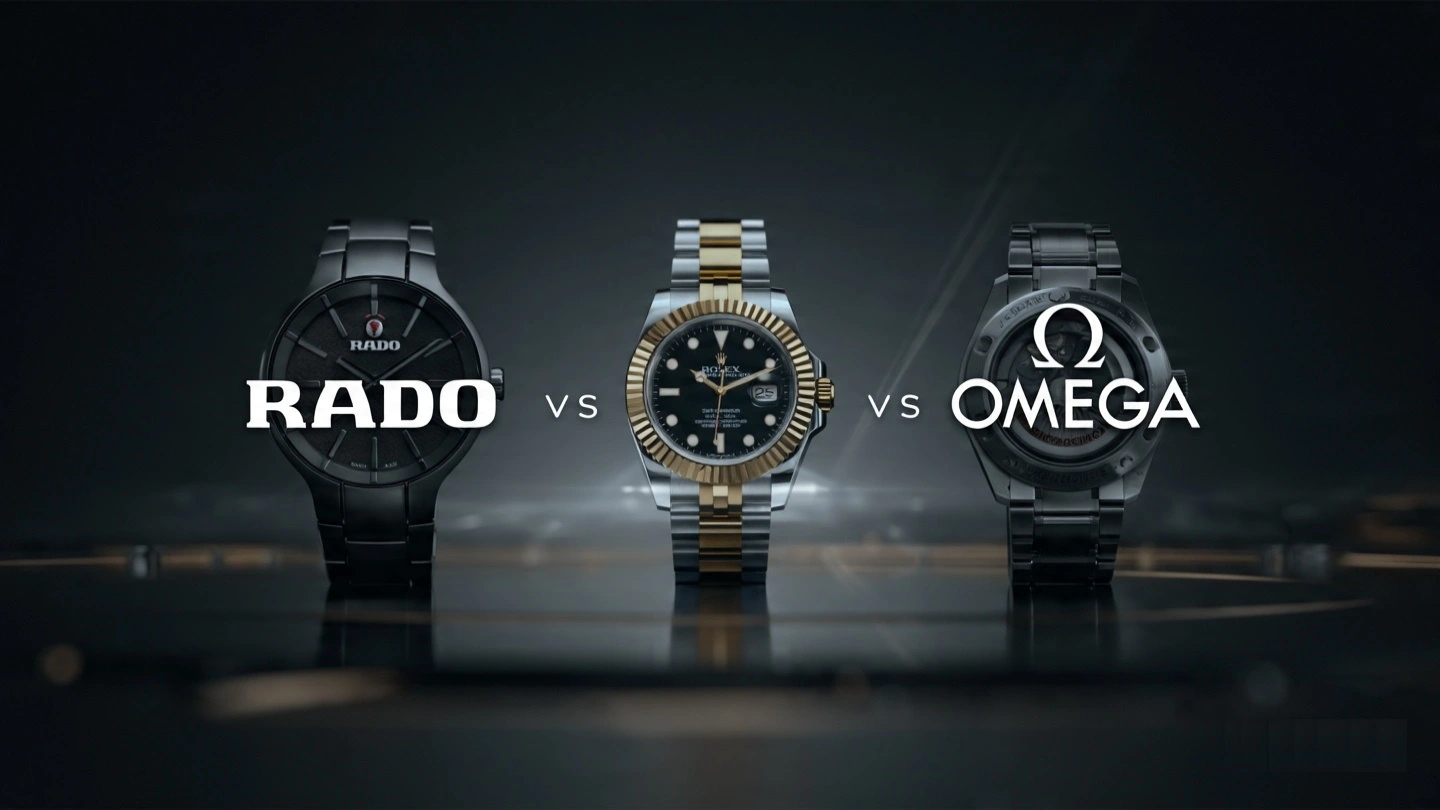
Models like the DiaStar Original and True Square are built entirely from ceramic. Even the bracelets resist scratches that would ruin a steel watch.
And because ceramic is lightweight, it’s comfortable for all-day wear—no heavy wrist drag.
Rolex: Tough, But Shows Wear
Rolex uses 904L stainless steel, which is more corrosion-resistant than regular steel. The Oyster case is waterproof to 100 meters and built like a tank.
But steel will scratch. Over time, even a well-cared-for Rolex shows wear on the case and bracelet. Polishing can fix it, but too much polishing wears down the metal and hurts resale value.
So while Rolex is tough, it doesn’t stay “like new” without effort. If you want a watch that ages gracefully, this is fine. But if you want low-maintenance durability, Rado wins.
Omega: Titanium and Ceramic Options
Omega uses Grade 5 titanium in models like the Seamaster Diver 300M Milano Cortina. Titanium is strong, lightweight, and corrosion-resistant—great for comfort and long-term wear.
Omega also uses black zirconium oxide ceramic in the Speedmaster Dark Side of the Moon. This gives it a sleek, modern look and excellent scratch resistance.
But unlike Rado, Omega doesn’t use ceramic across its entire lineup. It’s reserved for high-end models, making it less accessible.
Still, Omega balances material innovation with classic design, appealing to those who want both style and strength.
Movement & Performance: Accuracy and Innovation
The movement is the heart of the watch. It affects accuracy, power, and resistance to real-world challenges.
Omega: Leader in Anti-Magnetic Technology
Omega’s biggest edge is its Master Chronometer certification, tested by METAS (Swiss Federal Institute of Metrology).
This means the entire watch—not just the movement—is resistant to:
- Magnetic fields up to 15,000 gauss
- Water pressure
- Daily wear and tear
For context, a typical MRI machine is around 1,500 to 3,000 gauss. Rolex watches are tested to 90 gauss—good, but far behind Omega.
Omega’s Calibre 8806 and 8800 movements offer a 55-hour power reserve. The Speedmaster Moonwatch uses Calibre 3861 with a 50-hour reserve.
This level of tech makes Omega ideal for pilots, engineers, and anyone in high-magnetic environments.
| Omega Movement | Power Reserve | Magnetic Resistance | Certified By |
|---|---|---|---|
| Calibre 8806 | 55 hours | 15,000 gauss | METAS |
| Calibre 8800 | 55 hours | 15,000 gauss | METAS |
| Calibre 3861 | 50 hours | 15,000 gauss | METAS |
Rolex: Reliable and Long-Lasting
Rolex movements are known for bulletproof reliability. They’re not the most advanced, but they’re built to last decades.
The Oyster case protects the movement from water, dust, and shocks. Many Rolex models have a 70-hour power reserve, so it stays running over weekends.
Rolex doesn’t publish magnetic resistance specs for all models, but its Parachrom hairspring offers good protection—just not at Omega’s level.
Rolex recommends servicing every 10 years to keep the watch accurate. With proper care, a Rolex can run for generations.
But remember: Rolex tests the movement, not the full watch, for magnetism. Omega’s full-watch testing gives it an edge in real-world performance.
Rado: Quartz Focus, Less Mechanical Appeal
Most Rado watches use quartz movements, especially in the HyperChrome and D-Star lines.
Quartz is:
- Extremely accurate
- Low maintenance (battery change every 2–3 years)
- Affordable
But it lacks the mechanical charm that watch lovers admire in Rolex and Omega. No ticking second hand, no intricate gears visible through a caseback.
Rado does offer some automatic models, like the Centrix Automatic (₹1,10,000 – ₹1,50,000), but the brand’s focus is on design and materials, not horological complexity.
If you want a watch that just works with zero fuss, quartz is perfect. But if you love the art of watchmaking, you might miss the mechanical soul.
Brand Prestige & Image: What Does the Watch Say About You?
A luxury watch isn’t just a timepiece—it’s a statement.
Rolex: The Ultimate Status Symbol
Wearing a Rolex tells the world you’ve “made it.” It’s the most recognized luxury watch brand on the planet.
- Worn by CEOs, athletes, and celebrities
- Often has waiting lists
- Holds or increases in value
Rolex is about tradition, success, and legacy. If you want a watch that turns heads and opens doors, Rolex is hard to beat.
But it’s also common. In some circles, it’s seen as “safe” or even flashy. If you want to stand out quietly, Rolex might be too loud.
Omega: Heritage with a Modern Edge
Omega has deep roots in history:
- First watch on the moon (Speedmaster)
- Official timekeeper of the Olympics
- James Bond’s watch of choice since 1995
It appeals to people who appreciate achievement and innovation. It’s respected but not as flashy as Rolex.
Omega fans are often tech-savvy, adventurous, or nostalgic. They like knowing their watch has been to space or timed Olympic gold.
It’s a great choice if you want credibility without bragging.
Rado: The Smart, Modern Choice
Rado doesn’t have the same global fame as Rolex or Omega, but it’s growing fast—especially among professionals.
It’s known for:
- Minimalist, modern designs
- Innovative materials
- Comfort and durability
Rado is for people who value function over flash. It’s understated, elegant, and built for real life.
If you want a Swiss-made luxury watch that won’t scream for attention, Rado is a smart, stylish pick.
Warranty & After-Sales Service: Peace of Mind
All three brands now offer a 5-year international warranty—a big win for buyers.
Rado’s 5-Year Warranty
Rado offers a 5-year warranty on watches purchased after November 1, 2023. It covers:
- Manufacturing defects
- Material flaws
But it does not cover:
- Normal wear and tear
- Battery life
- Damage from misuse
The warranty is valid worldwide and requires a valid dealer certificate. Official dealers like Zimson Watches in India provide full support.
Rado’s warranty is solid, but it’s not transferable—only the original buyer is covered.
Rolex’s Trusted Service Network
Every new Rolex comes with a 5-year warranty covering defects. The warranty:
- Is transferable to new owners
- Requires purchase from an official Rolex retailer
- Is voided by unauthorized modifications
Rolex also recommends servicing every 10 years to maintain performance. Their service centers are global and highly trusted.
This makes Rolex not just a watch, but a long-term relationship with a brand that stands behind its products.
Omega: Strong Support, But Less Public Info
Omega’s warranty terms aren’t as clearly detailed in public sources. However, its Master Chronometer certification includes rigorous long-term testing.
With a global service network and strong reputation, Omega owners can expect reliable support.
While not as transparent as Rolex or Rado, Omega’s technical excellence suggests solid after-sales performance.
Who Should Buy What in 2026?
Let’s make it simple. Here’s who should choose which brand.
Choose Rado If You Want:
- A scratch-resistant, lightweight watch for daily wear
- Modern design with innovative materials
- A Swiss-made luxury watch under $5,000
- Low maintenance (quartz models)
Best for: Professionals, first-time buyers, people with active lifestyles.
Choose Rolex If You Want:
- A status symbol with strong resale value
- A timeless design that never goes out of style
- A watch that may increase in value
Best for: Collectors, investors, those who value prestige.
Choose Omega If You Want:
- High-tech performance and anti-magnetic protection
- A mix of heritage and modern innovation
- A watch with space and sports legacy
Best for: Tech lovers, history buffs, Bond fans.
Rado vs Rolex vs Omega : Which Brand Is Worth Buying?
So, in the Rado vs Rolex vs Omega showdown—which brand is actually worth buying in 2026?
There’s no single winner. But here’s the truth:
- Rado wins for durability, comfort, and value. If you want a watch that looks new for years and fits a modern lifestyle, it’s the smartest pick.
- Rolex wins for prestige and investment. If you want a watch that holds or grows in value and makes a statement, Rolex is still king.
- Omega wins for technology and heritage. If you love space history and cutting-edge engineering, Omega delivers.
Luxury watch trends in 2026 focus on durability, comfort, and real-world performance—areas where Rado excels.
But if you care more about legacy and recognition, Rolex and Omega still lead.
So, which brand is worth buying?
- If you want practical luxury, go with Rado.
- If you want status and value, go with Rolex.
- If you want tech and tradition, go with Omega.
The beauty of the Rado vs Rolex vs Omega debate isn’t about who wins—it’s about which watch fits your life. And that’s a choice only you can make.