
If you are looking for a fitness tracker that does more than just count steps, the Fitbit Charge 6 is likely on your radar. As we move through August 2026, this device remains a top choice for people who want serious health tracking without the bulk of a smartwatch. But with new gadgets arriving every year, you might be asking: is the Fitbit Charge 6 still the right pick? Is it worth your money today?
The short answer is yes. The Fitbit Charge 6 offers the best heart rate accuracy in its class, seamless Google app integration (Maps, Wallet, Music), and a battery life of up to 7 days. While it has some mixed GPS performance depending on how you wear it, the current price drops make it an incredible value. Whether you are a runner, a gym-goer, or just want to sleep better, this guide breaks down everything you need to know to decide if this tracker is for you.
Current Price and Value in 2026
One of the first things you want to know before buying any gadget is the price, and the Fitbit Charge 6 has become much more affordable since its launch.
Price in the United States
When the Fitbit Charge 6 first launched, the price was set at $159.95. However, as of August 2026, you can find it for significantly less. Retailers like Amazon often run deals that drop the price to around $120, and some limited-time offers have even seen it dip near $75.99. Currently, the average price on Amazon sits around $133.10, making it a very strong competitor in the mid-range market.
Price in India
For readers in India, the pricing is also competitive. As of today, August 15, 2026, the Fitbit Charge 6 is listed on Amazon India for ₹13,649. Other major retailers like Myntra and GetGear have similar pricing, ranging between ₹13,499 and ₹13,649. This places it in the premium fitness band category in India, competing with high-end models from Xiaomi and Samsung but offering unique Google features they lack.
What Is in the Box?
When you buy the Fitbit Charge 6, you get more than just the tracker. The package includes the device, a charging cable, and both small and large bands so you can get the perfect fit immediately. Most importantly, your purchase includes a free trial for Google Health Premium. While some listings mention a 3-month trial, official Google sources confirm that eligible purchases can include a 6-month membership, unlocking advanced health insights we will discuss later.
Fitbit Charge 6, Obsidian/Black Aluminum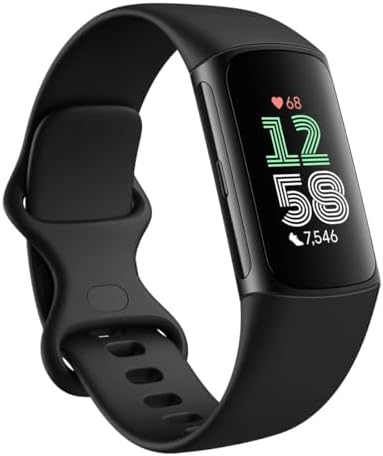
Design and Display Quality
The design of a fitness tracker matters because you will wear it all day and night, and the Fitbit Charge 6 improves on previous models with a sleeker, more usable build.
The Display Quality
The screen on the Fitbit Charge 6 is a standout feature. It uses a 1.04-inch AMOLED display, known for deep blacks and bright colors that make stats easy to read even in sunlight. The resolution is 326 pixels per inch (ppi), ensuring text and icons look sharp. With brightness reaching up to 450 nits, you can clearly see your data on sunny days. The screen is protected by Gorilla Glass, helping prevent scratches from daily wear and tear.
Comfort and Build Materials
Fitbit focused heavily on comfort. The case is made from recycled aluminum, making it lightweight yet durable. The band is soft silicone, great for workouts as it handles sweat well, and the buckle is also aluminum for a premium feel. The dimensions are compact at 36.73 x 23.09 x 11.2mm, so it never gets in the way while sleeping or typing. It is also water-resistant up to 50 meters, meaning you can wear it in the pool or shower without worry.
The New Haptic Button
A major improvement in the Fitbit Charge 6 is the addition of a haptic side button. Previous models relied only on touch, which was hard to use during sweaty workouts. This new button gives a small vibration when pressed, confirming your input. Reviewers from The New York Times Wirecutter and Lifehacker praise this change, noting it makes navigation much easier when your hands are wet or moving fast.
Key Features: Google Integration
The Fitbit Charge 6 is not just a fitness tracker; it is your gateway to the Google ecosystem, setting it apart from almost every other fitness band.
Google Apps on Your Wrist
The integration of Google services is the main selling point of the Fitbit Charge 6.
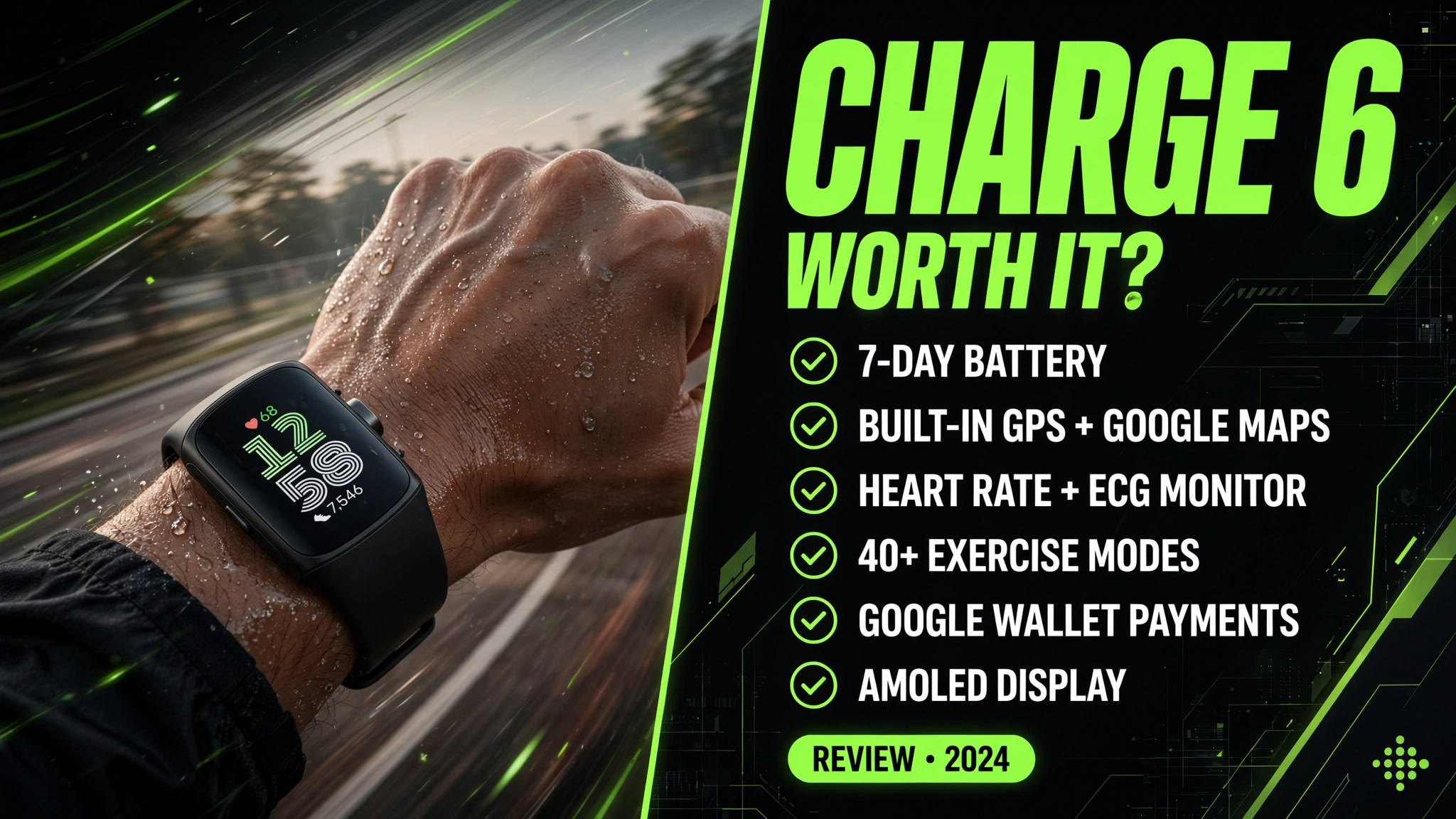
- Google Maps: You get turn-by-turn navigation directly on your wrist. This is perfect for runners or cyclists exploring new routes without carrying a phone. Note that maps require a phone connection and server communication to work.
- Google Wallet: You can leave your wallet at home. The device supports NFC payments through Google Wallet, letting you tap your wrist to pay for coffee or groceries at contactless terminals.
- YouTube Music: If you subscribe to YouTube Music, you can control playback (play, pause, skip, volume) from the tracker. However, the device does not store music offline, and it does not support Spotify. You need your phone nearby to stream.
Comprehensive Workout Modes
Whether you love yoga, running, or weightlifting, the Fitbit Charge 6 has a mode for you. It supports over 40 different workout modes, double the number found on the Charge 5. This includes specific modes for HIIT and strength training. The device also automatically recognizes when you start exercising, so you do not always have to manually start a timer.
Health Sensors and Accuracy
When it comes to health tracking, the Fitbit Charge 6 is packed with sensors designed to give you accurate data about your body.
Heart Rate Accuracy
Fitbit claims the heart rate accuracy on the Fitbit Charge 6 is up to 60% more accurate than the Charge 5, thanks to new machine learning algorithms. Real-world tests support this. During high-intensity interval training (HIIT), the device showed a 92% correlation with chest strap monitors, which are the gold standard for accuracy. Business Insider also noted that heart rate tracking remains reliable even during tough interval training.
Advanced Health Sensors
The device includes a wide range of sensors for comprehensive health monitoring:
- ECG Sensor: Checks for irregular heart rhythms that might suggest atrial fibrillation.
- EDA Sensor: Measures electrodermal activity to help you manage stress through relaxation exercises.
- SpO2 Sensor: Tracks blood oxygen levels while you sleep.
- PulseWave Technology: Helps detect irregular heart rhythms, adding an extra layer of safety for heart health.
Sleep Tracking
Sleep tracking is another area where Fitbit shines. Reviews have rated the sleep tracking capabilities a 9.5 out of 10, praising its detailed detection of REM sleep stages and its ability to provide actionable insights on how to rest better.
Battery Life and GPS Performance
Performance is where the rubber meets the road. A fitness tracker is only useful if it lasts long enough to track your day and if the data it collects is accurate.
Battery Life: How Long Does It Last?
Battery life is often a dealbreaker, but the Fitbit Charge 6 delivers solid performance. Fitbit advertises a battery life of up to 7 days on a single charge. In real-world testing, users report achieving around 6 days and 14 hours, which is very close to the claim. However, using the built-in GPS frequently drops the battery life to about 5 days, and heavy GPS users might see around 3.1 days. Charging takes about 2 hours from empty to full.
The GPS Debate: Accurate or Flawed?
GPS accuracy is vital for runners, and reviews on this feature are mixed. It is important to look at both sides.
- The Good: The New York Times Wirecutter found the Fitbit Charge 6 was only -0.02 miles off in a 1-mile test, an error rate of just 1.3%. MT Watches found it reliable in cities and trails, with distance readings varying only slightly on 5 km runs.
- The Bad: Some sources describe the GPS as a “fatal flaw,” rating it 4 out of 10. Shopsavvy reported that built-in GPS can be off by 15–20% compared to phone GPS. A specific issue is that wearing the band tight enough for heart rate accuracy can sometimes block the GPS signal.
The Verdict on GPS: If you are a casual jogger, the GPS will likely serve you well. If you are a serious runner needing precise data, you might prefer using “Connected GPS” mode, which uses your phone’s GPS for better accuracy.
Fitbit Premium: Is It Worth It?
When you buy the Fitbit Charge 6, you get a taste of what Fitbit can really do with the included Google Health Premium trial. But what happens after the trial ends?
What Does Premium Include?
Google Health Premium (formerly Fitbit Premium) unlocks deeper insights. Without it, you get basic stats like steps and heart rate. With Premium, you get:
- Readiness Score: Tells you how ready your body is for a workout based on sleep and activity.
- Detailed Sleep Insights: Gives a more detailed breakdown of sleep stages and personalized suggestions.
- Workout Plans: Access to guided video and audio workouts tailored to your level.
- AI-Powered Coaching: The new Google Health app uses AI to provide personalized coaching.
The Cost
After your free trial (3 to 6 months), the subscription costs money. In the UK, it is £7.99/month or £79.99/year. In the US, it is typically around $9.99/month. Some features, like raw data export from the EDA sensor, require this subscription. While the free version is robust, Premium adds significant value for those serious about optimizing health.
Pros and Cons Summary
To help you decide quickly, here is a summary of the strengths and weaknesses of the Fitbit Charge 6 based on our analysis.
| Feature | Pros | Cons |
|---|---|---|
| Accuracy | Excellent heart rate accuracy (60% better than Charge 5) | Inconsistent GPS performance in some conditions |
| Smart Features | Google Maps, Wallet, and YouTube Music integration | No offline music storage; No Spotify support |
| Battery | Up to 7 days battery life | Battery drops to ~5 days with heavy GPS use |
| Design | Comfortable, lightweight, haptic button | Premium subscription required for advanced data |
| Health | ECG, EDA, SpO2, and detailed sleep tracking | Privacy concerns with Google Maps server communication |
Is It Worth Buying?
So, after looking at the price, features, and performance, is the Fitbit Charge 6 worth buying in 2026? The answer depends on what you need.
If you are already part of the Google ecosystem, the Fitbit Charge 6 is an easy recommendation. The ability to pay with Google Wallet, see maps on your wrist, and control your music makes it feel much more like a smartwatch than a simple band. The heart rate accuracy is top-notch, making it a reliable tool for monitoring cardio health. The battery life is also a major plus, meaning you do not have to charge it every night.
However, if you are a competitive runner who demands 100% precise GPS data for every run, you might find the Fitbit Charge 6 frustrating at times. The mixed reports on GPS accuracy suggest it might not be the best standalone device for serious marathon training unless you carry your phone for Connected GPS. Additionally, if you dislike paying a monthly subscription to unlock full data, the Premium paywall might be a turn-off.
Considering the current price drops in August 2026 (~$120 in the US, ~₹13,649 in India), the value is very strong. At this price, it offers more features and better build quality than cheaper alternatives like the Xiaomi Smart Band 8.
My Final Thoughts
The Fitbit Charge 6 strikes a great balance between a simple fitness tracker and a full-blown smartwatch. It is comfortable enough to wear 24/7, smart enough to handle payments and navigation, and accurate enough for most fitness enthusiasts. While the GPS issues are a notable flaw, they do not overshadow the excellent heart rate tracking and Google integration. If you want a device to help you build healthy habits and stay connected without distraction, the Fitbit Charge 6 is definitely worth buying.