

The Rolex vs Rado Watch debate isn’t about which brand is better—it’s about what kind of luxury you value. Rolex reigns supreme in prestige, heritage, and investment value, with watches that often appreciate over time and carry unmatched global recognition. In contrast, Rado excels in innovation, comfort, and daily wearability, pioneering the use of scratch-resistant high-tech ceramic that keeps watches looking pristine for years. While Rolex starts at ₹5,00,000+ ($10,000), Rado offers accessible luxury from ₹80,000 ($2,000). Rolex is a status symbol and long-term asset; Rado is a modern, durable companion for everyday elegance. Your choice depends on whether you’re buying a legacy or a lifestyle.
The Titans of Time: Setting the Stage
The Rolex vs Rado Watch comparison begins with two brands that represent opposite ends of the luxury spectrum. Rolex is more than a watchmaker—it’s a cultural icon. Synonymous with success, precision, and Swiss excellence, Rolex has spent over a century building a legacy that few can match. Its watches are worn by explorers, athletes, and world leaders, and its name alone carries weight in boardrooms and auction houses alike.
Rado, while part of the Swatch Group like Omega and Tissot, has chosen a different path. Instead of chasing heritage, Rado has positioned itself as the “Master of Materials”, focusing on innovation in design and construction. It was one of the first brands to embrace high-tech ceramic on a large scale, creating watches that are lightweight, hypoallergenic, and virtually scratch-proof. Rado appeals to a modern, design-conscious audience that values form, function, and forward-thinking engineering.
This fundamental difference—tradition versus innovation—sets the tone for the entire Rolex vs Rado Watch discussion. Rolex is about timeless prestige; Rado is about contemporary practicality.
Design & Materials: Tradition Meets Innovation
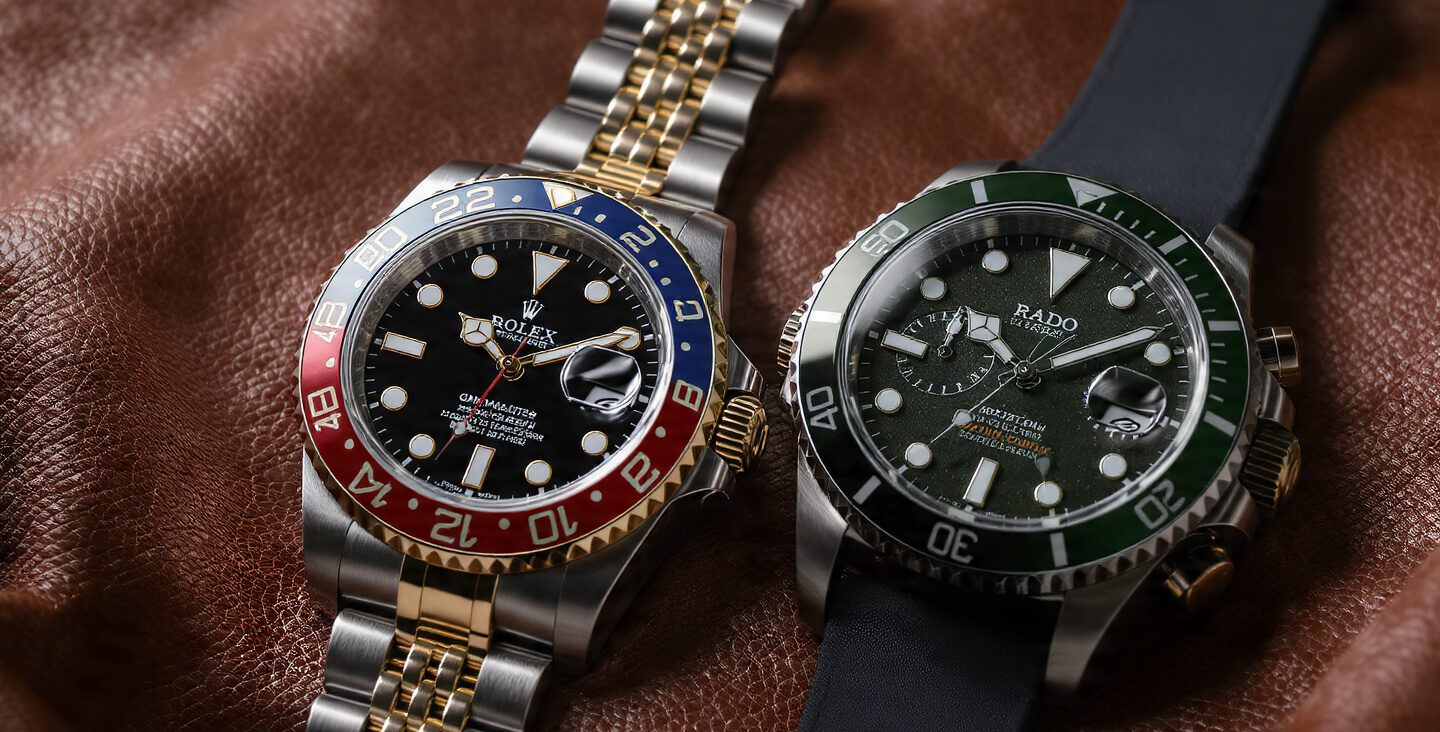
The most immediate difference in the Rolex vs Rado Watch face-off is how they look and feel on the wrist.
Rolex: The Epitome of Classic Design
Rolex watches are instantly recognizable. The Oyster case, Cyclops lens, and fluted bezel are design elements that have remained largely unchanged for decades—because they work. Rolex uses 904L stainless steel, a highly corrosion-resistant alloy that polishes to a mirror-like finish and is more durable than the 316L steel used by most luxury brands. This material choice reflects Rolex’s commitment to both aesthetics and longevity.
Whether it’s the sporty Submariner, the elegant Datejust, or the rugged Explorer, Rolex designs follow a tool watch philosophy—built for function first, but refined to perfection. The brand’s aesthetic is bold, substantial, and timeless. A Rolex doesn’t just tell time; it makes a statement.
Rado: The Future of Watch Design
Rado, in contrast, embraces minimalism and modernity. Its signature material is high-tech ceramic, which the brand helped pioneer in the 1980s. This isn’t ordinary ceramic—it’s a composite material that’s five to ten times harder than steel, making it extremely scratch-resistant. As a result, a Rado watch can look “like new” even after years of daily wear.
Rado’s designs are sleek, fluid, and often integrated—meaning the case and bracelet flow together seamlessly. The Rado Captain Cook Over-Pole, for example, features a 39mm case in yellow gold PVD stainless steel with a ceramic bezel engraved with world cities in gold. It’s a perfect blend of practicality and glamour.
| Feature | Rolex | Rado |
|---|---|---|
| Primary Material | 904L Stainless Steel, Gold, Platinum | High-Tech Ceramic, Titanium, PVD Steel |
| Case Finish | Polished/Brushed Steel, Highly Reflective | Matte or Polished Ceramic, Scratch-Resistant |
| Weight | Heavy, Substantial Feel | Lightweight, Comfortable for Daily Wear |
| Design Language | Classic, Tool-Watch Inspired | Modern, Minimalist, Integrated |
| Scratch Resistance | Moderate (can develop patina) | Exceptional (ceramic resists scratches) |
Rolex feels like a piece of history; Rado feels like the future.
Price & Value: What Are You Really Paying For?
When it comes to Rolex vs Rado Watch, price is one of the most decisive factors.
Rado: Accessible Luxury
Rado positions itself in the accessible luxury segment. In India, Rado watches range from ₹80,000 to ₹3,00,000 (approximately $2,000 to $5,000). Even their most advanced models, like the Rado Hyperchrome or Captain Cook, fall within this range. This makes Rado an attractive option for professionals seeking a premium timepiece without the six-figure price tag.
Despite the lower price, Rado doesn’t compromise on quality. The brand uses durable materials and reliable movements, offering excellent value for the build and innovation.
Rolex: Premium Pricing, Premium Perception
Rolex starts where Rado tops out. Entry-level models like the Oyster Perpetual begin at ₹5,00,000+ ($10,000), while popular models like the Submariner or Daytona often sell for double or triple their retail price on the secondary market due to high demand and limited supply.
This pricing isn’t just about materials or craftsmanship—it’s about brand equity. Rolex has cultivated an image of exclusivity, success, and timelessness that justifies the premium.
Resale Value: Investment vs Enjoyment
Here’s where the Rolex vs Rado Watch debate takes a sharp turn.
- Rolex: Legendary for value retention. Many models appreciate over time. A stainless steel Daytona or Submariner can double in value within a few years.
- Rado: Generally depreciates on the secondary market. While well-made, it lacks the collector demand and brand prestige to command high resale prices.
| Model | Retail Price (USD) | Avg. Market Price (USD) | Depreciation |
|---|---|---|---|
| Rado D-Star | $1,900 | $472 | 75% |
| Rado Hyperchrome 42 | $3,500 | $776 | 78% |
| Rado Hyperchrome Captain Cook | $2,100 | $1,089 | 48% |
Source: WatchCharts.com, 2026
As the data shows, Rado watches lose significant value after purchase. This isn’t a flaw—it’s a reflection of their purpose. Rado is designed for daily enjoyment, not investment. As one Reddit user put it: “Rado do not have anywhere near the same reputation” for value retention as Rolex.
Craftsmanship & Movement: Inside the Machine
When you flip the watch over, the Rolex vs Rado Watch contrast becomes even clearer.
Rolex: In-House Mastery
Rolex manufactures everything in-house—from the 904L steel to the final movement assembly. Its calibers, like the Caliber 3235 (used in the Datejust), are engineered for precision, durability, and a 70-hour power reserve. Every movement is certified as a Superlative Chronometer, accurate to -2/+2 seconds per day.
This vertical integration gives Rolex unparalleled control over quality and innovation. The brand invests heavily in R&D, ensuring its watches remain at the forefront of mechanical engineering.
Rado: Reliable, But Not In-House
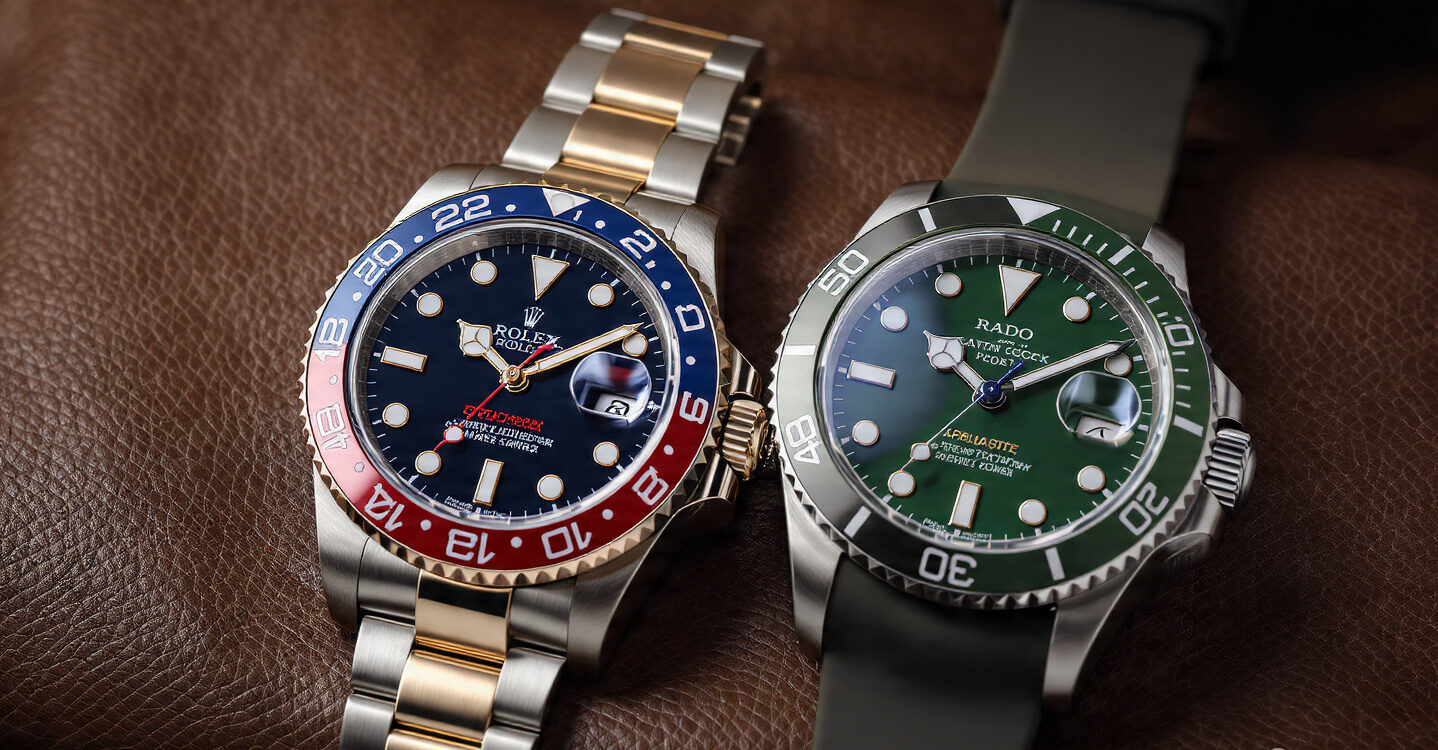
Rado, while highly dependable, relies on modified ETA movements—industry-standard calibers also used by Tissot, Longines, and others. The Powermatic 80 is a standout, offering an 80-hour power reserve and excellent accuracy. Some models, like the Rado Captain Cook with R862 movement, even include manual winding capability.
While not in-house, these movements are proven, robust, and serviceable. Rado’s engineering focus is on the case and materials, not the movement. As one watch enthusiast noted: “Rolexes are just better from a watchmaking standpoint,” but Rado delivers “good build quality and finishing.”
| Feature | Rolex | Rado |
|---|---|---|
| Movement Type | In-house, proprietary | Modified ETA (e.g., Powermatic 80) |
| Power Reserve | 48–70 hours | 38–80 hours |
| Accuracy | -2/+2 sec/day (Superlative Chronometer) | ±10–15 sec/day |
| Manufacturing | Fully vertical integration | Uses third-party movements |
| Innovation Focus | Horological precision | Material science and case design |
Rolex innovates inside the movement; Rado innovates around the case.
Daily Wear & Lifestyle: Which Watch Fits Your Life?
Now, let’s talk real life. How do these watches perform when you’re not comparing them online?
Rado: The Everyday Champion
If you’re looking for a watch you can wear every single day without worry, Rado is hard to beat. Its high-tech ceramic is hypoallergenic, thermally stable, and scratch-resistant. You can wear it to the office, the gym, or on vacation—it will still look flawless weeks later.
The lightweight construction makes it comfortable for long wear, and the 2-year international warranty covers manufacturing defects. Rado is ideal for people who want a luxury accessory that doesn’t require babysitting.
Rolex: Built Tough, But Noticeable
Rolex is also built for daily wear. The Oyster case is waterproof to 100m or more, and the bracelet is incredibly durable. However, the 904L steel can scratch, and while some owners love the “tropical patina” that develops, others prefer a pristine look.
More importantly, wearing a Rolex comes with social visibility. It’s a status symbol, which can be a pro or a con. As one Reddit user said: “The Rolex was once interesting but has become ubiquitous.” In contrast, a Rado lets you stand out with unique, modern design.
Regional Preferences Matter
Interestingly, in markets like India and Southeast Asia, Rado is often seen as more aspirational than Rolex. Why? Because Rado’s designs are ornamental, stylish, and accessory-focused, which aligns with local tastes. As one user noted: “In India Rado is more aspirational than Rolex. The style and ornamentation of their brand is exactly what the South East Asian markets look for.”
Who Should Buy What? The Final Verdict
After analyzing design, price, value, and lifestyle fit, here’s who should choose which in the Rolex vs Rado Watch battle.
Choose Rolex If:
- You want a globally recognized status symbol.
- You’re buying a watch as a long-term investment.
- You value in-house movements and Swiss horological tradition.
- You don’t mind the higher price and heavier weight.
- You want a watch that opens doors and commands respect.
Choose Rado If:
- You prioritize modern design and innovation.
- You want a lightweight, scratch-resistant watch for daily wear.
- You appreciate cutting-edge materials like high-tech ceramic.
- You’re looking for accessible luxury with excellent build quality.
- You want a unique, conversation-starting piece that isn’t everywhere.
The truth is, both brands make excellent watches. Rolex wins in prestige and resale value. Rado wins in comfort, durability, and design innovation.
As one Reddit user perfectly summarized: “Rado definitely for the uncommon name and interesting design.” Another admitted: “I really don’t like Rado. But at the end of the day it is the better watch” in terms of build quality.
And when it comes to the Captain Cook, multiple users called it “a solid watch option for anyone.”
Conclusion: Your Wrist, Your Choice
The Rolex vs Rado Watch debate isn’t about declaring a winner—it’s about finding the right fit for you.
Rolex is the premium choice: a symbol of success, a legacy piece, a watch that can outlive you and still be valuable. It’s for those who want the best-known name in watches and are willing to pay for it.
Rado is the practical choice: a watch that’s built for real life, stays beautiful, and doesn’t scream for attention. It’s for those who value innovation, comfort, and modern style over tradition.
Neither is wrong. Both are right—for the right person.
So ask yourself: Are you buying a legacy or a lifestyle?
Because in the end, the best watch is the one you love to wear.