

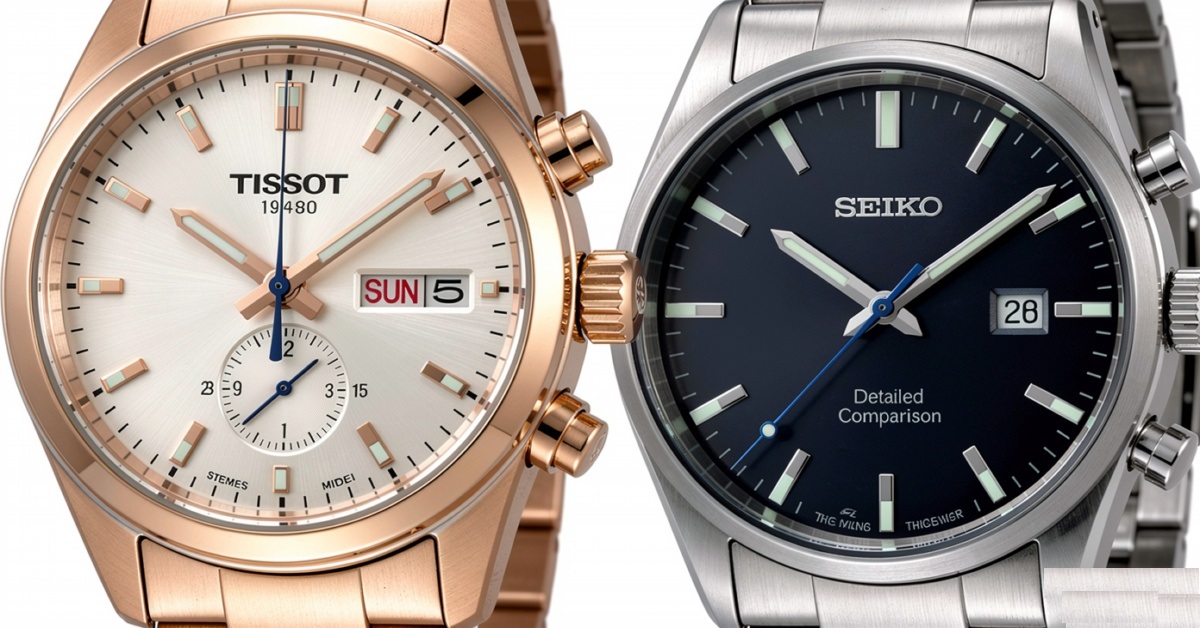
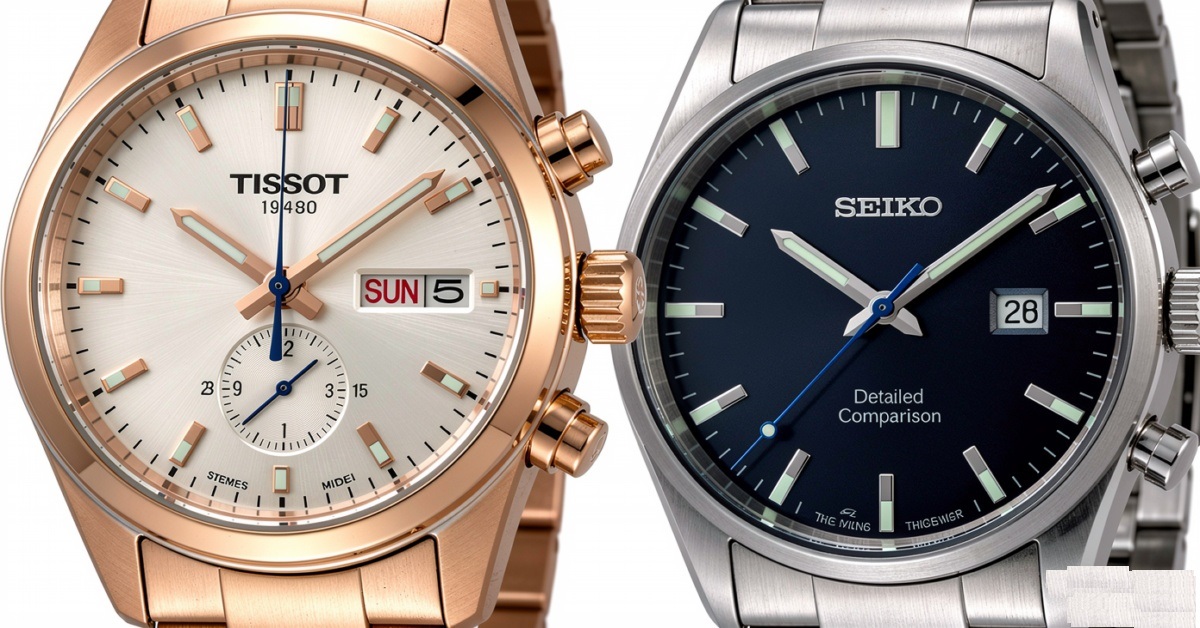
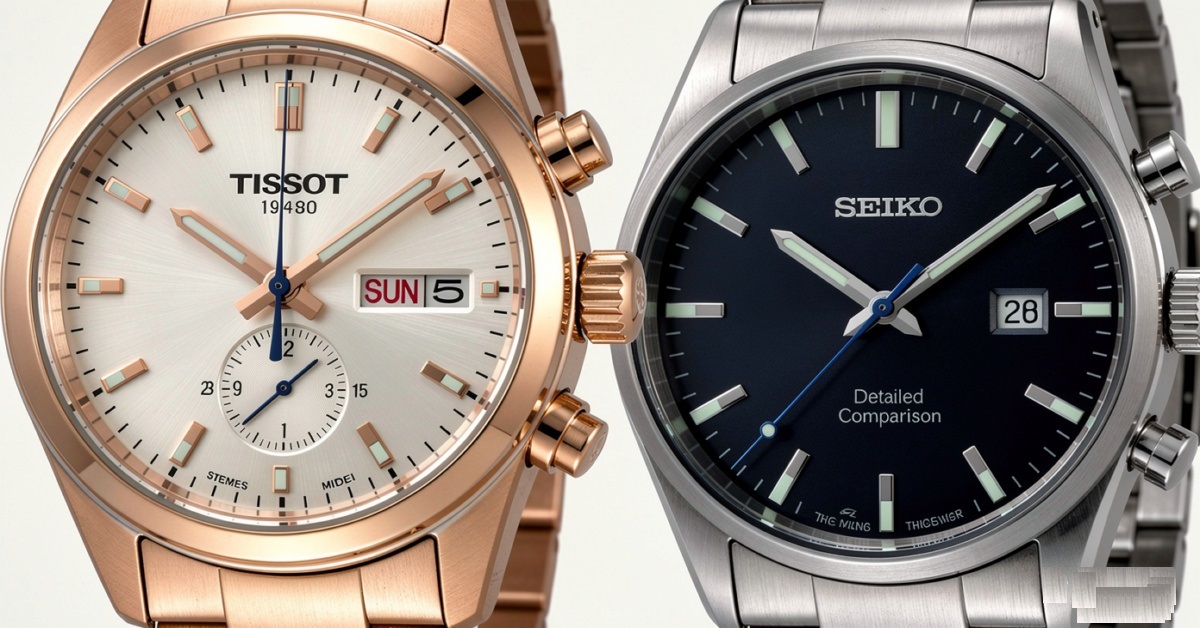
When it comes to affordable luxury watches, the Tissot vs Seiko debate is hotter than ever in 2026. Both brands deliver excellent value, strong reliability, and distinct design philosophies, but they appeal to different kinds of buyers.
- Tissot stands for Swiss Made heritage, elegant design, and consistent performance, with models like the PRX Powermatic 80 offering 80-hour power reserves and sapphire crystal at accessible prices.
- Seiko wins on innovation, durability, and collector appeal, with in-house movements, legendary dive watches (Prospex), and stunning artisan dials (Presage) that rival far more expensive timepieces.
While Tissot retains slightly better short-term resale value (50–65%), Seiko shows stronger long-term investment potential, especially with limited editions and Grand Seiko models appreciating significantly. Tissot leads in power reserve and Swiss prestige, but Seiko offers broader movement variety—including solar, kinetic, and Spring Drive—and superior water resistance in sports models.
Ultimately, your choice depends on what you value: Swiss tradition and sleek design (Tissot) or Japanese innovation, toughness, and collectibility (Seiko).
Brand Heritage: Swiss Tradition vs Japanese Innovation
Tissot and Seiko come from two very different watchmaking worlds, and that shapes everything from design to perception.
Tissot, founded in 1853 in Le Locle, Switzerland, is a proud member of the Swatch Group and carries the “Swiss Made” label on every watch. This means at least 60% of the movement value is Swiss, final assembly and quality control happen in Switzerland, and it meets strict legal standards. For many buyers, this label brings instant credibility, social recognition, and a sense of timeless quality—especially in professional or formal settings.
Seiko, founded in 1881 in Tokyo, Japan, is a pioneer of horological innovation. It introduced the world’s first quartz watch in 1969 and later developed the revolutionary Spring Drive movement—a hybrid of mechanical and quartz technology. While not Swiss, Seiko is respected globally for in-house engineering, proven reliability, and democratizing high-quality watchmaking. It appeals to those who value technical achievement over geographic origin.
In the Tissot vs Seiko conversation, this is the first big divide: do you care more about Swiss prestige or Japanese innovation?
Design & Style: Classic Elegance vs Bold Functionality
When it comes to looks, Tissot and Seiko serve different tastes.
Tissot: Timeless, Refined, and Modern
Tissot leans into clean lines, polished finishes, and sophisticated elegance. Their designs often feel modern yet rooted in classic Swiss watchmaking.
The Tissot PRX Powermatic 80 is a standout in 2026. Priced at $650 or ₹48,000 in India, it features a retro-modern integrated bracelet that looks far more expensive than it is. The 38mm version launched in March 2026 and comes in multiple dial colors. It’s a favorite for office wear, casual outings, or even semi-formal events.
Another 2026 highlight is the Tissot Gentleman 38mm, also released in March 2026. With a 38mm case, 11.53mm thickness, and prices at $850 or ₹84,500 in India, it’s designed for everyday elegance. Available in blue, silver, green, and black dials, it’s a versatile, understated choice.
The Tissot Visodate 2026 refresh brings a 39mm stainless steel case, domed sapphire crystal, and beads-of-rice bracelet options. Priced at $850 on leather and $950 on bracelet, it blends vintage charm with modern specs.
Seiko: Diverse, Artistic, and Sporty
Seiko offers much wider design variety, from dressy elegance to rugged functionality.
The Seiko Presage line is all about artistic dials. Models like the Presage Cocktail Time feature sunburst lacquer finishes that shimmer like high-end luxury watches. These dials use artisanal techniques like guilloche and enamel, rivaling timepieces costing five times more. Presage models range from $350 to $500, making them a steal for dial lovers.
On the sporty side, the Seiko Prospex line is legendary. Dating back to 1965, Prospex includes dive watches built for real use. In 2026, new models feature ceramic bezels, 300m water resistance, and Arctic ice texture dials. The Prospex Marinemaster models are priced around $3,600–$3,900, targeting serious divers.
For bold style, the King Seiko Vanac Titanium, released in July 2026, features a striking silver-white and blue dial and a 41mm titanium case. Priced at $3,850, it’s a limited edition of 800 pieces, blending vintage inspiration with modern materials.
| Feature | Tissot | Seiko |
|---|---|---|
| Design Focus | Elegant, modern, Swiss | Diverse, artistic, functional |
| Popular 2026 Model | PRX Powermatic 80 | Presage Cocktail Time |
| Case Material | Stainless steel | Stainless steel, titanium |
| Bracelet Style | Integrated, polished | Oyster, beads-of-rice, leather |
| Price Range (Entry) | $650 | $125 (Seiko 5 Sports) |
Movement & Performance: Power Reserve, Accuracy, and Technology
The movement is the engine of a watch, and here’s where the Tissot vs Seiko debate gets technical.
Tissot: Long Power Reserve, Swiss Reliability
Tissot uses ETA-based movements, mostly the Powermatic 80 in its automatic watches. This movement offers an 80-hour power reserve—meaning you can take it off Friday night and wear it Monday morning without winding. That’s a big plus for weekend wearers.
It also features the Nivachron balance spring, which helps resist magnetism and improves accuracy. The Tissot Gentleman Powermatic 80 Silicium even uses a silicon balance spring for even better performance.
However, many Tissot models lack hacking seconds (the second hand doesn’t stop when setting time) and hand-winding capability, which some enthusiasts miss.
Seiko: In-House Innovation and Variety
Seiko builds its own movements, giving it more control and innovation. The 4R36 movement (41-hour reserve) powers entry-level models, while the 6R35 offers 70 hours and includes hand-winding and hacking.
But Seiko goes further. It offers:
- Solar-powered watches (like the 2026 ‘Raise the Future’ collection)
- Kinetic (Autoquartz) models that convert motion to electricity
- Spring Drive, a unique hybrid with ±20 seconds per year accuracy
Spring Drive is a game-changer—mechanical in feel but quartz-accurate. It’s exclusive to Seiko and found in Grand Seiko models.
While Tissot wins on power reserve (80 hours), Seiko wins on technology variety and user-friendly features like hand-winding.
| Movement Feature | Tissot | Seiko |
|---|---|---|
| Power Reserve | 80 hours (Powermatic 80) | 41–72 hours (4R/6R/8L) |
| Hacking Seconds | Not on most models | Yes (on 4R/6R) |
| Hand-Winding | Limited availability | Standard on most |
| In-House Movement | No (uses ETA) | Yes (4R, 6R, Spring Drive) |
| Special Tech | Nivachron spring | Solar, Kinetic, Spring Drive |
Water Resistance & Durability: Who Builds Tougher Watches?
If you’re active, swim, or dive, water resistance matters.
Seiko: Built for the Real World
Seiko’s Prospex dive watches are built tough. They offer 200m to 600m water resistance, making them suitable for snorkeling, diving, and extreme conditions. The Prospex Marinemaster HBF001/002, priced at $3,600–$3,900, is a professional-grade diver with 300m resistance.
Even entry-level Seiko 5 Sports models offer 100m water resistance, enough for swimming.
Seiko is known for durable construction, reliable seals, and real-world testing. Many users report their Seikos lasting decades with minimal issues.
Tissot: Solid, But Some Concerns
Tissot’s Seastar 1000 offers 300m water resistance, which is solid for most activities. It also features a ceramic bezel and sapphire crystal, adding to its toughness.
However, some users on Reddit have reported caseback issues with entry-level Tissot models, which could affect long-term durability and water resistance. While not widespread, it’s a point to consider.
Tissot’s 100m water resistance is standard across most collections, suitable for everyday wear but not for serious water sports.
In the Tissot vs Seiko durability test, Seiko has the edge, especially for sports, diving, or rugged use.
Price & Value: Which Brand Gives More for Your Money?
Both brands are affordable, but they deliver value in different ways.
Tissot: Premium Features at Fair Prices
Tissot prices reflect its Swiss Made status. The PRX Powermatic 80 starts at $650, the Visodate 2026 at $850–$950, and the T-Race MotoGP 2026 limited edition at $2,375.
What you get:
- Sapphire crystal on all PRX models
- 80-hour power reserve
- Swiss movement with Nivachron spring
- Strong brand recognition
Tissot offers honest value—you’re paying for Swiss quality and design.
Seiko: More Bang for Your Buck
Seiko starts lower. The Seiko 5 Sports line begins at just ₹10,500 in India (~$125). The Presage collection ranges from $350 to $500, offering artisan dials that look far more expensive.
Higher-end models like the King Seiko Vanac go up to $3,850, but still undercut Swiss rivals.
Seiko’s value lies in:
- Stunning dial craftsmanship at low prices
- In-house movements
- Higher water resistance in sports models
- More movement options (solar, kinetic)
While Tissot feels more “premium,” Seiko gives more features per dollar, especially in design and durability.
| Price Range | Tissot | Seiko |
|---|---|---|
| Entry-Level | $650 (PRX) | $125 (Seiko 5) |
| Mid-Range | $850–$950 (Visodate) | $350–$500 (Presage) |
| High-End | $2,375 (T-Race LE) | $3,850 (King Seiko) |
| Value Highlight | Swiss Made, sapphire crystal | Artisan dials, in-house movements |
Resale Value & Investment Potential
If you plan to sell later, resale value matters.
Tissot: Steady Retention
Tissot watches typically retain 50–65% of retail value after two years. Limited editions do better:
- Tissot PRX Powermatic 80: Appreciating at 5–10% annually
- Tissot Heritage COSC 1938: Returns of 7–12% per year
- Tissot Seastar 1000: 6–10% ROI due to strong demand
While not a “get rich” investment, Tissot holds value well for everyday wearers.
Seiko: Stronger Collector Appeal
Seiko retains 50–60% of value, but limited and vintage models often appreciate:
- SKX007 (discontinued): Now worth more than retail
- Grand Seiko SBGA211 ‘Snowflake’: Sells for $5,200–$5,600 vs. $4,800 retail
- Grand Seiko prices up 18–22% since 2024
- Seiko Kinetic Perpetual Calendar: +11.9% appreciation
Grand Seiko, in particular, is seeing strong secondary market growth, with models like the SBGH273 ‘Whirlpool’ now trading at $9,200–$9,800.
Verdict: Seiko wins on investment potential, especially for collectors and limited editions.
New 2026 Releases: What’s Fresh This Year?
2026 is packed with new models from both brands.
Tissot’s 2026 Lineup
- Tissot PRX 38mm: Launched March 2026, ₹48,000 in India
- Tissot Gentleman 38mm: Multiple dial colors, $850
- Tissot Visodate 2026: 39mm, sapphire crystal, $850–$950
- T-Race MotoGP 2026: Five new models, including a limited edition of 2,026 pieces at $2,375
Seiko’s 2026 Highlights
- 145th Anniversary Limited Editions: Four watches across King Seiko, Presage, Prospex, and Astron, released February 2026
- King Seiko VANAC: 72-hour power reserve, Caliber 8L45, 800 pieces, available July 2026
- ‘Raise the Future’ Solar Watches: Two limited solar models with sapphire crystal, 100m resistance
- Prospex Limited Editions: Two-tone bezels, launching June 2026
Grand Seiko 2026 Novelties
- Spring Drive U.F.A. Ushio 300 Diver: $12,400, titanium, ±20s/year
- SBGH376 ‘Sakura-Wakaba’: 18k yellow gold, $32,800
- SBGD228 ‘Red Lion’: $273,000, 267 diamonds and garnets
Who Should Buy Tissot? Who Should Buy Seiko?
After all the facts, here’s who should pick which brand.
Choose Tissot if:
- You value Swiss Made heritage and global recognition
- You want a long 80-hour power reserve
- You prefer sleek, modern designs like the PRX or Gentleman
- You like consistent accuracy—some users report Tissot movements are more precise
- You want sapphire crystal across most models
Choose Seiko if:
- You love innovation like Spring Drive, solar, or kinetic
- You want more design variety and bold colors
- You need high water resistance for diving or sports
- You care about resale value and collector appeal
- You appreciate stunning dial artistry at a low price
Which Brand Wins in 2026?
There’s no single winner in the Tissot vs Seiko battle.
Tissot wins for those who want Swiss elegance, long power reserve, and everyday sophistication. It’s perfect for office wear, travel, or anyone who values brand prestige.
Seiko wins for innovation, durability, and long-term value. It’s ideal for active lifestyles, collectors, and those who appreciate Japanese craftsmanship.
As one expert puts it: “Neither brand disappoints regarding fundamental quality—both deliver reliable timekeeping, durable construction, and honest value within their respective price segments.”
So in 2026, your choice isn’t about which brand is “better”—it’s about which one fits your life.
Whether you go Swiss with Tissot or Japanese with Seiko, you’re getting a great watch that will last for years.