

When it comes to Swiss luxury watches, the debate of Rado vs Rolex vs Omega isn’t just about price or prestige—it’s about what kind of luxury you value. After years of wearing, collecting, and comparing these three iconic brands, I’ve discovered something surprising: Rado, often overlooked, outperforms both Rolex and Omega in one critical area—everyday durability and wearability.
While Rolex remains the ultimate status symbol with unmatched resale value and Omega excels in technical innovation and space-age precision, Rado stands apart as the most resilient, lightweight, and scratch-resistant option for modern professionals. Priced between $1,000 and $5,000, Rado delivers premium materials like high-tech ceramic and sapphire crystal at a fraction of Rolex’s $6,000+ entry point.
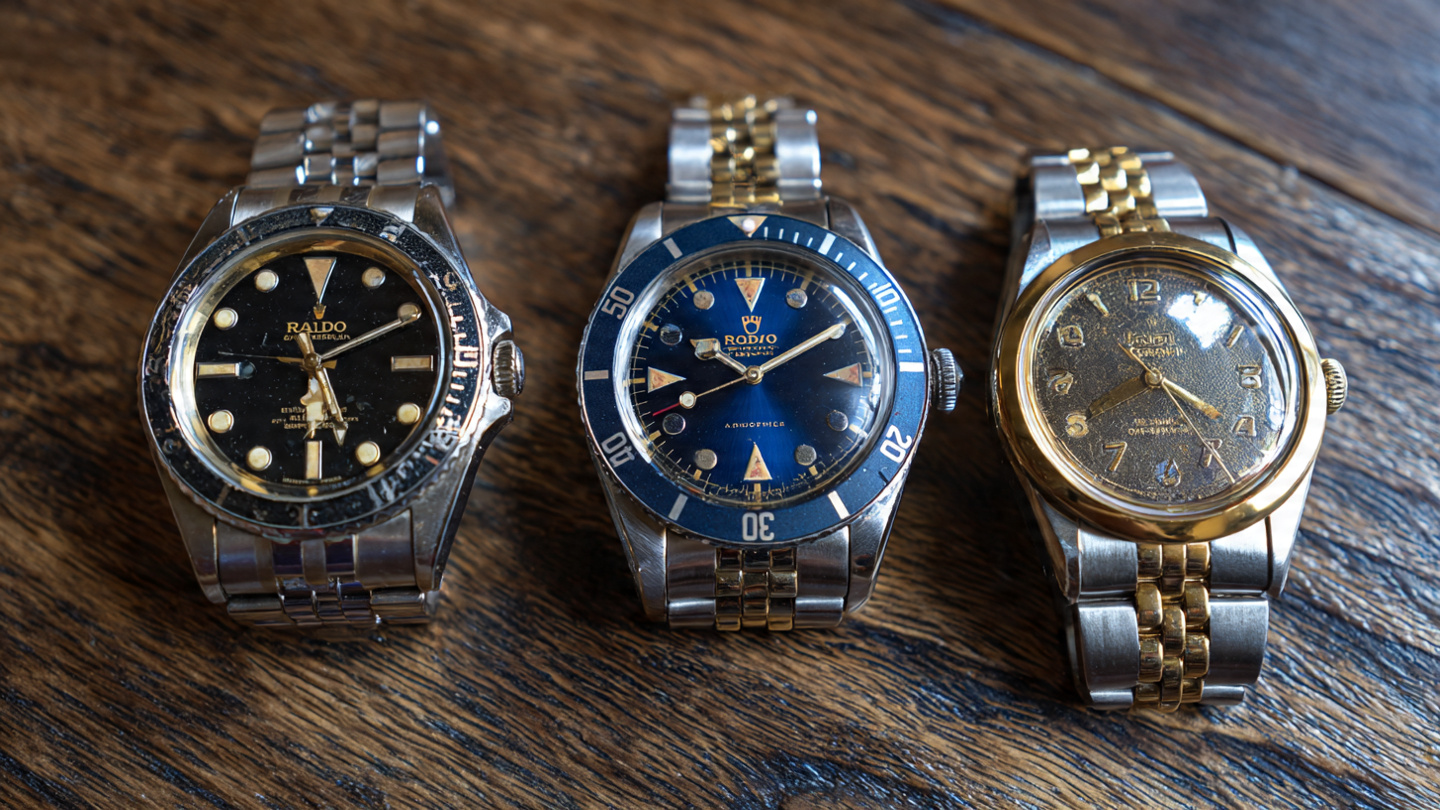
All three brands now offer a 5-year international warranty, but Rolex leads in after-sales support with a 10/10 service network. Omega counters with Master Chronometer-certified movements resistant to 15,000 gauss—far beyond Rolex’s 90 gauss. Yet, only Rado guarantees a scratch-free case for years, thanks to its pioneering use of ceramic.
So, who wins in Rado vs Rolex vs Omega?
- For prestige & investment: Rolex
- For innovation & performance: Omega
- For durability & daily wear: Rado — the unexpected champion.
The Philosophy Behind Each Brand
Each brand represents a distinct vision of luxury watchmaking.
Rado is the “Master of Materials,” pioneering high-tech ceramic, sapphire crystal, and tungsten carbide. Its design philosophy centers on innovation, minimalism, and resilience. Rado watches are built for daily wear—lightweight, scratch-resistant, and modern.
Rolex, founded in 1905, symbolizes achievement and exclusivity. Every watch is crafted in-house, from movement to case, and tested to its proprietary Superlative Chronometer standard (-2/+2 seconds per day). Rolex is engineered for longevity and status.
Omega, established in 1848, blends heritage with performance. Known for being the first watch on the moon and the official timekeeper of the Olympics, Omega emphasizes anti-magnetism and precision through its Master Chronometer certification.
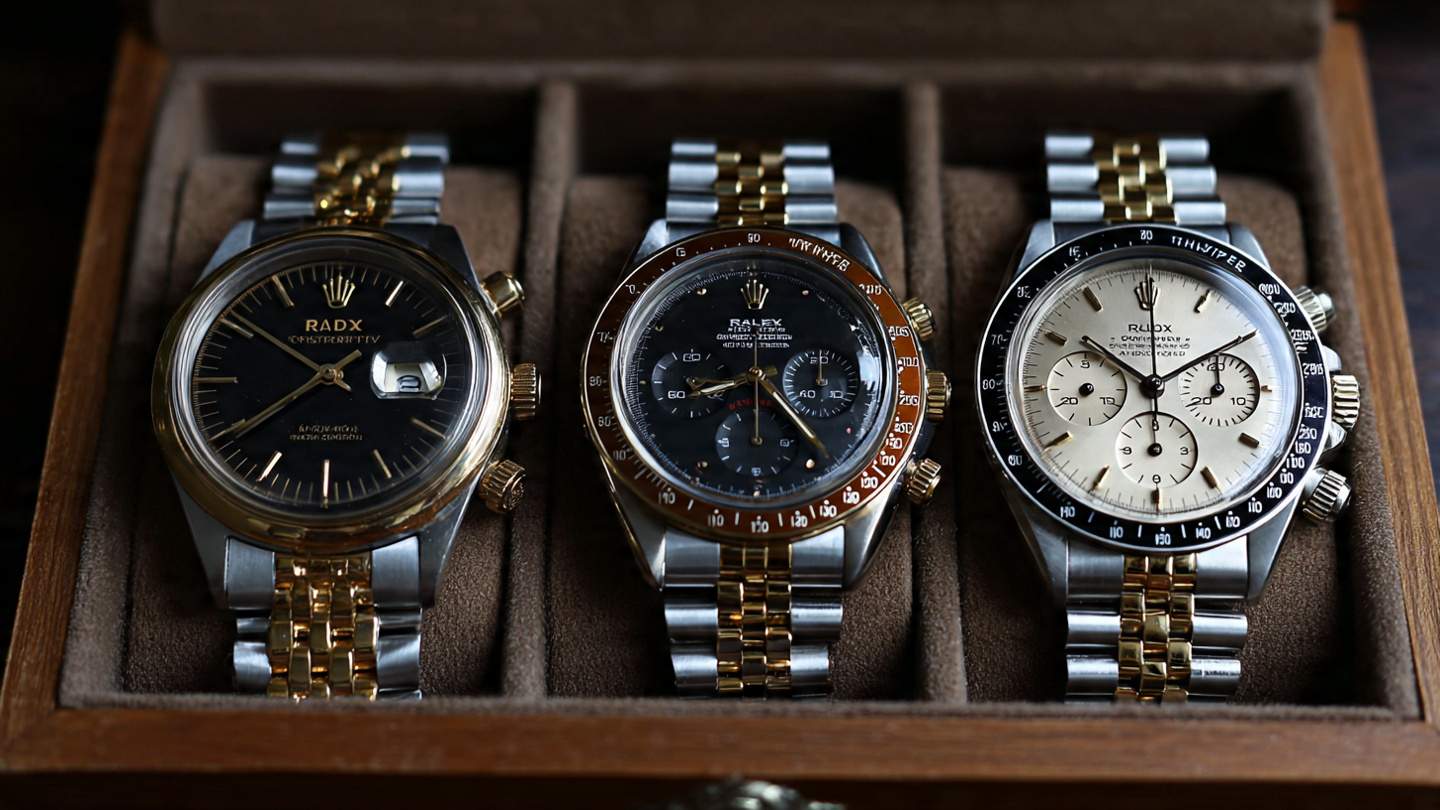
Durability: Where Rado Dominates
If you want a watch that stays pristine, Rado wins hands down.
Rado’s use of high-tech ceramic ensures cases remain scratch-free even after years of daily wear. Combined with sapphire crystal glass, Rado outperforms standard mineral glass used in many entry-level luxury watches.
| Feature | Rado | Rolex | Omega |
|---|---|---|---|
| Case Material | High-tech ceramic, tungsten carbide | Oystersteel (904L), Rolesor | Oystersteel, Sedna gold |
| Scratch Resistance | Excellent (ceramic) | Very High (904L steel) | High |
| Weight | Lightweight | Moderate | Moderate to Heavy |
| Daily Wear Suitability | ★★★★★ | ★★★★☆ | ★★★★☆ |
While Rolex’s Oyster case and Omega’s Speedmaster X-33 Marstimer are robust, neither matches Rado’s resistance to surface damage. A scratched bezel on a Rolex Submariner or Omega Seamaster can hurt resale value—but a Rado retains its showroom look.
The Rado Captain Cook collection, with its 37mm ceramic bezel and retro design, exemplifies this balance of style and toughness—ideal for office and adventure alike.
Movements and Precision: Rolex and Omega Lead
When it comes to horological engineering, Rolex and Omega lead decisively.
Rolex manufactures all movements in-house, including the Caliber 3255 (70-hour power reserve, -2/+2 sec/day accuracy) and the 9001 (Sky-Dweller, with annual calendar). Their Parachrom hairspring resists shocks and magnetism (up to 90 gauss), while the Chronergy escapement boosts efficiency.
Omega counters with Master Chronometer-certified movements, tested to resist 15,000 gauss—over 160 times more than Rolex. The Co-Axial escapement reduces friction, enhancing long-term reliability. Models like the Speedmaster and Seamaster showcase Omega’s versatility.
| Movement Feature | Rolex | Omega | Rado |
|---|---|---|---|
| In-House Movement | Yes | Yes | No (quartz/automatic) |
| Accuracy Standard | Superlative Chronometer (-2/+2 sec/day) | Master Chronometer (-0/+5 sec/day) | Quartz: ±15 sec/month |
| Magnetic Resistance | 90 gauss | 15,000 gauss | Low (quartz) |
| Power Reserve | Up to 70h | Up to 60h | Quartz: years (battery) |
Rado, by contrast, uses primarily quartz movements (e.g., Rado HyperChrome) and select automatics. While quartz ensures excellent accuracy and low maintenance, it lacks the mechanical soul prized by purists.
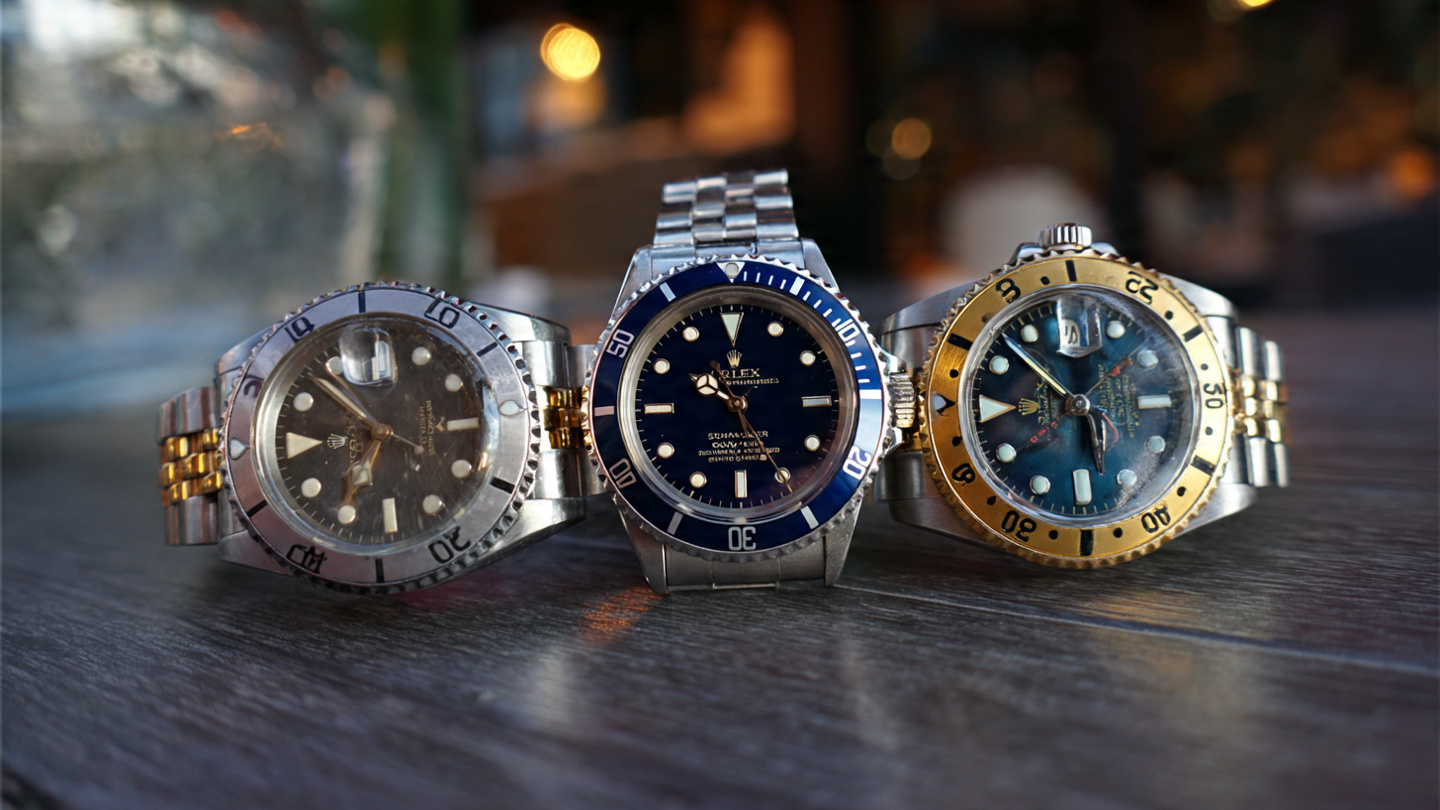
For horological enthusiasts, Rolex and Omega are clear winners. But for those who value set-and-forget reliability, Rado’s quartz is more than sufficient.
Pricing and Accessibility: Rado Offers the Best Value
In the Rado vs Rolex vs Omega battle, value for money is where Rado shines.
Rado watches range from $1,000 to $5,000, with Indian market prices between ₹80,000 and ₹3,00,000. They’re readily available through authorized dealers—no waitlists.
Omega starts around $3,000, with flagship models like the Speedmaster Professional exceeding $10,000. High-complication pieces can reach $50,000+.
Rolex begins at $6,000 and climbs to €61,200 for the Sky-Dweller in Everose gold. Even “entry-level” models like the Oyster Perpetual 41 now cost $7,050—up 3.6% in 2026.
| Brand | Entry Price (2026) | Top Model Price | Availability |
|---|---|---|---|
| Rado | $1,000 | $5,000 | Immediate |
| Omega | $3,000 | $50,000+ | Moderate |
| Rolex | $6,000 | €61,200 | Waitlists common |
For the budget-conscious buyer, Rado delivers premium materials and Swiss quality at a fraction of the cost—making it the most accessible luxury watch in this trio.
Warranty and Service: Strong Support Across All Three
All three brands now offer a 5-year international warranty, a major upgrade from the industry’s typical 2-year standard.
- Rolex: 5-year warranty, indefinite extendability, recommends servicing every 10 years
- Omega: 5-year warranty, extensive global service network (rated 9/10)
- Rado: 5-year warranty for watches purchased after May 1, 2023, requires valid dealer certificate
| Brand | Warranty Length | Service Network Quality | Servicing Interval |
|---|---|---|---|
| Rolex | 5 years | 10/10 | Every 10 years |
| Omega | 5 years | 9/10 | Every 5–8 years |
| Rado | 5 years (post-2023) | 7/10 (estimated) | Every 5 years |
Rolex leads in after-sales support, offering lifetime repair services and a legendary global network. Omega follows closely, while Rado provides reliable but less extensive coverage.
Proper registration and authorized servicing are essential to maintain warranty validity across all brands.
Resale Value: Rolex Reigns Supreme
If you’re buying a watch as an investment, Rolex dominates.
The Rolex secondary market is robust, with models like the Daytona and Submariner often selling above retail. Limited availability, heritage, and demand drive appreciation.
Omega holds value well—especially Speedmaster and Seamaster editions—but rarely appreciates like Rolex. Limited editions may retain value, but most models depreciate after purchase.
Rado, while trusted and durable, has moderate resale value. As one Reddit user noted: “Rado is a great watch for its price but a poor investment compared to Rolex.”
| Brand | Resale Value | Secondary Market Demand | Appreciation Potential |
|---|---|---|---|
| Rolex | ★★★★★ | Very High | High |
| Omega | ★★★★☆ | Moderate | Low to Moderate |
| Rado | ★★★☆☆ | Low | Minimal |
Rado’s strength lies in long-term wearability, not financial return. It’s a watch you buy to use, not to flip.
Design and Prestige: Rolex and Omega Rule
Let’s be honest—Rolex and Omega are status symbols.
Wearing a Rolex signals achievement, exclusivity, and success. It’s the watch of CEOs, athletes, and Bond. The waitlists for models like the Submariner and Daytona only add to their allure.
An Omega conveys a love for history and precision. From the Moon landing to Olympic timing, Omega’s legacy is proven in extreme conditions. It’s favored by pilots, divers, and space enthusiasts.
Rado, while respected, lacks the same cultural cachet. Its minimalist, modern designs appeal to “thinking man’s watches”—those who value substance over flash. It’s not a conversation starter like a Rolex, but it’s a conversation sustainer—people notice its flawless finish and ask, “How is it still so shiny?”
| Brand | Prestige Level | Cultural Legacy | Design Style |
|---|---|---|---|
| Rolex | 10/10 | James Bond, explorers, investors | Iconic, timeless |
| Omega | 8/10 | NASA, Olympics, pilots | Sporty, elegant |
| Rado | 6/10 | Design innovators, professionals | Minimalist, modern |
Rado attracts those who don’t need to prove anything—they just want a watch that works, looks good, and lasts.
The Surprise Winner: Rado for Everyday Excellence
So, who wins in Rado vs Rolex vs Omega?
If you want prestige and investment, Rolex is unmatched.
If you crave technical innovation and heritage, Omega delivers.
But if you’re like me—a professional who wears a watch every day—Rado is the surprise winner.
It’s not about replacing Rolex or Omega. It’s about choosing the right tool for your life. Rado may not have the Moon landing or the Bond legacy, but it has something just as valuable: the ability to look brand new, year after year, without fuss.
In 2026, as luxury watch prices rise—Rolex increased prices by 3–5% this year—Rado stands out as a rational, elegant, and resilient choice. It’s the watch you can wear to the office, the gym, or on vacation, forget about it, and still love a decade later.
Why Rado Wins for Daily Wear:
- ✅ Scratch-resistant ceramic case
- ✅ Lightweight and comfortable
- ✅ Low maintenance (quartz)
- ✅ Affordable luxury
- ✅ Modern, timeless design
It’s not flashy. It doesn’t need to be.
Final Verdict
The Rado vs Rolex vs Omega debate isn’t about which brand is “best”—it’s about what you value most.
| Priority | Best Choice |
|---|---|
| Prestige & Investment | Rolex |
| Innovation & Performance | Omega |
| Durability & Daily Wear | Rado |
Rolex remains the king of status and resale. Omega leads in technical excellence and anti-magnetism. But Rado wins on real-world durability, comfort, and value—making it the most surprising winner in this trio.
For the modern professional who wants a luxury watch that lasts, not just impresses, Rado deserves a serious look. It may not be the loudest voice in the room, but it’s the one that keeps ticking—perfectly.