

When comparing the Apple Watch Series 11 vs Whoop 5.0, the decision ultimately comes down to purpose: lifestyle integration versus performance optimization. The Apple Watch Series 11, released on 2025-09-19, is a full-featured smartwatch with a 24-hour battery, 5G connectivity, a 2,000-nit always-on display, and a 3rd-generation optical heart rate sensor. It excels in daily usability, offering calls, apps, notifications, and robust health tracking—including ECG and hypertension detection.
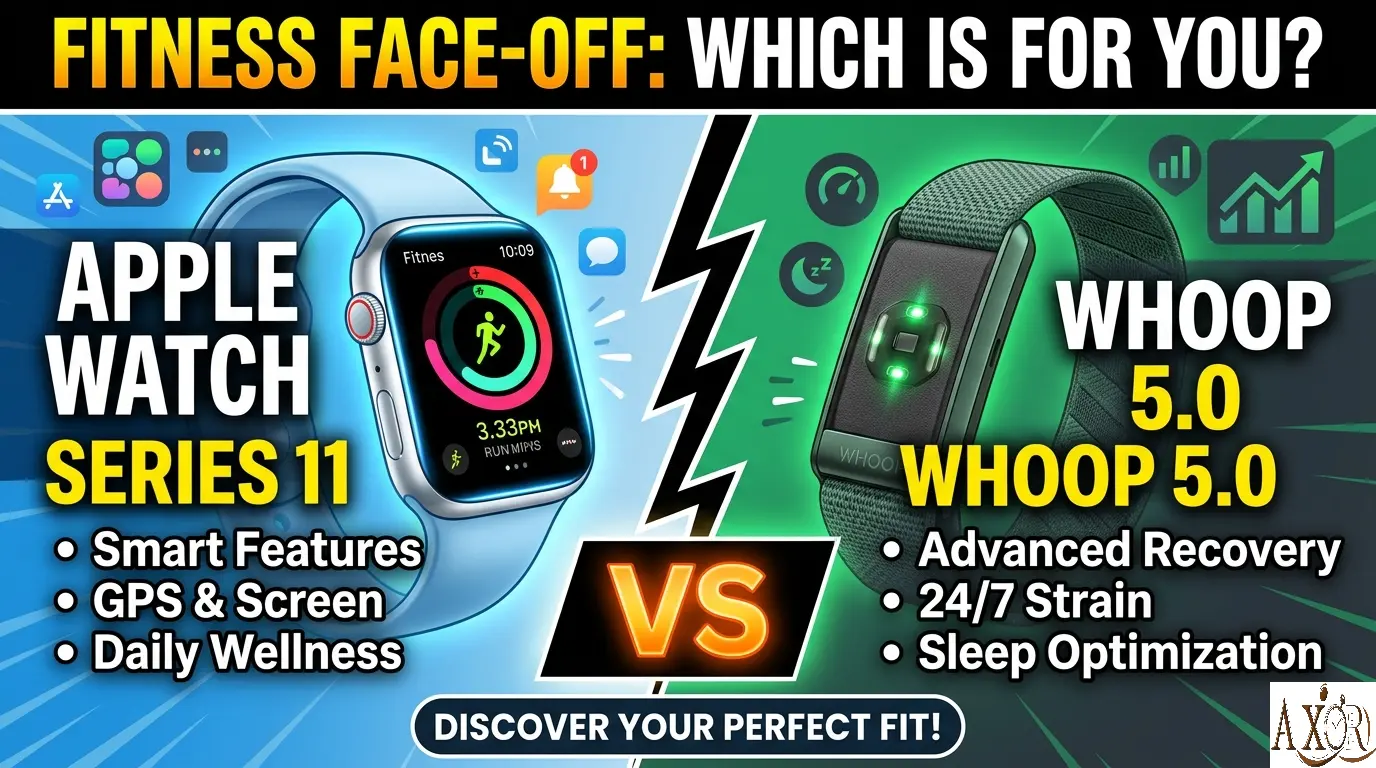
In contrast, the Whoop 5.0 is a screen-free recovery tracker with a 14+ day battery life, continuous 24/7 biometrics, and advanced recovery scoring based on HRV, sleep, and strain. It lacks smart features but delivers 95% alignment between recovery scores and user-reported feelings, making it a favorite among athletes. While the Apple Watch is a one-time purchase starting at $399, Whoop operates on a subscription model from $149/year, with no standalone hardware option.
Key differentiators:
- Apple Watch Series 11 has superior real-time heart rate accuracy and smartwatch functionality.
- Whoop 5.0 offers more accurate HRV and sleep tracking, with automated recovery and strain insights.
- Whoop integrates with Apple Health and Strava but cannot receive data from them.
- Apple Watch supports tens of thousands of third-party apps; Whoop maintains a closed ecosystem.
- Long-term cost favors Apple Watch, while depth of recovery analytics favors Whoop.
For most users, the Apple Watch provides broader utility. For serious athletes and biohackers, Whoop 5.0 remains the gold standard in recovery tracking.
Design and Wearability: Form Meets Function
The Apple Watch Series 11 maintains the iconic square design with refined edges and a thinner 10mm profile, featuring sapphire crystal glass and Ion-X glass that is 2x more scratch-resistant than previous models. It comes in 42mm and 46mm sizes with an LTPO3 OLED display, delivering 2,000-nit peak brightness and an always-on feature. The display is 30% larger than the Apple Watch SE 3, enhancing readability and interaction.
| Feature | Apple Watch Series 11 | Whoop 5.0 |
|---|---|---|
| Display | 42mm/46mm LTPO3 OLED, 2,000 nits | No screen |
| Weight | ~30g (varies by band) | 28.3g |
| Build Material | Aluminum, sapphire crystal | Flexible polymer band |
| Water Resistance | 50m | 10m |
| Dust Resistance | IP6X | Not specified |
Whoop 5.0, by contrast, has no screen, making it lightweight and minimalist. Its screen-free design encourages users to focus on data review in the app rather than constant wrist-checking, promoting mindfulness and recovery awareness. The band is designed for 24/7 wear, including during sleep, and is quick-drying and comfortable for extended use.
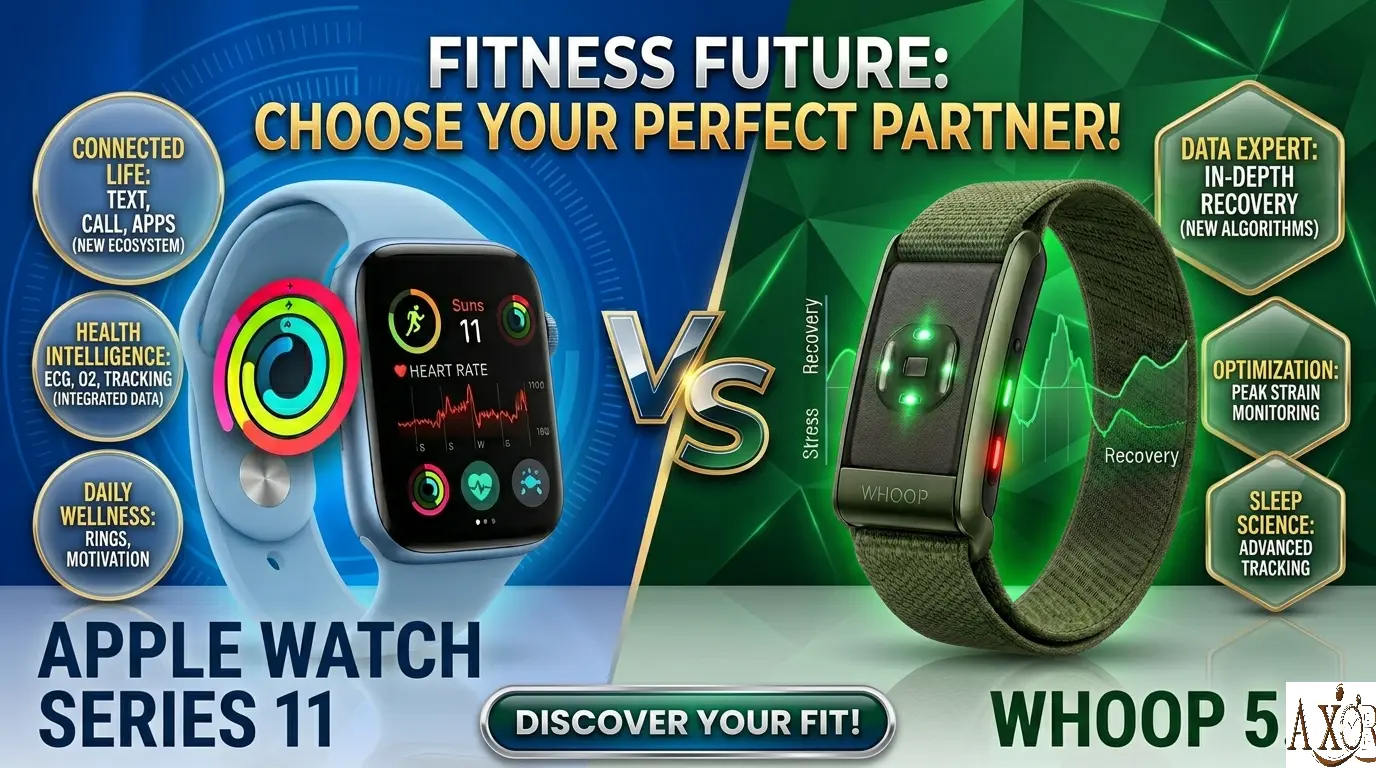
While the Apple Watch feels like a premium tech device, the Whoop 5.0 blends into daily life—almost becoming invisible. This makes it ideal for continuous biometrics and sleep tracking, where minimal distraction is key.
Battery Life: Daily Charging vs. Two-Week Freedom
Battery life is one of the most significant differentiators in the apple watch series 11 vs whoop 5.0 debate.
The Apple Watch Series 11 offers up to 24 hours of battery life, extending to 38 hours in Low Power Mode. Some long-term users report getting up to two days under light usage, but daily charging remains standard. This can disrupt overnight sleep tracking if not charged before bed.
In contrast, the Whoop 5.0 boasts a 14+ day battery life, achieved by eliminating the screen and using a 26Hz heart rate sampling rate to conserve power. However, it requires a separate magnetic charging pack—no direct cable charging. The pack attaches wirelessly to the band, allowing charging without removing it from the wrist.
| Battery Metric | Apple Watch Series 11 | Whoop 5.0 |
|---|---|---|
| Typical Use | 24 hours | 14+ days |
| Extended Mode | 38 hours (Low Power) | N/A |
| Charging Method | Magnetic puck | Wireless charging pack |
| Charging Time | ~1.5 hours | ~2 hours |
| Sleep Tracking Impact | May require pre-sleep charge | Uninterrupted |
For athletes who travel or train intensively, Whoop’s extended battery is a game-changer, enabling uninterrupted data collection over weeks. The Apple Watch, while powerful, demands daily ritual charging, which can be inconvenient for those focused on continuous health monitoring.
Health and Fitness Tracking: Accuracy and Depth
Both devices track core biometrics, but with different priorities and accuracy profiles.
Heart Rate and Sensor Technology
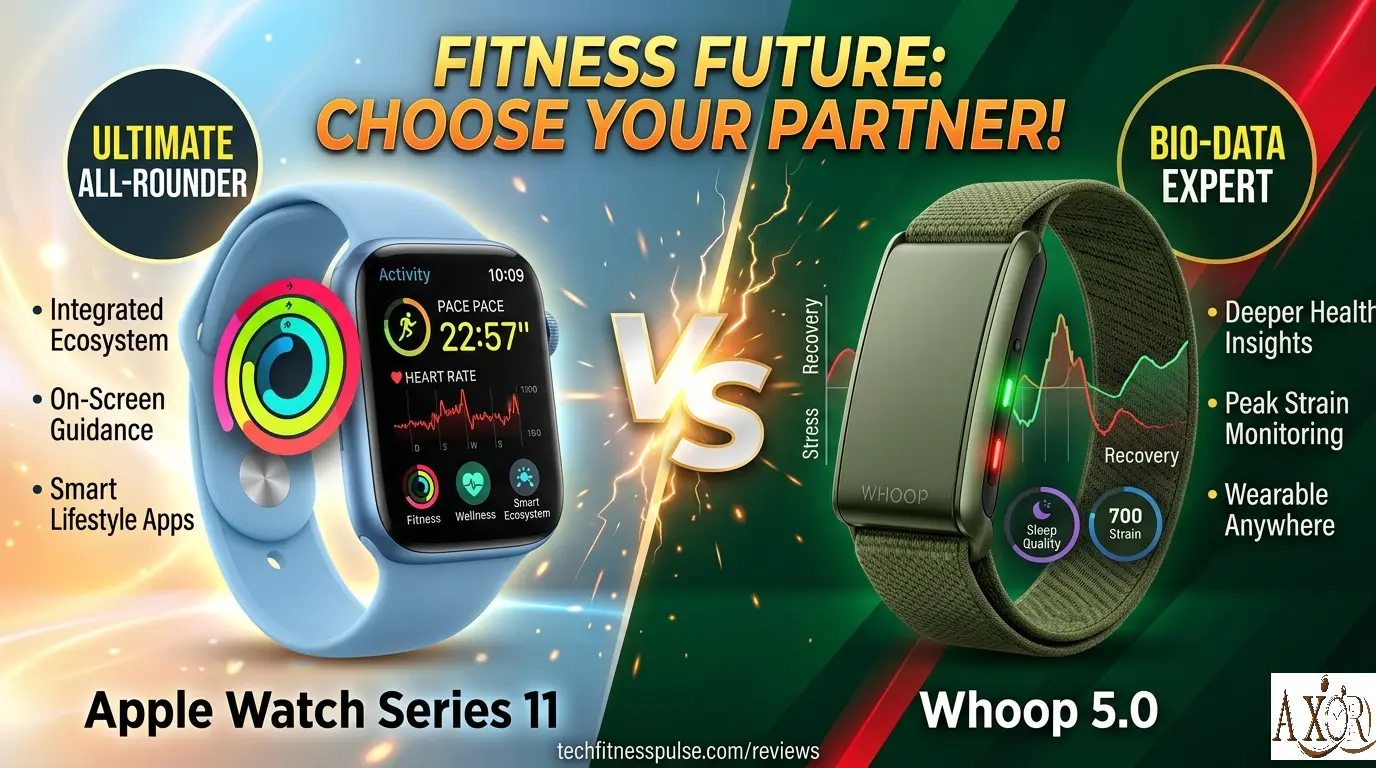
The Apple Watch Series 11 uses a 3rd-generation optical heart rate sensor and an electrical heart sensor for ECG, which is FDA-approved for detecting atrial fibrillation. It also includes:
- Blood oxygen (SpO₂) monitoring
- Skin temperature sensing
- Always-on altimeter
- High-g accelerometer
- Depth gauge (to 6 meters)
- Water temperature sensor
- 5G cellular support
Studies show the Apple Watch has stronger agreement with clinical heart rate measurements than Whoop, especially during high-intensity workouts.
The Whoop 5.0 uses a multi-LED PPG sensor with a 26Hz sampling rate, measuring:
- Heart rate
- HRV (Heart Rate Variability)
- Respiratory rate
- SpO₂
- Skin temperature
While Whoop lacks ECG, it excels in HRV and sleep tracking accuracy. Independent reviews and user reports indicate Whoop 5.0’s recovery scores match user feelings 95% of the time (PCMag, 2025). However, the 26Hz sampling rate may result in less accurate heart rate spikes during weightlifting, where rapid changes occur.
| Sensor | Apple Watch Series 11 | Whoop 5.0 |
|---|---|---|
| Heart Rate Sensor | 3rd-gen optical + electrical | Multi-LED PPG, 26Hz |
| ECG | ✅ FDA-approved | ❌ |
| SpO₂ | ✅ | ✅ |
| HRV Accuracy | Moderate | High |
| Sleep Tracking | Good (Sleep Score) | Excellent |
| Workout Auto-Detect | ✅ | ✅ (improved in 2025) |
Clinical and Real-World Validation
- A 2025 Nature Digital Medicine study found Apple Watch shows stronger agreement with criterion measures for heart rate than Whoop.
- YouTube reviewers and athletes note Whoop 5.0 offers more accurate HRV and sleep staging, crucial for recovery insights.
- Whoop’s Healthspan metric estimates biological aging based on recovery data, a feature not available on Apple Watch.
Recovery and Performance Analytics: The Core Differentiator
This is where the apple watch series 11 vs whoop 5.0 comparison diverges most sharply.
Apple Watch: Activity Rings and Lifestyle Motivation
The Apple Watch uses Activity Rings (Move, Exercise, Stand) to gamify daily movement. It provides a Sleep Score based on duration, consistency, and disturbances, but no built-in recovery score. Users must rely on third-party apps like:
- Athlytic ($29.99/year): Delivers Whoop-like HRV and recovery insights
- Training Today (£2.95/month): Real-time HRV and training readiness
- Rise: Advanced sleep tracking
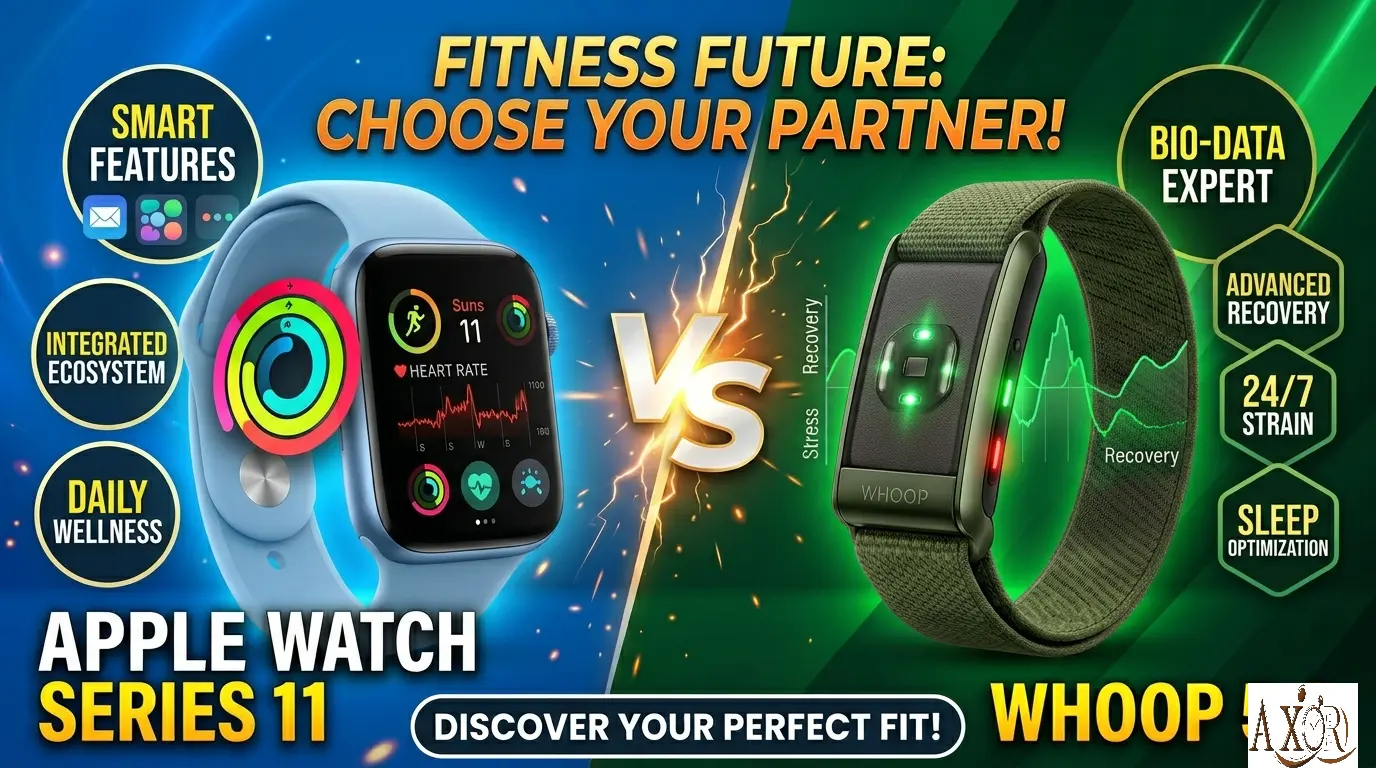
While these apps fill gaps, they require setup and may vary in accuracy.
Whoop 5.0: Recovery as a Science
Whoop is built around recovery optimization. It provides:
- Daily Recovery Score (0–100%): Based on HRV, RHR, sleep performance, and respiratory rate
- Strain Score (0–21): Automated daily exertion score guiding workout intensity
- Sleep Performance: Detailed staging and efficiency metrics
- Healthspan: Estimates biological age based on long-term recovery trends
- Advanced Labs (2025 update): Integrates blood biomarker results for deeper insights
Whoop’s automated strain scoring requires no user input, unlike Apple’s Training Load, which asks for post-workout exertion ratings. This automation reduces friction and improves data consistency.
| Feature | Apple Watch Series 11 | Whoop 5.0 |
|---|---|---|
| Recovery Score | ❌ (requires 3rd-party app) | ✅ Daily, automated |
| Strain/Exertion Score | Manual input (Training Load) | ✅ Automated (0–21 scale) |
| HRV Tracking | Available | More accurate, continuous |
| Sleep Analysis | Basic stages, Sleep Score | Detailed breakdown, efficiency % |
| Biological Age Estimation | ❌ | ✅ (Healthspan) |
| Blood Biomarker Integration | ❌ | ✅ (Advanced Labs) |
For serious athletes, coaches, and biohackers, Whoop’s data-driven approach to recovery is unmatched. It helps prevent overtraining and optimize performance—something no smartwatch currently replicates natively.
Smart Features and Ecosystem Integration
Apple Watch: The Full Smartwatch Experience
The Apple Watch Series 11 is a complete smartwatch:
- Make and receive phone calls and messages
- Access app notifications (social, email, calendar)
- Stream music with 64GB storage (phone-free workouts)
- Use 5G connectivity for cellular independence
- Run tens of thousands of apps via the Watch App Store
- Integrate with Apple Fitness+, Strava, Runna, 18Birdies, Golfshot, and more
It runs watchOS 26, released on 2025-09-15, with enhanced health features and hypertension detection in select regions. The wrist-flick gesture allows quick notification dismissal, improving usability.
Whoop 5.0: Minimalist, Focused, Closed
Whoop is not a smartwatch. It has:
- No screen
- No notifications
- No apps
- No standalone functionality
However, it syncs data to:
- Apple Health (steps, HRV, sleep, RHR)
- Strava (activities, steps)
- Google Fit (via Health Connect)
It also supports Bluetooth Heart Rate Broadcast, sending real-time HR to:
- Peloton
- Zwift
- Garmin devices
- Concept2 rowers
But Whoop does not accept data from Apple Health, maintaining a closed ecosystem. There is no Whoop app for Apple Watch—data is only accessible via the iPhone app.
| Ecosystem Feature | Apple Watch Series 11 | Whoop 5.0 |
|---|---|---|
| App Store | ✅ 20,000+ apps | ❌ |
| Notifications | ✅ | ❌ |
| Phone Calls | ✅ | ❌ |
| Music Storage | 64GB | ❌ |
| 5G Connectivity | ✅ | ❌ |
| Third-Party App Integration | ✅ Full support | ✅ Limited (outbound only) |
| Real-Time Workout Feedback | ✅ | ❌ |
Apple Watch wins for ecosystem breadth, while Whoop wins for data focus and privacy.
Pricing and Value: One-Time Purchase vs. Subscription
Apple Watch Series 11: One-Time Cost
The Apple Watch Series 11 is a one-time purchase:
- GPS model: Starting at $399 / £369 / ₹46,900
- GPS + Cellular: Higher price (e.g., ₹56,900 in India)
- No subscription required—all features included
This makes it cost-effective over time, especially for users who keep devices for 3+ years.
Whoop 5.0: Subscription-Only Model
Whoop operates on a membership model:
- Standard: $149/year
- Peak: $240–$359/year (includes ECG, blood pressure insights, Advanced Labs)
- Hardware included—no standalone purchase
There is no one-time buy option. Upgrades (e.g., to Peak) incur fees (e.g., $49). Over 24 months, the cost ranges from $298 to $718, significantly more than the Apple Watch.
| Cost Factor | Apple Watch Series 11 | Whoop 5.0 |
|---|---|---|
| Upfront Cost | $399 | $0 (included in sub) |
| 12-Month Cost | $399 | $149–$359 |
| 24-Month Cost | $399 | $298–$718 |
| Subscription Required | ❌ | ✅ |
| Long-Term Value | High | Lower (ongoing cost) |
While Whoop’s analytics justify the price for serious athletes, the Apple Watch offers better long-term value for general users.
Who Should Choose Which?
Choose Apple Watch Series 11 If You:
- Want a full smartwatch with calls, texts, and apps
- Value Apple ecosystem integration (iPhone, AirPods, Home)
- Prefer a one-time purchase with no subscriptions
- Want ECG, blood pressure, and FDA-approved health features
- Like a bright, interactive display for workouts and navigation
- Use third-party fitness apps like Strava, Peloton, or Runna
Choose Whoop 5.0 If You:
- Are an athlete, coach, or biohacker focused on performance
- Prioritize recovery, sleep, and HRV tracking over smart features
- Want 14-day battery life for uninterrupted data
- Prefer a lightweight, screen-free design for 24/7 wear
- Value automated strain and recovery scores
- Are willing to pay a subscription for advanced analytics
- Use HR broadcast with Peloton, Zwift, or Garmin
Many users pair both devices: using the Apple Watch for daily smart features and Whoop for deep recovery insights. The two can coexist—Apple Health syncs Whoop data, and Whoop can import Apple Watch GPS workouts.
My final View.
In the apple watch series 11 vs whoop 5.0 showdown, there is no universal winner—only the right tool for your goals.
The Apple Watch Series 11 is the ultimate lifestyle smartwatch, combining cutting-edge health sensors, 5G connectivity, 64GB storage, and seamless ecosystem integration. It’s ideal for iPhone users who want a powerful, versatile device for daily life.
The Whoop 5.0 is the premier recovery tracker, offering unmatched HRV accuracy, continuous 24/7 biometrics, and data-driven recovery insights. It’s the go-to for athletes who train hard and need to recover smarter.
For most people, the Apple Watch Series 11 provides the best balance of functionality, value, and convenience.
For peak performers, Whoop 5.0 remains the gold standard in recovery tracking—a specialized tool that no smartwatch has yet replicated.
Ultimately, your choice depends on whether you prioritize functionality or focus. Both are excellent—just for different missions.