

The real difference between Rolex and Patek Philippe isn’t just price or prestige—it’s philosophy. Rolex is engineered for everyday dominance, built like precision equipment with brutal bracelet engineering and unmatched reliability. Patek Philippe is crafted for generational legacy, where each movement takes 4–8 years to complete and ownership is framed as stewardship. While Rolex produces 1.1 million watches annually, Patek makes only ~53,000, prioritizing hand-finishing and emotional depth over scale. In 2026, this contrast defines not just horology, but identity: one brand announces your arrival; the other prepares your heirloom.
The Soul of the Brand: Inevitability vs. Immortality
The real difference between Rolex and Patek Philippe begins with intent. Rolex is built to feel inevitable—a tool forged for performance, visibility, and resilience. It’s the watch pilots wear with the GMT-Master II’s rotating bezel to track multiple time zones, or divers trust with the Submariner’s 300-meter water resistance. It’s industrial precision made personal.
Patek Philippe, in contrast, is built to feel private. It doesn’t announce itself. Instead, it whispers tradition, heritage, and quiet mastery. The brand’s iconic slogan—“You never actually own a Patek Philippe. You merely look after it for the next generation”—isn’t just marketing. It’s a philosophical commitment to legacy.
While Rolex’s brand value was estimated at 7.387 billion CHF in 2016, Patek Philippe’s stood at 1.885 billion CHF—a gap that reflects not weakness, but focus. Rolex dominates global recognition; Patek commands reverence among connoisseurs.
Craftsmanship: Where Time is Handmade
When comparing Rolex and Patek Philippe, craftsmanship reveals the deepest divide.
Rolex excels in scalable excellence. Every component is engineered in-house, from the Parachrom hairspring to the Oyster case. The 2025 Land-Dweller, powered by Calibre 7135, showcased Rolex’s ability to innovate within its ecosystem—delivering a dual-time display with high torque and long power reserve. These are watches built for real-world endurance.
Patek Philippe operates on a different plane: artistic horology. Each movement is a hand-finished masterpiece. Angles are beveled by hand, screws are polished to a mirror shine, and Geneva stripes are applied with artisan care. The result? Movements described as “a miniature city of hand-polished angles.”
| Feature | Rolex | Patek Philippe |
|---|---|---|
| Annual Production | ~1.1 million | ~53,000–62,000 |
| Movement Finish | Industrial precision | Hand-polished, decorative |
| Complication Mastery | Functional (e.g., GMT) | Artistic (e.g., Calibre 89 with 33 complications) |
| Time to Craft Movement | Weeks to months | 4–8 years (due to hand-finishing) |
| Most Famous Piece | Submariner | Henry Graves Supercomplication ($24.4M sold) |
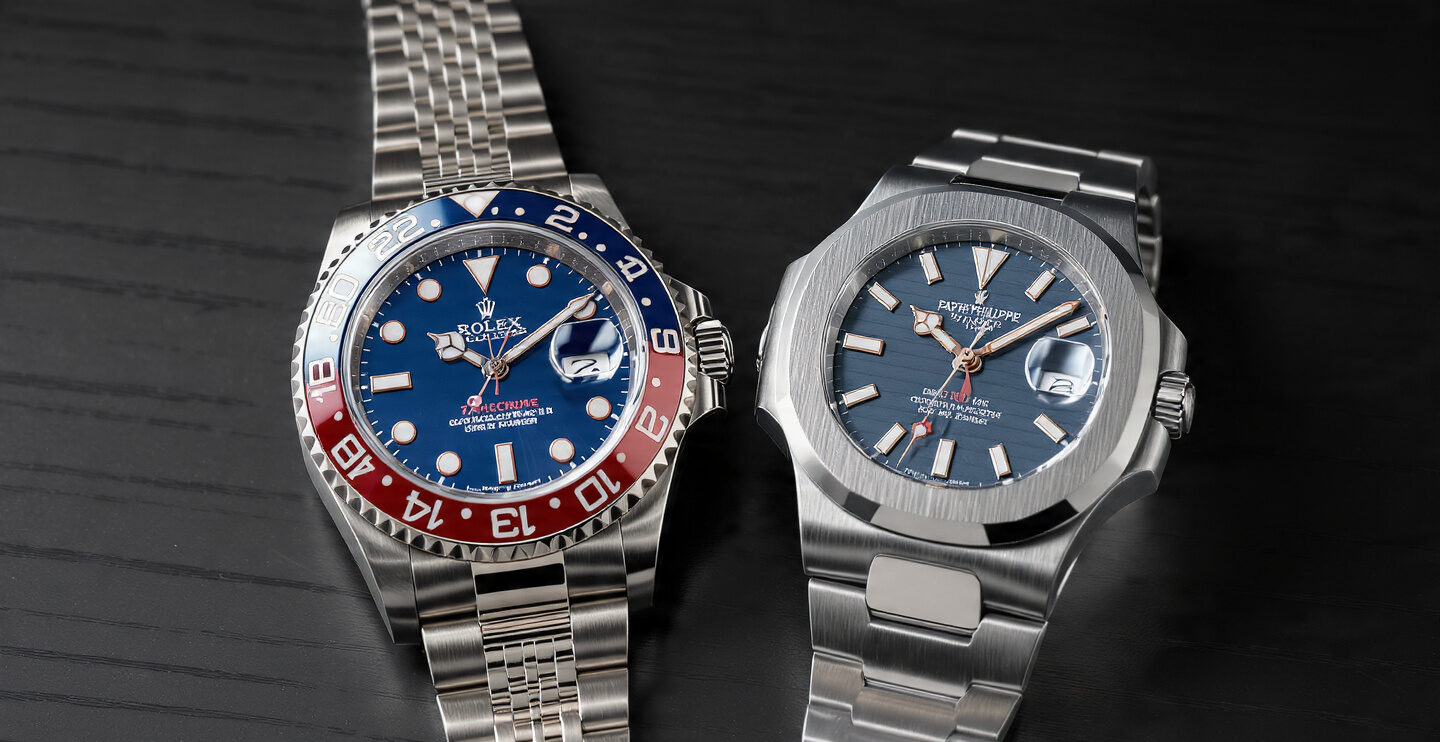
The Calibre 89, one of the most complicated wristwatches ever made, is a testament to Patek’s ambition. Meanwhile, Rolex focuses on reliability—its watches are less about showy complexity and more about consistent performance under pressure.
Pricing and Availability: List Price vs. Reality
On paper, the price difference between Rolex and Patek Philippe is stark. In reality, it’s even more extreme.
| Model | Starting Price (USD) | UK List Price (Est.) |
|---|---|---|
| Rolex Oyster Perpetual | $6,100 | £5,000–£6,000 |
| Rolex Submariner Date | — | £9,000–£10,500 |
| Rolex Cosmograph Daytona | — | £13,500–£16,000 |
| Patek Calatrava | $30,000 | £24,000–£35,000 |
| Patek Aquanaut (Steel) | $23,070 | £24,000–£35,000 |
| Patek Nautilus (Steel) | — | £35,000–£50,000 |
But in 2026, list price is fiction for Patek Philippe. The Nautilus, especially the 5811/1G model, has a waitlist exceeding 8 years. Even authorized dealers rarely allocate them without long-standing relationships.
In Singapore, a pre-owned Patek Philippe Nautilus 5811/1G trades between S$180,000 and S$220,000—triple or more its retail value. This isn’t just scarcity; it’s cultural desirability amplified by exclusivity.
Rolex, while also facing grey market premiums, remains more accessible. You can buy, sell, and service a Rolex with relative ease. For entry-level collectors, this liquidity is invaluable.
Patek Philippe, however, offers superior long-term capital appreciation, especially for rare complications. But only if you’re willing to wait—not just to buy, but to sell.
Ownership Experience: Service, Support, and Satisfaction
Owning a Rolex is like joining a global club. The brand offers a 5-year warranty, a vast service network, and transparent pricing. In the UK, servicing a Rolex costs between £700 and £1,100, with turnaround times measured in weeks.
Patek Philippe ownership is more complex. Servicing can cost £1,500 to £4,000 and take months due to the hand-done nature of the work. While the craftsmanship is revered, the customer experience is mixed.
On Trustpilot, Patek.com has 66% 1- or 2-star ratings, with complaints about lack of empathy and poor after-sales communication. Some praise the watch quality; others feel alienated by the brand’s aloofness.
Yet, the design philosophy endures. Patek cases often wear thinner than their specs suggest—deliberate balance, elegance, and wearability. They’re made to be lived in, not locked in a safe.
Rolex, with its brutal bracelet engineering, feels like equipment. Patek feels like heirloom jewelry—delicate in presence, enduring in meaning.
Investment and Identity in 2026
In 2026, luxury watches are no longer just timekeepers—they’re expressions of identity. Mechanical watches are taking center stage, with collectors prioritizing in-house calibres, hand-finishing, and intentional luxury.
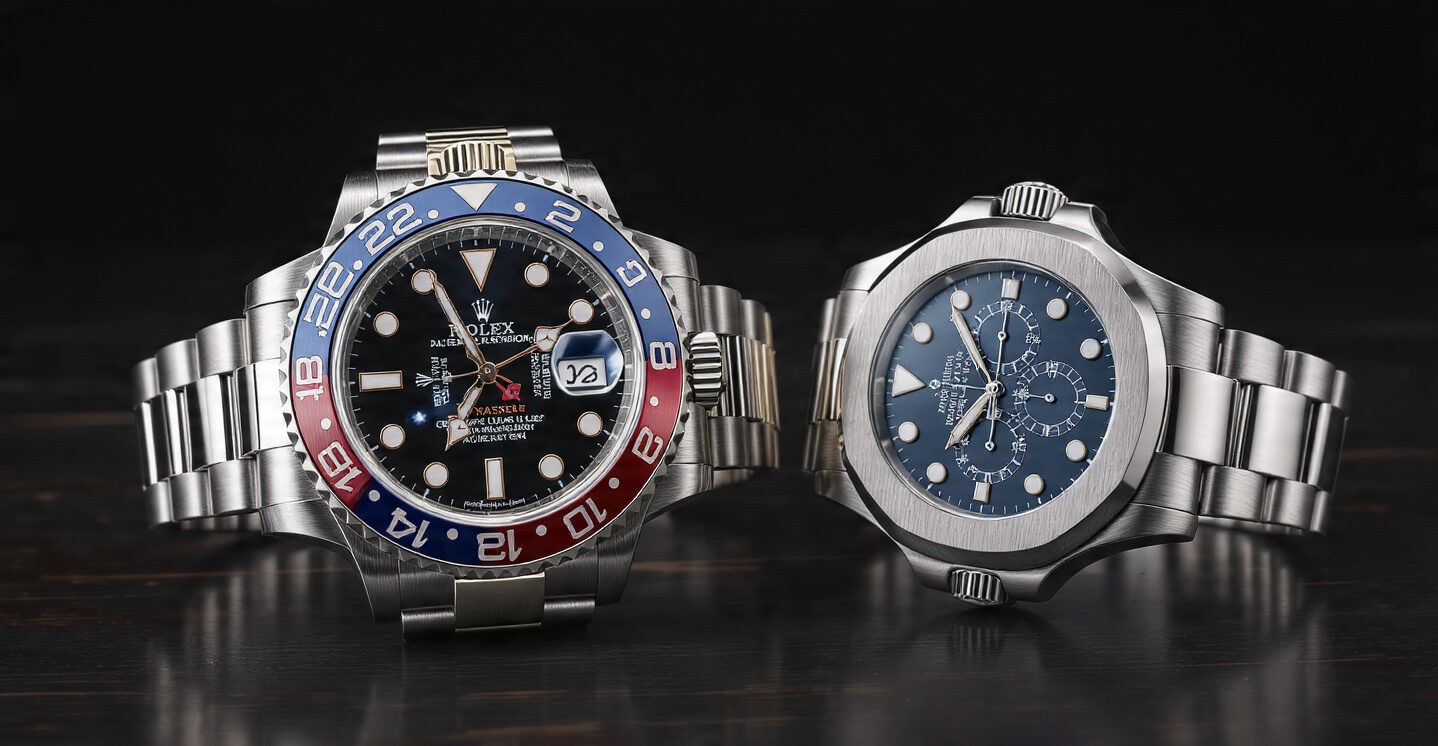
Both Rolex and Patek Philippe are targets for super clone watches—high-fidelity replicas engineered to mimic the real thing in almost every measurable way. The Patek Nautilus 5711/5811 is among the most cloned models, a backhanded compliment to its status.
But for true collectors, authenticity is everything.
- Rolex wins on recognition, durability, and liquidity. It’s the watch that performs like a tool and appreciates like an asset.
- Patek Philippe wins on emotional depth, artistry, and generational significance. It’s not just a watch—it’s a family heirloom in waiting.
The rise of “intentional luxury” means buyers are no longer chasing logos. They’re chasing meaning. And in that world, Patek’s quiet excellence resonates deeply.
Yet, Rolex remains the world’s most recognizable luxury watch brand—a symbol of achievement that transcends horology.
So, Which One Should You Choose?
The real difference between Rolex and Patek Philippe comes down to what you want your watch to say.
Ask yourself:
👉 Do you want a watch that announces your arrival?
👉 Or one that tells your descendants who you were?
Choose Rolex if:
- You value daily wearability and rugged reliability
- You want global recognition and strong resale value
- You prefer fast, affordable servicing and wider availability
- You see your watch as a tool for achievement
Choose Patek Philippe if:
- You value handcrafted artistry and generational legacy
- You’re willing to wait years to own and decades to appreciate
- You appreciate quiet elegance over loud branding
- You see your watch as a family heirloom
Both brands are exceptional. But they serve different souls.
Rolex is for the achiever.
Patek Philippe is for the connoisseur.
And in 2026, as mechanical watches reclaim their throne, the choice isn’t just about time—it’s about what time means to you.