

The Apple Watch Series 11 redefines personal health monitoring with FDA-cleared hypertension and sleep apnea detection, powered by its advanced suite of apple watch series 11 health sensors. Unlike previous models, it doesn’t just track fitness—it actively screens for silent, life-threatening conditions using passive, continuous monitoring.
At the core is the third-generation optical heart sensor, which—combined with machine learning trained on over 100,000 participants—analyzes 30-day blood vessel response patterns to flag potential hypertension with 92–95% accuracy vs. clinical devices. While it detects trends rather than real-time blood pressure numbers, its 92% specificity minimizes false alarms, making it a reliable early-warning system.
The Core Health Sensors: A Multimodal Approach
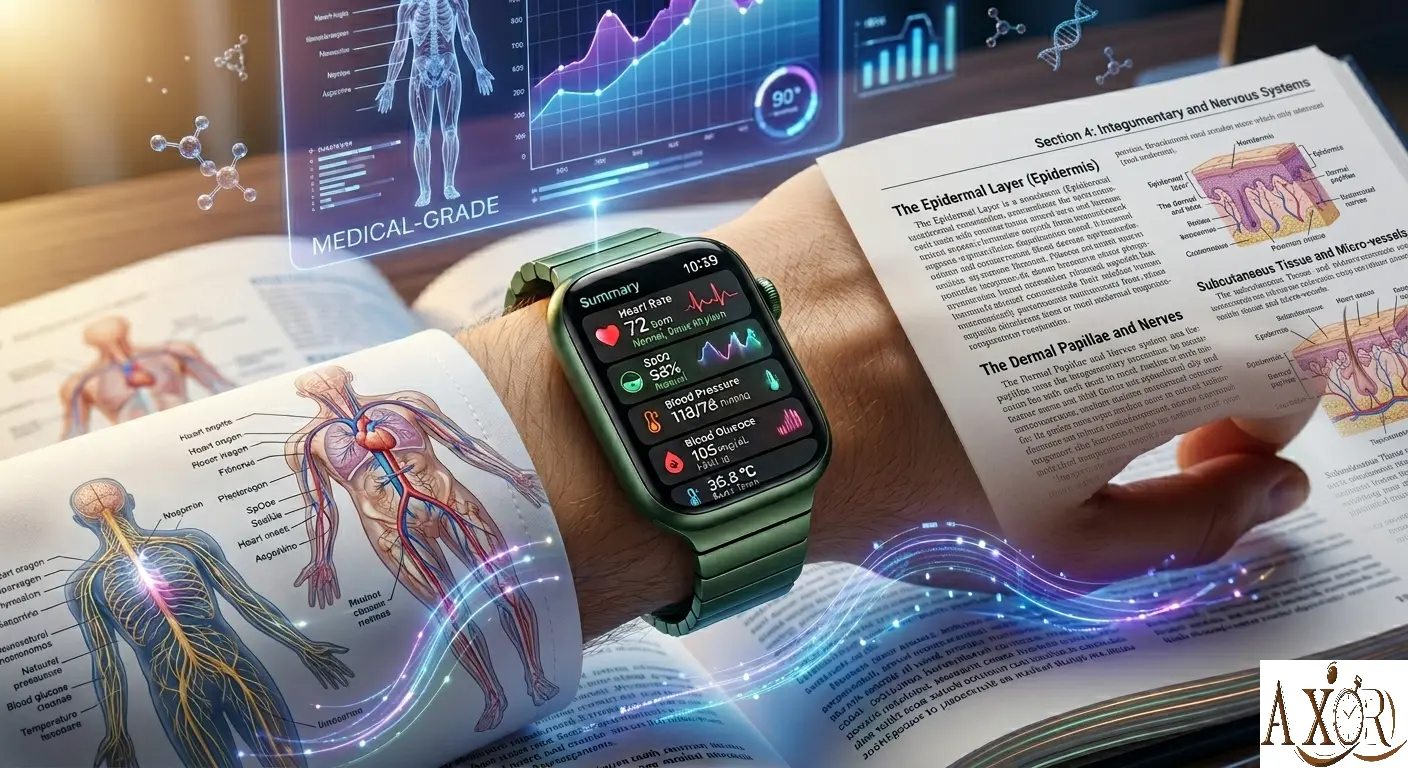
The Apple Watch Series 11 health sensors form a sophisticated, multimodal system designed for continuous, non-invasive physiological monitoring. Unlike single-purpose trackers, it integrates multiple sensors to cross-validate data and deliver clinically meaningful insights.
These sensors include:
- Third-generation optical heart sensor with 2x scratch-resistant Ion-X glass
- Electrical heart sensor for ECG
- Blood oxygen (SpO₂) sensor
- Skin temperature sensor
- High-g accelerometer and high dynamic range gyroscope
- Compass and always-on altimeter
- Depth gauge (up to 6 meters) and water temperature sensor
This sensor fusion allows the watch to monitor heart rate, rhythm, oxygen levels, movement, breathing patterns, and environmental context—enabling features like hypertension screening, sleep apnea detection, and advanced sleep staging.
The design ensures durability and signal integrity, with improved glass protecting the optical sensor from scratches that could degrade long-term performance.
Optical Heart Sensor: The Foundation of Health Monitoring
The third-generation optical heart sensor is the workhorse behind most of the Apple Watch Series 11’s health features. It uses photoplethysmography (PPG)—a method that shines green and infrared LEDs into the wrist and measures blood flow via photodiodes.
This sensor dynamically adjusts LED brightness and sampling rates based on motion, skin tone, and ambient light, ensuring consistent signal quality across diverse users and conditions.
It powers heart rate tracking, blood oxygen measurement, and critically, the hypertension notification system, which analyzes pulse wave patterns over time.
Research shows the Apple Watch’s heart rate monitoring is highly reliable:
- Mean absolute percentage error: 1.14%–6.70% during rest and exercise
- Bland-Altman analysis: minor underestimation of –0.27 bpm, with acceptable variability
The 2x more scratch-resistant Ion-X glass ensures long-term optical clarity, preserving data accuracy even after months of wear.
ECG and Atrial Fibrillation Detection
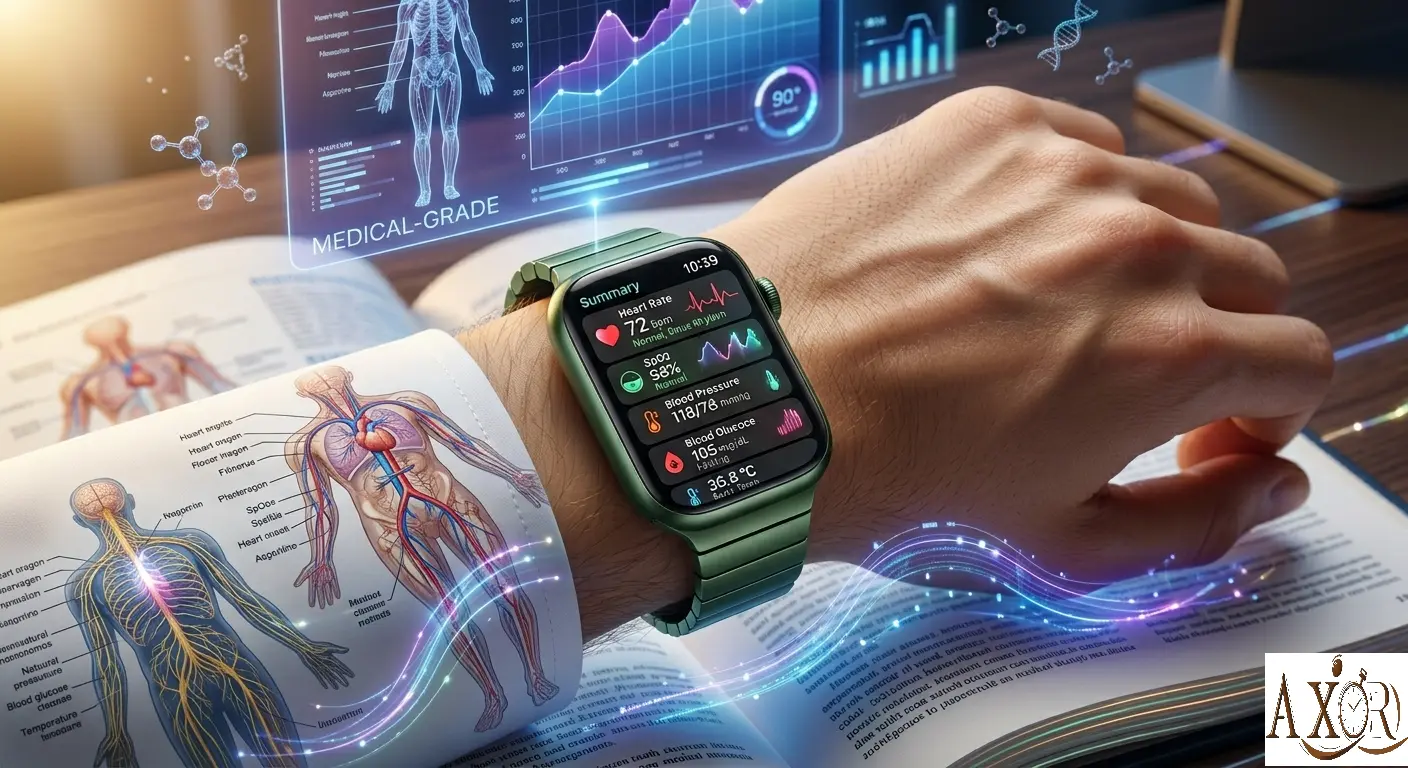
The electrical heart sensor enables on-demand electrocardiogram (ECG) readings, allowing users to capture a medical-grade heart rhythm strip in 30 seconds. This feature is FDA Class II cleared and globally certified.
It’s specifically designed to detect atrial fibrillation (AFib), an irregular heart rhythm that increases stroke risk. Clinical validation shows:
- 98.3% sensitivity for detecting AFib
- 99.6% specificity for confirming normal sinus rhythm
While not a replacement for a clinical ECG, it serves as a powerful screening tool—especially for asymptomatic users.
The ECG app integrates directly into the Health app, where data can be shared with physicians. It’s most effective when used in response to irregular rhythm notifications or symptoms like palpitations.
Blood Oxygen (SpO₂) Monitoring
The blood oxygen sensor measures the percentage of oxygen in your blood, which can reflect respiratory or cardiovascular health. It uses red and infrared light to estimate SpO₂ levels during rest.
While Apple states this feature is not intended for medical use, it provides valuable trend data—especially during sleep or at high altitudes.
Clinical studies show:
- Low mean bias: –0.04% vs. reference devices
- Wide limits of agreement: –4.00 to 3.94, indicating variability in individual readings
Despite this variability, it’s effective at identifying significant desaturations—such as those seen in sleep apnea or respiratory illness.
Users should interpret SpO₂ data as part of a broader health picture, not as a standalone diagnostic metric.
Groundbreaking Hypertension Detection
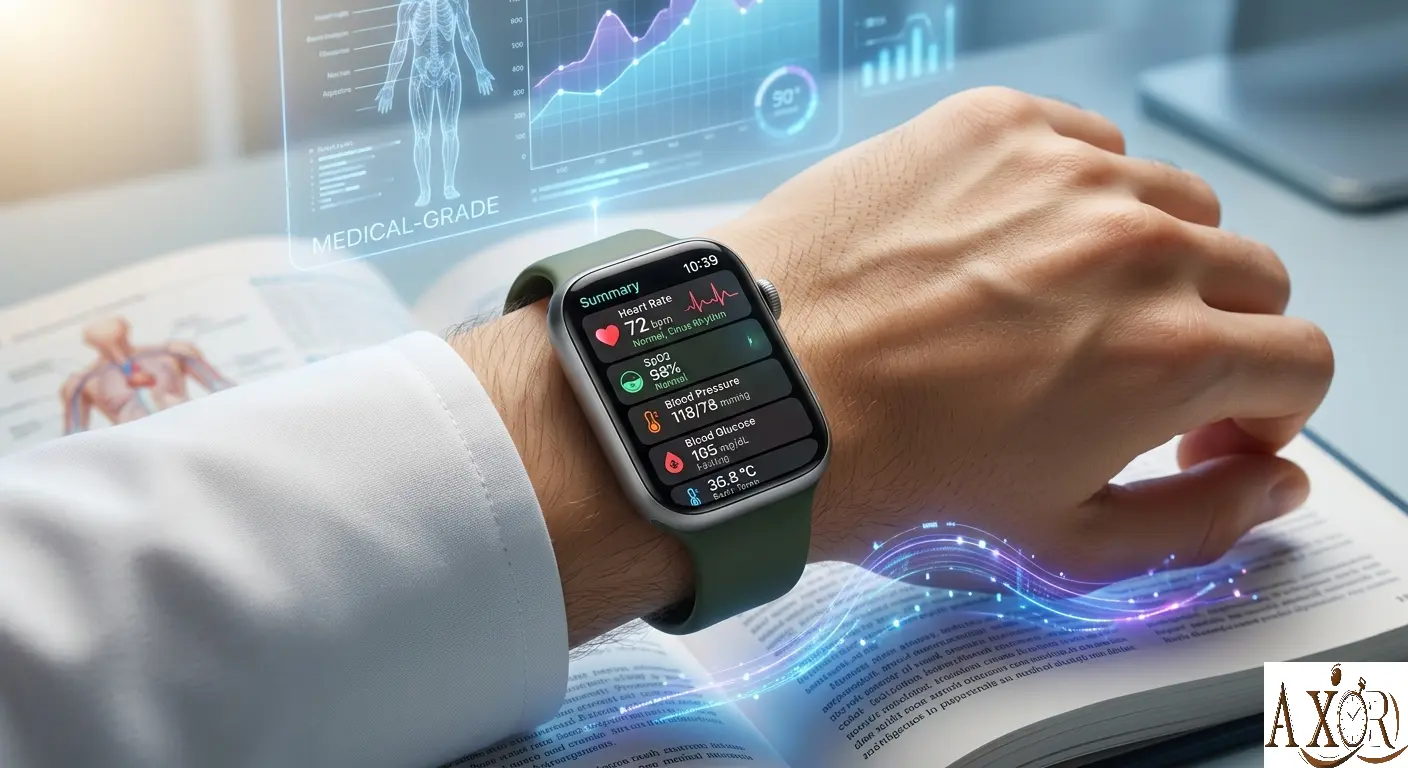
The FDA-cleared hypertension notification system is the standout health feature of the Apple Watch Series 11. It’s the first smartwatch to offer passive, continuous screening for high blood pressure—though it doesn’t provide real-time BP numbers.
Instead, it uses the optical heart sensor to analyze pulse wave data over 30-day periods, detecting patterns consistent with chronic hypertension.
How It Works
- Operates passively during waking hours, analyzing PPG signals
- Algorithm trained on over 100,000 participants across diverse demographics
- Evaluates long-term vascular response to heartbeats
- Sends notification if patterns suggest elevated blood pressure
After a notification, users are advised to log blood pressure for 7 days using a validated cuff and consult a healthcare provider.
Monthly calibration with a medical device is recommended to maintain accuracy.
Clinical Validation and Accuracy
| Metric | Value | Source |
|---|---|---|
| Sensitivity | 41% | PMC12826266 |
| Specificity | 92% | PMC12826266 |
| Accuracy (vs. medical devices) | 92–95% | Brillex.io, MedBoundTimes |
| Systolic deviation | ±5–7 mmHg | Brillex.io |
| Diastolic deviation | ±4–6 mmHg | Brillex.io |
| Stage 1 HTN accuracy (130–139/80–89) | 94% | Brillex.io, TechRadar |
| Stage 2 HTN accuracy (≥140/90) | 96% | Brillex.io, MedBoundTimes |
The 41% sensitivity means it detects less than half of undiagnosed cases—but its 92% specificity ensures that alerts are highly reliable, minimizing false positives.
The FDA 510(k) clearance was based on a study of 2,229 adults without prior hypertension, comparing Apple Watch signals to home BP monitoring over 30 days.
Regulatory Context
The feature is marketed as a wellness tool but cleared as a medical device under FDA 510(k), reflecting its clinical rigor. However:
- It’s not intended for known hypertensive patients
- It does not replace traditional diagnosis
- There are no international validation protocols for cuffless BP devices
Apple’s approach aligns with FDA guidance allowing non-invasive BP estimation for wellness use, provided it’s not claimed to diagnose or treat disease.
Sleep Apnea Detection: A Lifesaving Innovation
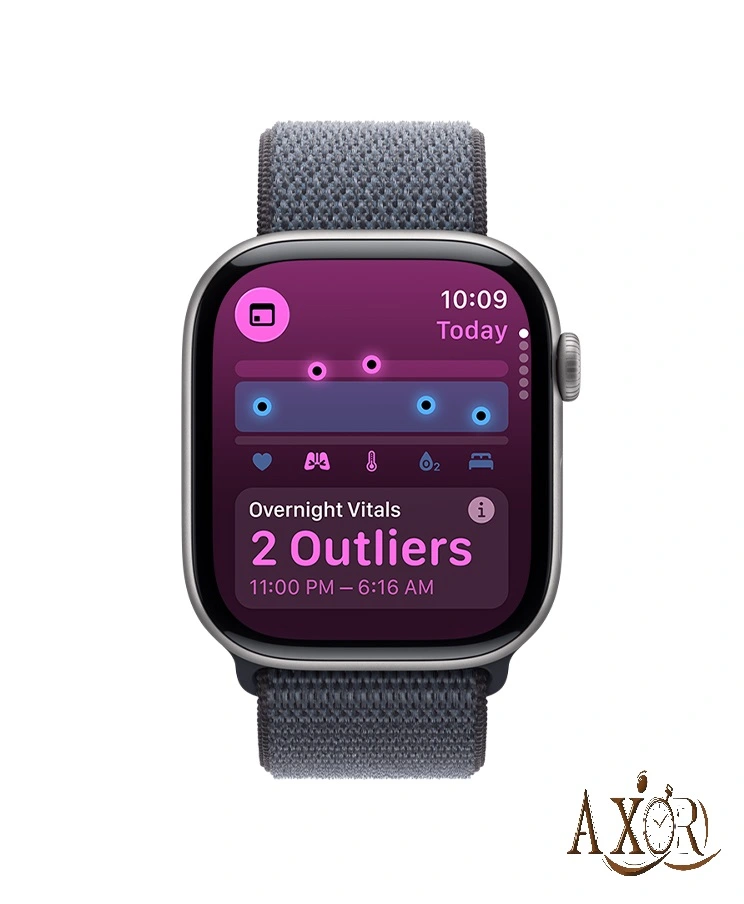
The FDA-cleared sleep apnea notification feature uses the triaxial accelerometer to detect breathing disturbances during sleep, combined with SpO₂ and heart rate data.
It analyzes 30 nights of data in the user’s natural sleep environment, identifying patterns of interrupted breathing.
Clinical Performance
| Metric | Value | Source |
|---|---|---|
| Sensitivity (moderate/severe) | 66.3% | Pulmonology Advisor |
| Specificity (normal/mild) | 98.5% | Pulmonology Advisor |
| Accuracy (severe cases) | 89% | Back2Sleep.eu |
| False positives (severe) | ~0% | Back2Sleep.eu |
| Validation nights | 3,936 | AppleInsider |
The algorithm was validated across 3,936 nights from 2,160 participants, including home and lab testing. An additional 7,220 nights from 2,542 volunteers were used in training.
The FDA explicitly states the feature is not for diagnosis, treatment, or management—but to prompt users to seek professional evaluation.
This is crucial, as 80% of sleep apnea cases go undiagnosed, and untreated apnea increases risks of stroke, heart failure, and diabetes.
Sleep Score: A Holistic View of Rest
Introduced with watchOS 26, the Sleep Score provides a 0–100 rating based on:
- Duration: total sleep time
- Consistency: bedtime regularity
- Sleep stages: time in REM, core, and deep sleep
The score helps users track sleep quality over time and identify trends—such as the impact of stress, alcohol, or exercise.
Long-term reviews confirm improved sleep tracking accuracy compared to earlier models, thanks to better sensor fusion and algorithm updates.
While not a medical metric, it empowers users to make lifestyle changes that improve rest and overall health.
Temperature Sensing and Women’s Health
The temperature sensor enables advanced sleep tracking and supports women’s health features, including:
- Menstrual cycle predictions
- Ovulation estimates
- Fertility window tracking
It detects subtle changes in skin temperature that correlate with hormonal shifts, particularly the post-ovulation rise.
While not medical-grade, when combined with other data (like heart rate variability and sleep), it provides meaningful insights into reproductive health.
Apple emphasizes that this data is for general wellness, not diagnosis of conditions like PCOS or infertility.
Still, it’s a valuable tool for users seeking greater awareness of their bodies.
Battery Life and Sensor Performance
Extended battery life is critical for continuous health monitoring—and the Series 11 delivers.
- 24-hour battery life (up from 18 on Series 10)
- Fast charging: 15 minutes = 8 hours of use
- Some users report 36 hours under normal conditions
This ensures uninterrupted data collection for features like hypertension and sleep apnea detection, which rely on long-term trends.
The S11 chip contributes to improved energy efficiency, enabling 24/7 sensor operation without compromising performance.
With reliable all-day and all-night wear, users can trust that no critical health data is missed.
Performance and Connectivity
Powered by the S11 chip, the Series 11 offers:
- 30% performance improvement over S10
- Better energy efficiency
- Faster health data processing
It retains the S10 SiP in some models but adds 5G connectivity on compatible networks (e.g., Airtel, Reliance Jio), enabling:
- Faster syncing
- Improved emergency response
- Emergency SOS via satellite for backcountry use
The combination of processing power and connectivity ensures that health alerts are timely and actionable—critical for conditions like AFib or hypertension.
User Experience and Settings Optimization
The Series 11 enhances usability with:
- Bigger display and thinner bezels for better readability
- Wrist flick gesture to dismiss notifications
- Liquid Glass UI in watchOS 26 for smoother navigation
To maximize sensor accuracy:
- Wear the watch snug but comfortable
- Enable background health monitoring
- Calibrate monthly with a medical BP cuff
- Keep software updated
Optimizing settings transforms the watch from a passive tracker into a precise, reliable health tool.
Comparison with Competitors
| Feature | Apple Watch Series 11 | Samsung Galaxy Watch 8 |
|---|---|---|
| Hypertension Detection | Yes (trend-based, FDA-cleared) | Yes (calibration-based) |
| Sleep Apnea Detection | Yes (FDA-cleared, Q4 2025 update) | Yes (available at launch) |
| ECG | Yes | Yes |
| SpO₂ | Yes | Yes |
| Blood Pressure Estimation | No (trend detection only) | Yes (with calibration) |
| Temperature Sensor | Skin temperature | Infrared temp sensor |
| Bioelectrical Impedance | No | Yes (body composition) |
While the Galaxy Watch 8 offers direct BP estimation, Apple’s approach focuses on long-term trend detection, which aligns better with clinical screening practices.
However, Samsung’s earlier availability of sleep apnea detection gave it a temporary edge.
Apple’s FDA clearances and larger clinical validation datasets lend greater credibility to its health claims.
Real-World Impact and Future Potential
The apple watch series 11 health sensors have real-world implications:
- Early detection of undiagnosed hypertension (affecting 1 in 3 adults)
- Screening for sleep apnea, often missed for years
- Empowering users with actionable health insights
Apple has partnered with Harvard University on a five-year study to validate long-term health metrics, signaling a commitment to medical-grade research.
Future updates may enable:
- More precise BP estimation
- Glucose monitoring (non-invasive)
- Enhanced mental health tracking
As wearable data integrates deeper into healthcare systems, the Series 11 could become a standard tool in preventive medicine.
Conclusion: A New Era in Wearable Health
The apple watch series 11 health sensors represent a paradigm shift in personal health technology. With FDA-cleared hypertension and sleep apnea detection, advanced sensor fusion, and machine learning trained on over 100,000 participants, it goes far beyond fitness tracking.
It’s not a medical device—but it’s the most clinically validated consumer wearable to date. Its strength lies in passive, continuous monitoring that catches silent conditions early, when intervention is most effective.
While it has limitations—modest sensitivity, need for confirmatory testing, and lack of real-time BP numbers—its high specificity and ease of use make it a powerful tool for preventive health.
For anyone serious about their well-being, the Apple Watch Series 11 isn’t just a luxury—it’s a proactive health guardian that could one day save a life.
