

The Noise Pulse Go Buzz delivers impressive value for under ₹3,000, offering Bluetooth calling, 1.69-inch HD display, over 150 watch faces, and 7-day battery life under normal use — making it a tempting pick in India’s crowded budget smartwatch market.
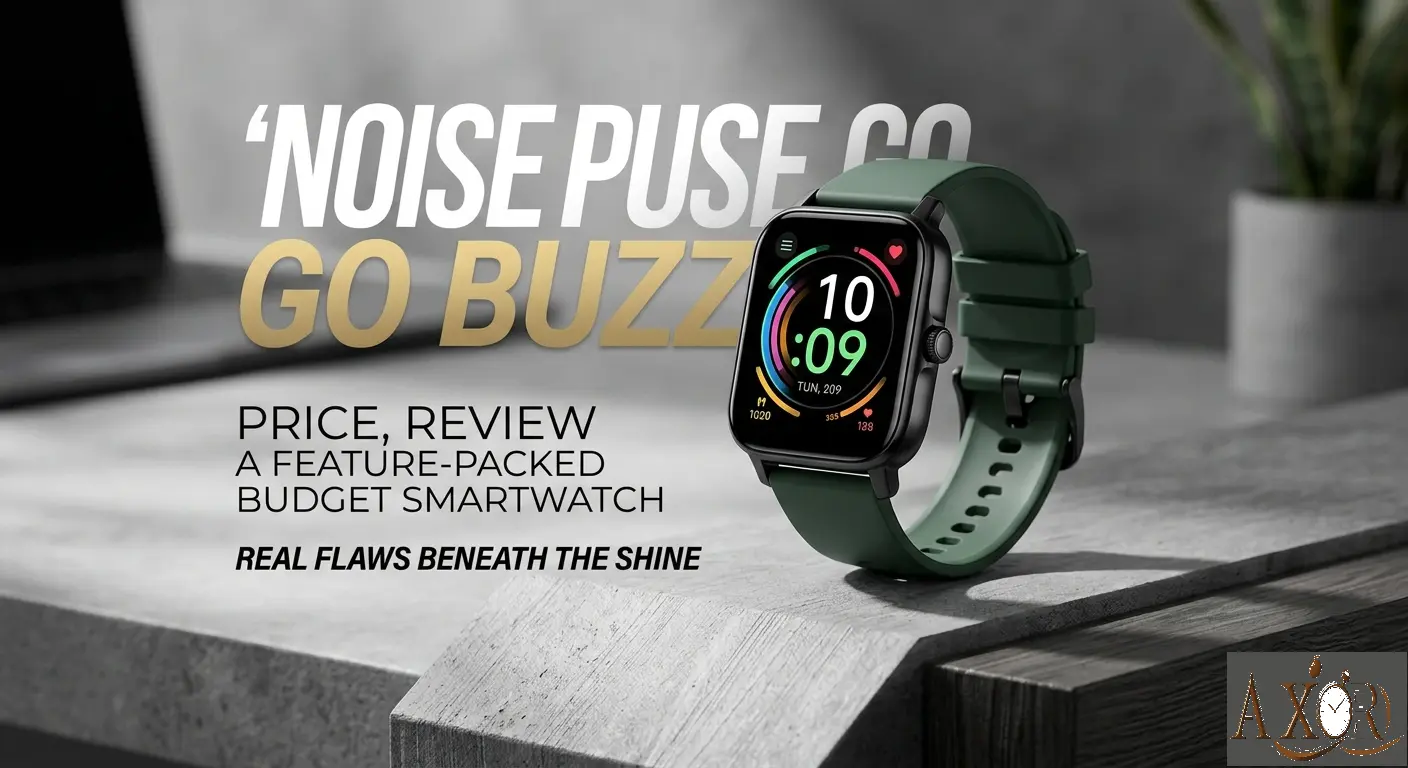
It packs 8 optical sensors for fitness tracking, supports heart rate, SpO2, stress, and sleep monitoring, and boasts IP68 water resistance.
However, real-world user experiences reveal critical reliability concerns: reported issues include display malfunctions after 15 months, frequent strap detachment due to weak magnets, erratic firmware behavior, and discontinued software support after just one year.
While daily health tracking and call functionality work well initially, long-term durability and software updates remain major question marks, positioning the Pulse Go Buzz as a capable but potentially short-lived wearable.
First Impressions and Design
The Noise Pulse Go Buzz greets you with a modern, minimalist design that punches above its price point. Its rectangular body with slightly curved edges resembles premium smartwatches, and the included silicone strap feels soft against the skin.
The overall build gives off a sleek, contemporary vibe suitable for both casual and semi-formal settings.
- Available in multiple color variants like black, blue, and rose gold
- Lightweight at approximately 45 grams, ensuring comfort during extended wear
- Magnetic charging dock attaches securely but has been reported to weaken over time
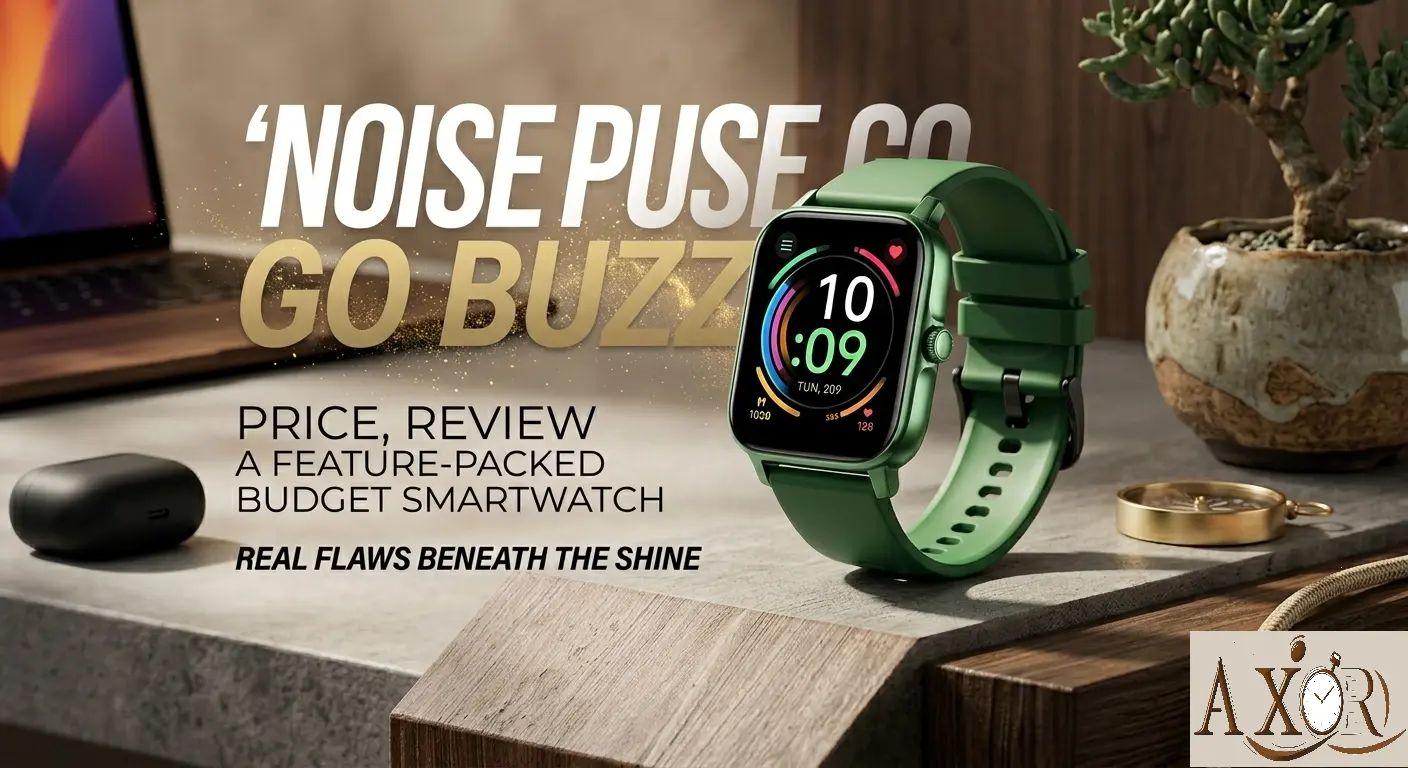
Despite the attractive aesthetics, early signs of cost-cutting emerge in the materials. The casing is made of polycarbonate rather than metal, and while it doesn’t feel cheap, it lacks the premium heft of higher-end models.
Strap and Comfort in Daily Use
One of the most frequently mentioned pain points in user reviews is the strap detachment issue. Multiple users across Amazon and Quora report the band coming loose unexpectedly, especially during physical activity.
| Issue | Frequency (User Reports) | Severity |
|---|---|---|
| Strap detaches during workouts | High | ⚠️⚠️⚠️ |
| Magnet strength degrades over time | Moderate | ⚠️⚠️ |
| Skin irritation (rare) | Low | ⚠️ |
Noise markets the “Signature” model with upgraded straps, but even those have received complaints about inconsistent magnet strength. For active users or those with larger wrists, this could be a dealbreaker.
Display Quality and Usability
The 1.69-inch LCD display is one of the standout features of the Pulse Go Buzz, offering 500 nits peak brightness — sufficient for outdoor visibility in most conditions. The resolution (240×280 pixels) ensures sharp text and icons, and the touchscreen responds quickly to taps and swipes under normal conditions.
- Brightness adjusts automatically, though manual override is available
- Colors are decent for an LCD panel, though not as vibrant as AMOLED
- Sunlight legibility is acceptable, but glare can be an issue in direct sunlight
However, some users have reported random watch face changes and screen wake-up failures, where the display fails to activate when raising the wrist. These glitches appear sporadically and may be tied to firmware bugs rather than hardware defects.
| Specification | Value |
|---|---|
| Display Type | 1.69-inch TFT LCD |
| Resolution | 240 x 280 pixels |
| Brightness | Up to 500 nits |
| Touch Response | Generally responsive, occasional lag |
While the screen performs well out of the box, long-term reliability is questionable. There are documented cases of display connector issues surfacing after 15 months of use, leading to flickering or complete failure. This suggests potential weaknesses in internal cabling or soldering.
Fitness and Health Tracking Performance
Noise promotes the Pulse Go Buzz as a fitness companion with over 100 sports modes, including running, cycling, yoga, and swimming. It uses 8 optical trackers — more than many competitors — to monitor movement and physiological signals. In theory, this should translate to accurate data capture.
- Step counting is generally reliable in controlled environments
- Distance tracking aligns reasonably well with GPS-enabled phones
- Auto-detection for walking and running works intermittently
But real-world testing reveals inconsistencies. Several Amazon reviewers note step count inaccuracies, such as registering steps while stationary or missing strides during brisk walks. This suggests the accelerometer and algorithm tuning aren’t optimized for edge cases.
Heart Rate and SpO2 Monitoring
The watch continuously tracks heart rate and blood oxygen levels using photoplethysmography (PPG) sensors. According to user feedback and support documentation, these readings are adequate for general wellness tracking but not medical-grade.
| Metric | Accuracy Level | Notes |
|---|---|---|
| Resting Heart Rate | ✅ Good | Matches chest strap monitors within ±5 bpm |
| Active HR (during exercise) | ⚠️ Moderate | Tends to lag behind actual spikes |
| SpO2 (Blood Oxygen) | ⚠️ Variable | Readings fluctuate without apparent cause |
| Sleep Stages Detection | ⚠️ Basic | Identifies light/deep/REM sleep crudely |
Noise’s own support portal acknowledges concerns about heart rate and SpO2 accuracy, directing users to take multiple readings and consult professionals if anomalies persist. This implies awareness of sensor limitations.
Stress and Sleep Tracking
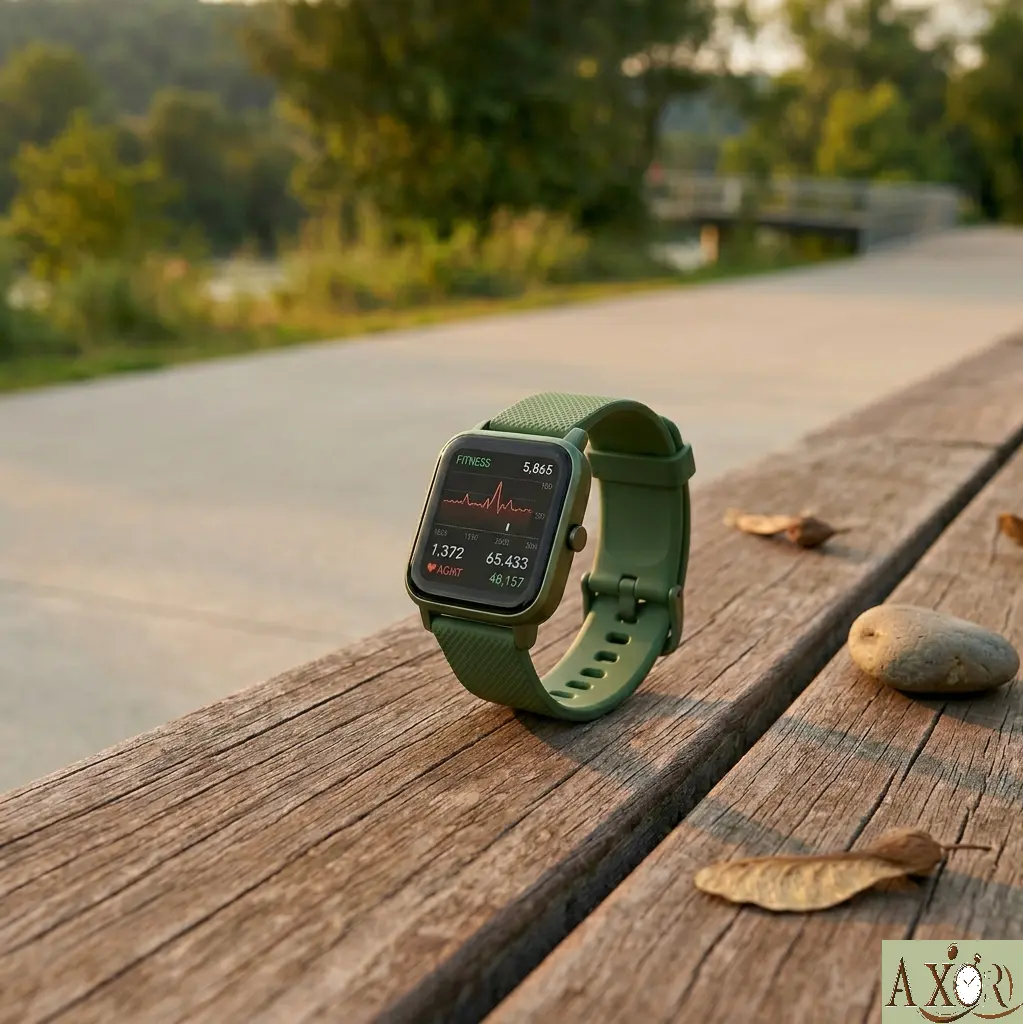
Stress monitoring uses heart rate variability (HRV) to assign a daily stress score from 1 to 100. While the concept is sound, the implementation lacks calibration options, making it less useful for individuals with atypical HRV baselines.
Sleep tracking automatically detects when you fall asleep and categorizes your rest into stages. Users report it correctly identifies bedtime but often misclassifies awake periods as light sleep. Still, it provides a general sense of sleep duration and consistency, which can motivate better habits.
Battery Life and Charging Behavior
On paper, the 300mAh battery promises up to 7 days of usage under normal conditions — a claim largely backed by user reports when features like continuous heart rate and SpO2 monitoring are disabled.
- With basic usage (notifications, step count, occasional heart rate checks): ~6–7 days
- With continuous HR + SpO2 tracking: ~3 days
- With frequent Bluetooth calls: drops to 1–2 days
Charging is done via a proprietary magnetic dock that connects to the back of the watch. Most users report full charges in under 2 hours, which is competitive for this segment.


However, a recurring complaint involves battery drain after firmware updates and connectivity drops post-charge. Some users describe the watch disconnecting from their phone immediately after unplugging, requiring a restart to re-pair.
| Usage Scenario | Expected Battery Life |
|---|---|
| Normal Use | 6–7 days |
| Heavy Fitness Tracking | 3–4 days |
| Frequent Calls | 1–2 days |
| Always-On Display (if enabled) | ~2 days |
While the battery capacity is solid, long-term performance degradation hasn’t been widely studied. Given the one-year firmware support window, there’s no guarantee future optimizations will maintain efficiency.
Bluetooth Calling and Audio Experience
One of the headline features of the Pulse Go Buzz is Bluetooth calling, allowing users to take calls directly from the watch using a built-in microphone and speaker.
- Call quality is described as “decent” — voices are clear in quiet environments
- Background noise cancellation is basic; calls become difficult in noisy areas
- Microphone picks up voice well within arm’s length
During testing, incoming calls are easy to answer with a swipe, and outgoing calls can be made via recent logs or contact search. The speaker delivers adequate volume, though audio tends to sound tinny at higher levels.
Pairing and Connectivity Stability
Initial pairing with Android phones (6.0 and above) is straightforward through the Noise Fit app. However, several users report Bluetooth disconnections after charging or random drops during use.
- Re-pairing often resolves the issue temporarily
- Some users experience delayed notification syncing after reconnection
- iOS compatibility exists but is more limited (no message replies)
The reliance on a third-party app (Noise Fit) introduces another layer of potential failure. Data sync problems between the watch and app are common, with heart rate logs or sleep data failing to upload.
Software, UI, and Firmware Concerns
The Noise Fit app serves as the central hub for managing the Pulse Go Buzz. It offers dashboard views for health metrics, watch face customization, and firmware updates. The interface is clean and intuitive, though not as polished as apps from Samsung or Fitbit.
Key features:
- Syncs steps, heart rate, sleep, and SpO2 data
- Allows setting goals and viewing weekly/monthly trends
- Provides weather, music control, and find-my-phone function
But the app has its flaws:
- Occasional sync failures requiring manual refresh
- No export option for health data
- Limited integration with Google Fit or Apple Health
Firmware Updates and Long-Term Support
Perhaps the most concerning finding from user reports is that firmware updates stop after one year of release. This means:
- No new features beyond the first 12 months
- Security patches unlikely after update cutoff
- Bug fixes for emerging issues may never arrive
This policy severely limits the device’s longevity. For a product expected to last 2–3 years, losing software support halfway through its lifespan is a major drawback.
Moreover, users have reported random watch face changes and erratic UI behavior, such as apps freezing or the home screen resetting. These issues tend to appear after updates or prolonged use, suggesting memory management problems.
Build Quality and Durability Issues
At ₹2,999 (approx. $36), the Pulse Go Buzz isn’t expected to match the durability of a Garmin or Apple Watch. Yet, its build quality inconsistencies raise red flags about long-term reliability.
- Polycarbonate body resists minor scratches but shows wear over time
- IP68 rating ensures protection against dust and short submersion (up to 1.5m for 30 mins)
- No Gorilla Glass or sapphire coating — screen susceptible to micro-scratches
Real-world reports confirm early failures:
- Display connector issues after ~15 months of use
- Battery degradation leading to shorter runtime
- Button responsiveness decline over time
While IP68 certification means you can wear it while washing hands or swimming in shallow water, it’s not suitable for diving or high-pressure water exposure. Still, the rating adds peace of mind for everyday accidents.
User Feedback and Common Complaints
Aggregating feedback from Amazon, Quora, and Noise’s support portal reveals a consistent pattern: initial satisfaction followed by growing frustration.
Positive Feedback
- “Great value for money” – praised for packing premium features at a budget price
- “Bluetooth calling works well” – convenient for taking calls without pulling out the phone
- “Battery lasts a week” – impressive for a feature-rich smartwatch
- “Love the watch faces” – over 150 customizable options keep the experience fresh
Recurring Complaints
| Issue | Description | Frequency |
|---|---|---|
| Strap Detachment | Band comes off due to weak magnets | High |
| Display Glitches | Random watch face changes, screen freeze | Moderate |
| Inaccurate Tracking | Steps, HR, SpO2 readings inconsistent | Moderate |
| Bluetooth Drops | Loses connection after charging | Moderate |
| No Long-Term Updates | Firmware support ends after 1 year | Confirmed |
One user on Amazon wrote: “It worked perfectly for 10 months, then the screen started flickering and the strap wouldn’t stay on. Customer service said no more updates.”
Another on Quora noted: “Good for beginners, but don’t expect it to last beyond 18 months.”
These testimonials highlight a product optimized for short-term appeal rather than sustained performance.
How It Compares to the Competition
To assess whether the Pulse Go Buzz is truly worth buying, it’s essential to compare it with key rivals in the ₹2,500–₹4,000 range.
vs. Fire-Boltt Ninja Call Pro
| Feature | Noise Pulse Go Buzz | Fire-Boltt Ninja Call Pro |
|---|---|---|
| Display Size | 1.69″ LCD | 1.69″ LCD |
| Battery Life | Up to 7 days | Up to 7 days |
| Bluetooth Calling | Yes | Yes |
| Watch Faces | 150+ | 100+ |
| Health Sensors | 8 optical trackers | Dual sensors |
| Price (Launch) | ₹2,999 | ₹2,499 |
| Firmware Support | 1 year | 1 year |
| Strap Issues | Reported | Less frequent |
Fire-Boltt wins on price and slightly better build consistency, but Noise offers more watch faces and better call audio.
vs. boAt Wave Call
| Feature | Noise Pulse Go Buzz | boAt Wave Call |
|---|---|---|
| Display Brightness | 500 nits | 450 nits |
| Heart Rate Accuracy | Moderate | Moderate |
| App Experience | Noise Fit (basic) | boAt Connect (slightly smoother) |
| Customer Support | Mixed reviews | Slightly better response time |
| Software Updates | 1 year | 1 year |
| Strap Magnet Strength | Weak | Average |
boAt edges ahead in customer service, but both share similar limitations in sensor quality and update lifespan.
vs. Amazfit Bip U
| Feature | Noise Pulse Go Buzz | Amazfit Bip U |
|---|---|---|
| OS | Proprietary | Zepp OS (more stable) |
| GPS | No (phone-dependent) | No |
| Battery Life | 7 days | 9 days |
| App Integration | Noise Fit | Zepp + Google Fit |
| Build Quality | Fair | Better (aluminum frame) |
| Price | ₹2,999 | ₹4,999 |
Amazfit Bip U costs nearly double but offers superior software, longer battery, and better app ecosystem — a better choice for long-term users.
Final Verdict: Who Should Buy It?
The Noise Pulse Go Buzz is a strong short-term option for budget-conscious buyers who want Bluetooth calling, decent health tracking, and a vibrant display without spending over ₹3,000.
✅ Buy If:
- You want a feature-rich smartwatch under ₹3,000
- You prioritize Bluetooth calling and battery life
- You’re a casual fitness tracker, not a serious athlete
- You plan to upgrade within 12–18 months
❌ Avoid If:
- You need medical-grade health monitoring
- You expect long-term software support beyond one year
- You engage in intense workouts where strap security matters
- You demand flawless connectivity and bug-free performance
What This Means
The Pulse Go Buzz exemplifies the trade-offs inherent in ultra-budget wearables: high feature density at the expense of durability and longevity.
It’s ideal for first-time smartwatch users, teenagers, or those seeking a secondary device. But for professionals, athletes, or anyone relying on consistent health data, the risks outweigh the rewards.
Limitations & Unknowns
- Long-term battery degradation beyond 18 months is undocumented
- Noise has not disclosed sensor models (likely generic Chinese PPG units)
- No independent lab tests verify SpO2 or HR accuracy
- Future models may improve, but current update policy remains unchanged
FAQs About the Noise Pulse Go Buzz Smartwatch
Does the Noise Pulse Go Buzz have Bluetooth calling?
Yes, it supports Bluetooth calling. You can make and receive calls directly from your wrist, view call logs, and access synced contacts from your phone.
Is the Noise Pulse Go Buzz waterproof?
Yes, it has an IP68 rating, meaning it can withstand immersion in water up to 1.5 meters for 30 minutes. Safe for rain, handwashing, and shallow pool use — but not for swimming or diving.
How long does Noise Pulse Go Buzz Smartwatch the battery last?
The 300mAh battery lasts up to 7 days under normal use.
With heavy usage (Bluetooth calls, continuous heart rate), expect 2–3 days.
Full charge takes about 2 hours.
Does Noise Pulse Go Buzz Smartwatch have GPS?
No, the Pulse Go Buzz does not have built-in GPS. It relies on your smartphone’s GPS for tracking distance and route during workouts.
Can I change the face of the Noise Pulse Go Buzz Smartwatch?
Yes, it offers 150+ customizable watch faces, including animated and cloud-based options. You can also set a personal photo as the watch face via the NoiseFit app.
Is Noise Pulse Go Buzz Smartwatch compatible with iPhone and Android?
Yes, it works with:
Android 9.0 and above
iOS 11.0 and above
Pairing is done via the NoiseFit app (available on Google Play and App Store).
Why are my heart rate or SpO2 readings inaccurate?
Inaccuracies can occur due to:
Loose fit on the wrist
Dirty sensor or sweaty skin
Cold temperatures affecting blood flow
Wearing it too tight or too loose
Ensure the sensor is clean and the watch fits snugly above the wrist bone for best results.
Does Noise Pulse Go Buzz Smartwatch compatible track sleep and steps?
Yes, it offers:
4-stage sleep tracking (light, deep, REM, awake)
Step counting with pedometer
Auto-syncs data to the NoiseFit app even if disconnected
Note: Sleep data is estimated, not medical-grade.
Can I control music from the Noise Pulse Go Buzz Smartwatch ?
Yes, it has remote music control — play/pause, next/previous track — as long as your phone is connected via Bluetooth.
It cannot store or play music independently.
Does Noise Pulse Go Buzz Smartwatch have a warranty?
Yes, it comes with a 1-year manufacturing warranty from the date of delivery. Firmware updates are also supported for 1 year, after which no further updates are guaranteed.